2024 B2C Marketing Priorities And Challenges - how can customer feedback tools help?
As the digital economy matures Customer Feedback is a hot topic, particularly in the world of eCommerce, where the customer is elusive. But for many brands a customer feedback initiative feels like at battle. A battle against data depreciation and the evolution toward a cookieless world on top of consent management issues with zero- and first-party data.
These challenges are clearly seen in Forrester's research, which has been nicely summarized by Martech.
You can see that many B2C marketers are finding it difficult to meet priorities around customer expereince, data, AI and ROI.
(Results from the 906 marketing decision-makers provided multiple answers to the question)
Priorities. The top priorities for B2C marketers were:
- Increase focus on customer experience (28%)
- Increase customer engagement across the lifecycle (27%)
- Improve how our brand is perceived by customers and prospects (26%)
- Improve the ROI/effectiveness of marketing (25%);
- Increase our brand’s ability to energize customer relationships and create passionate advocates (24%).
(The 906 marketing decision-makers provided multiple answers to the question.)
Difficulties. Marketers are also having a hard time with the priorities they were given by their organizations. Among the most difficult:
- Update our data strategy to adapt to data deprecation (47%)
- Introduce or enhance AI capabilities (47%)
- Implement an omnichannel marketing strategy (45%)
- Improve the ROI/effectiveness of marketing (44%)
- Implement agile frameworks, methodologies or principles (44%)
Marketing execution. B2C marketers are also having a hard time with marketing execution. Specifically:
- Personalizing, communications, experiences and interactions (41%)
- Coordinating different marketing service providers (including agencies) (40%)
- Creating a single view of the customer across channels and interactions (37%)
- Driving decision-making and customer insights (34%)
- Managing data quality (31%).
Customer feedback tools are evolving to meet these challenges, offering innovative ways to gather, analyze and personalize data. Here’s a look at what the future holds for these tools in the ecommerce industry.
AI-Powered Insights
Artificial intelligence (AI) is transforming customer feedback tools by providing deeper insights from data. AI can analyze vast amounts of feedback quickly, identifying trends and sentiments that might be missed by human analysis. This allows ecommerce businesses to react swiftly to customer needs and improve their offerings in real-time.
Personalized Survey Experiences
Personalization is key in modern ecommerce, and feedback tools are no exception. Future tools will offer highly personalized survey experiences, tailoring questions based on the customer’s previous interactions and purchase history. This ensures that feedback is relevant and engaging, leading to higher response rates and more useful data.
Omnichannel Feedback Collection
Customers interact with brands across multiple channels, from websites and social media to in-store experiences. Future feedback tools will seamlessly integrate across all these touchpoints, providing a holistic view of the customer journey. This omnichannel approach will help businesses understand how each channel contributes to the overall customer experience.
Real-Time Feedback and Action
Speed is essential in today’s fast-paced ecommerce environment. Future feedback tools will offer real-time data collection and analysis, allowing businesses to make immediate improvements. This could mean addressing a complaint instantly or tweaking a product feature based on customer suggestions without delay.
Enhanced Data Privacy and Security
As data privacy concerns grow, future feedback tools will prioritize secure and transparent data handling. Customers will have more control over their data, knowing exactly how it is used and protected. This trust will encourage more customers to share their honest opinions, improving the quality of feedback.
Integration with Other Ecommerce Tools
Future customer feedback tools will integrate more deeply with other ecommerce platforms, such as CRM systems, marketing automation tools, and inventory management software. This will enable a seamless flow of information, helping businesses create a more cohesive strategy based on comprehensive customer insights.
Incentivized Feedback
To boost participation rates, future feedback tools will offer more creative and effective incentives. Unique discount codes, loyalty points, and personalized rewards will make customers more likely to complete surveys. These incentives not only increase response rates but also enhance customer satisfaction and loyalty.
Visual and Voice Feedback
The way customers provide feedback is also changing. Future tools will support more interactive feedback methods, including video responses and voice recordings. These formats can provide richer, more nuanced insights compared to traditional text-based surveys.
Predictive Analytics
Predictive analytics will become a staple in future customer feedback tools. By analyzing past feedback and customer behavior, these tools will forecast future trends and potential issues. This proactive approach allows businesses to stay ahead of the curve, making informed decisions to enhance the customer experience.
Different Types of Feedback Channels for Ecommerce
Collecting customer feedback is vital for ecommerce success, and multiple channels can be utilized to gather comprehensive insights:
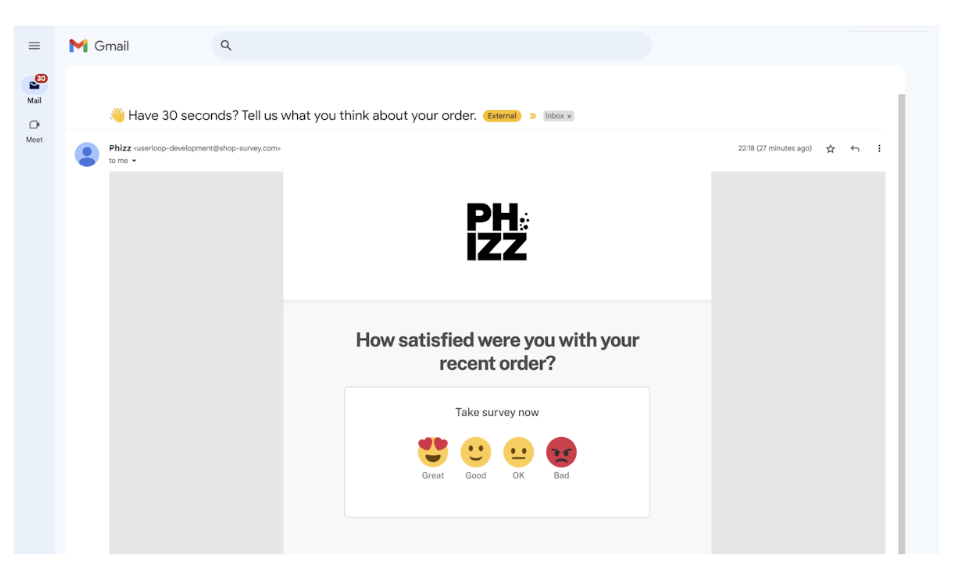
1. Email Surveys
Email surveys are a traditional yet effective method for collecting feedback. They can be sent post-purchase or at various customer journey stages to gather detailed insights on customer satisfaction, product experiences, and service quality.
2. On-Site Surveys
On-site surveys appear directly on the ecommerce website, often triggered by specific customer actions, such as time spent on a page or the completion of a purchase. These surveys capture immediate feedback and can help improve the user experience in real-time.
3. Social Media
Social media platforms are valuable feedback channels where customers often express their opinions and experiences. Monitoring social media mentions, comments, and direct messages provides real-time insights into customer sentiment and brand perception.
4. Chatbots and Live Chat
Chatbots and live chat tools on ecommerce websites can collect instant feedback during customer interactions. These tools can ask follow-up questions based on the conversation, providing context-rich insights.
5. Mobile Apps
For businesses with mobile apps, in-app surveys and feedback prompts can capture customer opinions during their app usage. This channel is particularly effective for understanding mobile user experiences and preferences.
6. SMS Surveys
SMS surveys offer a quick and convenient way for customers to provide feedback. Given the high open rates of text messages, SMS surveys can achieve high response rates and are ideal for short, focused questions.
7. Post-Purchase Feedback
Post-purchase surveys, often sent via email or through an app, are crucial for understanding customer satisfaction with the buying process and the product itself. These surveys can ask about delivery experiences, product quality, and overall satisfaction.
8. Review Platforms
Encouraging customers to leave reviews on platforms like Google, Yelp, or Trustpilot provides public feedback that can boost credibility and attract new customers. These reviews also offer valuable insights into customer experiences and areas for improvement.
Conclusion: Maximizing Revenue with Customer Feedback Tools
The future of customer feedback tools in ecommerce is bright. They are evolving to address the the challenges that marketers face right now. Driven by advancements in AI, personalization, and data integration, these tools will provide deeper insights, faster responses, and more secure data handling, helping ecommerce businesses thrive in an increasingly competitive landscape.
Among the various feedback tools, those that have the potential to deliver the highest revenue value are:
- AI-Powered Feedback Tools: These tools offer sophisticated analytics and insights, helping businesses understand customer behavior and preferences in-depth. By identifying key trends and sentiments, AI-powered tools enable companies to make data-driven decisions that can boost sales and customer loyalty.
- Omnichannel Feedback Solutions: Tools that collect feedback across multiple channels provide a comprehensive view of the customer journey. Understanding how different touchpoints contribute to the overall experience allows businesses to optimize each channel, enhancing customer satisfaction and driving repeat purchases.
- Predictive Analytics Tools: By forecasting future trends and identifying potential issues before they arise, predictive analytics tools enable proactive improvements to products and services. This foresight can lead to better customer experiences and increased revenue.
- Incentivized Feedback Mechanisms: Tools that offer unique discount codes, loyalty points, and personalized rewards effectively increase survey participation rates. Higher response rates lead to more comprehensive data, which in turn helps businesses refine their offerings and marketing strategies for higher sales.
By embracing these advanced feedback tools and utilizing various channels to gather customer insights, ecommerce businesses can enhance their strategies, improve customer experiences, and ultimately boost their revenue.
UserLoop is leading the way by introducing AI into the customer feedback process. It's innovative AI-powered solutions speed the survey creation process whilst providing personal branding options, results focused analytics, and easy-to-access data . Start building your customer feedback survey and emails today .
Discover what UserLoop can do for you with a free 14-day trial 🌟. Kick off your first customer survey in just a few minutes and start unlocking valuable insights for your brand and customers!


The agentic growth toolkit for Shopify
Ask your customers anything
UserLoop talks to your customers at scale with surveys and contests that feed one AI-queryable dataset. AI does the setup and the analysis.
- SurveysFind out why customers buy: checkout, email, link & QR.
- ContestsGiveaways that grow your list and social following.
Free plans on both apps · live in minutes