Survey-Triggered Discount Codes: The Strategy That Beats "10% Off for Your Email"
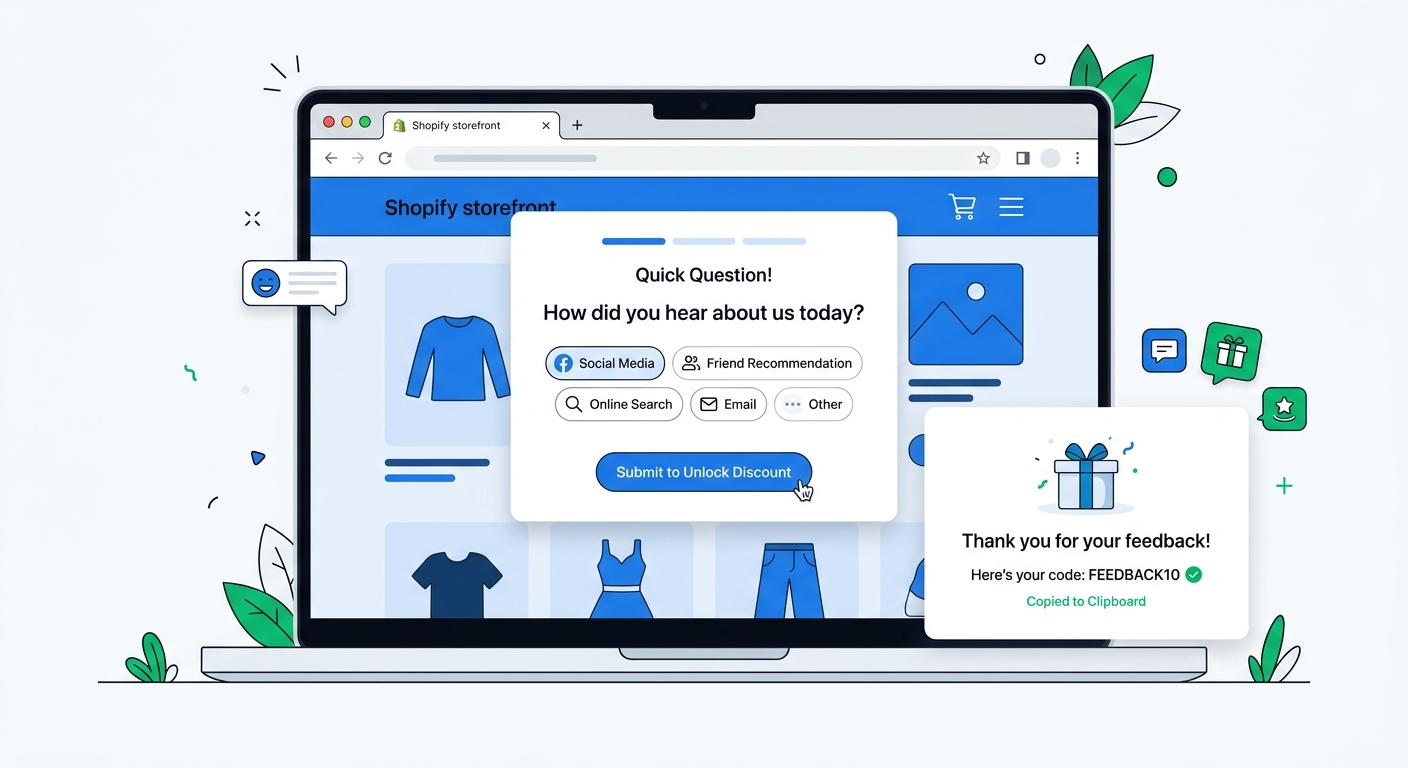
Most Shopify discount popups are lazy.
They interrupt the page, ask for an email, and throw out the same 10% code to everyone with a pulse. That can grow a list, sure, but it also trains shoppers to wait for a coupon, fills Klaviyo with low-intent leads, and tells you almost nothing about why someone hesitated in the first place.
A survey-triggered discount code is better because the shopper earns the offer by answering a question. That one change does three useful things at once:
- it gives you zero-party data you can actually use
- it filters for visitors with real purchase intent
- it makes the discount feel like an exchange, not a bribe
That matters more than most brands realize.
If your popup strategy is still just "email first, discount second," you are leaving both conversion insight and downstream personalization on the table. A one-question survey popup usually gives you a stronger signal about purchase motivation than another generic signup ever will.
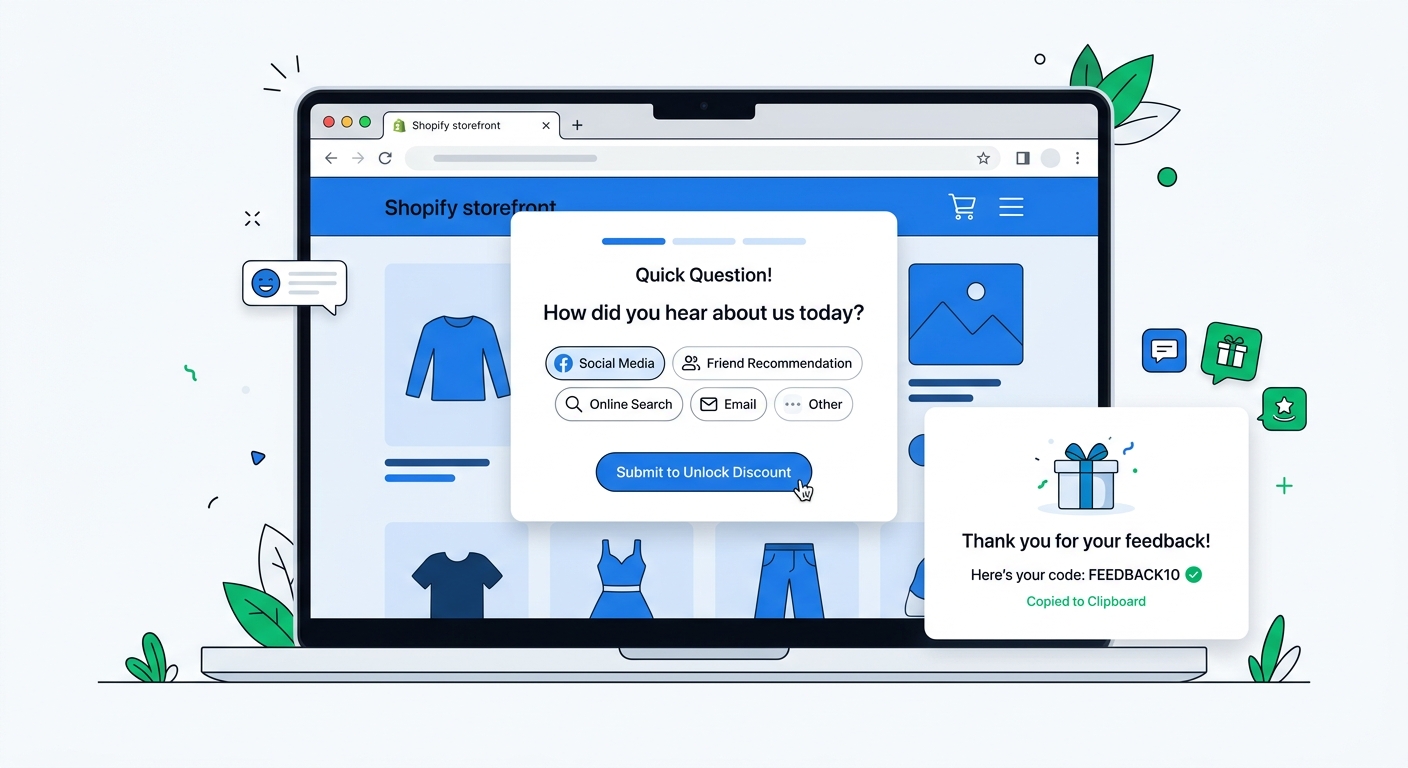
What a survey-triggered discount code actually is
The format is simple.
Instead of showing:
- Enter your email for 10% off
You show something like:
- What is stopping you from ordering today?
- What are you shopping for?
- Is this your first order with us?
- Which option describes you best?
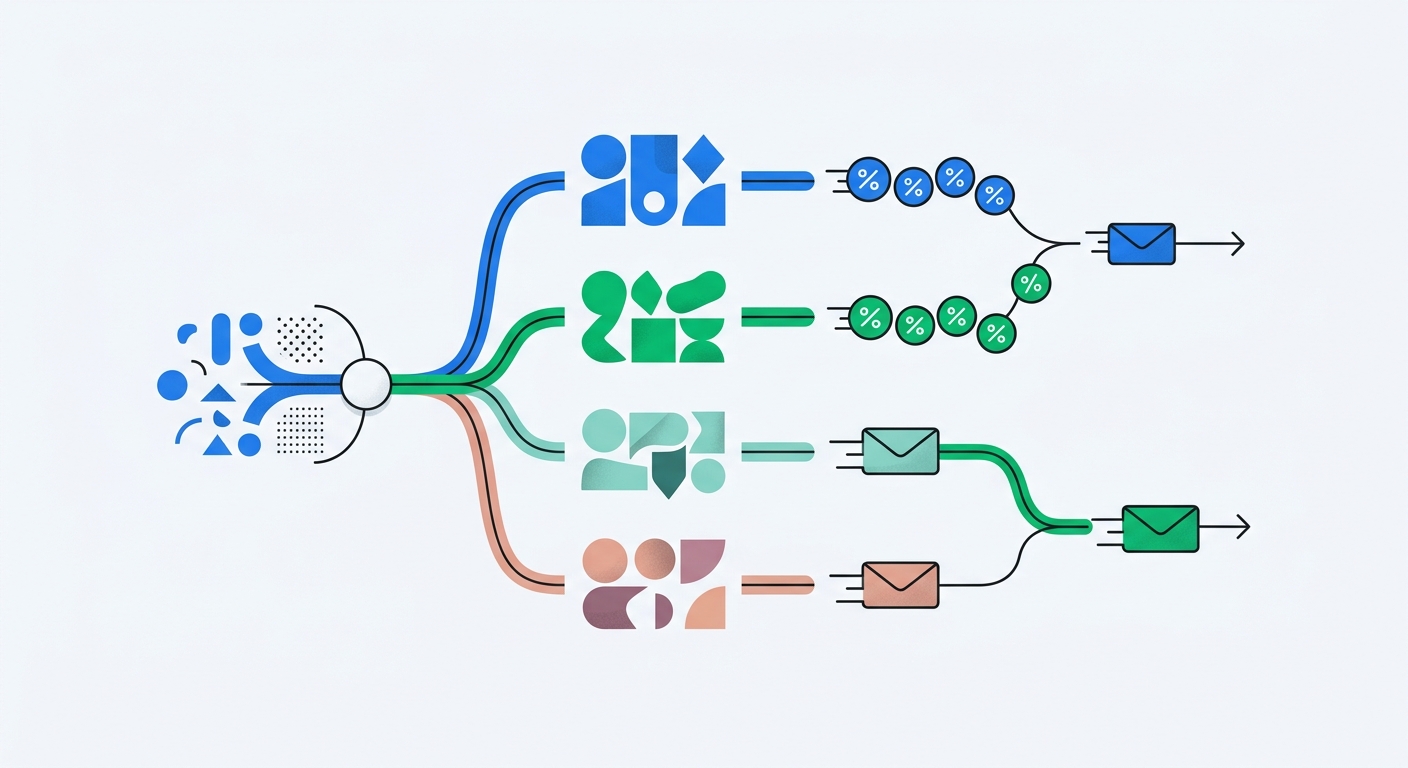
After the shopper answers, you reveal a Shopify discount code and optionally collect email, route them to a product page, or tag the response for follow-up.
That is the important shift. The popup is no longer just a lead capture form. It becomes a lightweight research and conversion layer.
This is where popup surveys for Shopify are more useful than standard email popups. You are not asking for contact information in a vacuum. You are learning intent at the exact moment a shopper is deciding whether to bounce, browse, or buy.
Why this converts better than a generic email popup
A normal email-for-discount popup optimizes for one event: email capture.
A survey-triggered discount popup can optimize for multiple outcomes at once:
- immediate conversion
- email capture
- zero-party data collection
- audience segmentation
- objection discovery
That usually makes it more valuable even if raw signup volume is a little lower.
And honestly, raw signup volume is often a vanity metric anyway. A list full of coupon grazers is not a growth strategy.
The exchange feels fairer
When a shopper answers a question before receiving the code, the discount feels earned. That makes the interaction feel less spammy and more intentional.
The brand gets context. The shopper gets value. Fair trade.
The question creates micro-commitment
A one-question step can increase completion quality because the visitor has already engaged. They are no longer just dismissing or grabbing a code. They are participating.
That micro-commitment matters, especially on mobile where a form field can feel like work but a tap on one of three answers feels easy.
The answer gives you a reason to personalize
If the shopper says they are buying for sensitive skin, gifting, comparing options, or waiting for payday, that should affect what happens next.
The popup should not be a dead end. It should inform the next experience.
For a broader zero-party data strategy, Zero-Party Data for Ecommerce covers why declared preferences usually outperform inferred guesses.
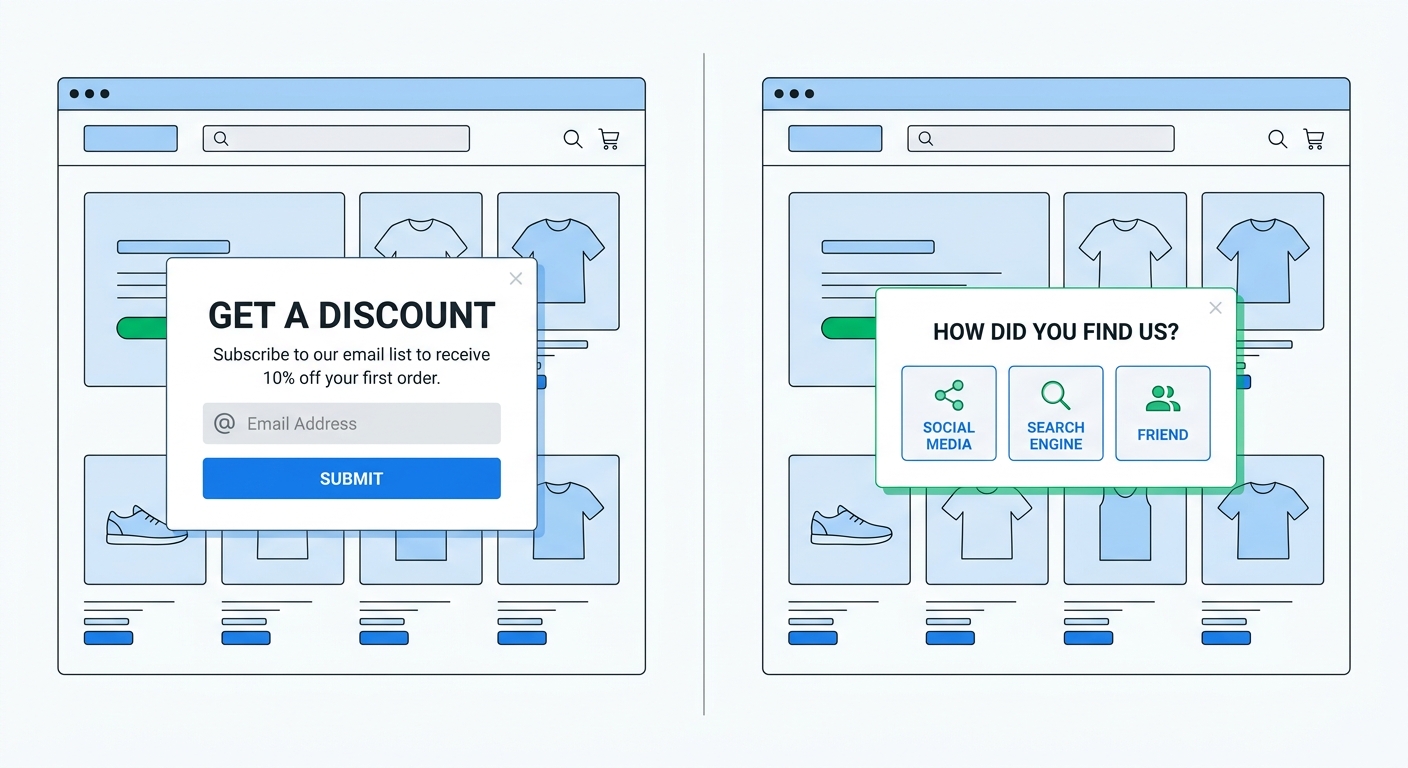
Where the standard 10% popup falls apart
The classic discount popup has four problems.
1. It collects weak data
An email address alone tells you almost nothing.
You still do not know:
- what the shopper wants
- why they hesitated
- whether they are high intent or just coupon hunting
- what message would move them to buy
2. It encourages discount dependence
If every visitor gets the same offer instantly, you condition people to wait for it. That is bad margin discipline and bad brand behavior.
3. It pollutes your CRM
Many popup leads never intended to buy. They wanted the coupon, not the relationship.
That hurts lifecycle marketing because your welcome flow gets stuffed with low-context subscribers and your segments stay fuzzy.
4. It does not improve the onsite experience
A normal popup captures data and ends there. A good survey popup should help you change what the visitor sees next, what code they get, or what email sequence they enter.
That is the real upgrade.
Best survey questions to use before revealing a discount
You do not need a long form. In fact, a long form is a good way to tank response rates.
One question is often enough. Two is the upper limit for most stores.
The best questions do one of three jobs:
- reveal intent
- identify friction
- qualify audience
Question type 1: purchase intent
Examples:
- What are you shopping for today?
- Which best describes your goal?
- What matters most in your decision?
These help you route the shopper toward the right product category, collection, or education path.
Question type 2: friction or objection
Examples:
- What almost stopped you from ordering?
- What do you still want to know before buying?
- Which concern matters most right now?
These are excellent because they expose the exact hesitation behind the session. That can inform both your conversion design and your retention messaging.
Question type 3: segment qualifier
Examples:
- Is this your first order with us?
- Are you shopping for yourself or someone else?
- Which of these best describes you?
These are useful when you want different welcome experiences, different offers, or different follow-up flows.
If your store has multiple customer types, this is dramatically better than pretending every lead should enter the same automation.
How to structure the popup without killing conversion rate
The safest structure is this:
- Trigger the popup based on behavior, not instantly on page load.
- Ask one low-friction question.
- Reveal the discount code immediately after the answer.
- Optionally collect email in the same step or the next step.
- Pass the answer into your email and analytics stack.
That order matters.
If you ask for too much too soon, the popup feels like homework. If you reveal the discount too late, people bail. If you collect an answer but never use it, you are wasting the signal.
Trigger timing matters more than people think
Do not fire the popup the second someone lands.
Better triggers include:
- 20 to 45 seconds on page
- 40 to 60 percent scroll depth
- exit intent on desktop
- second page view
- arriving on a high-intent collection or product page
The question should feel contextually timed, not ambushy.
If you want a deeper comparison of popup mechanics, Popup Surveys vs. Email Popups breaks down why asking a question often performs better than asking for an address.
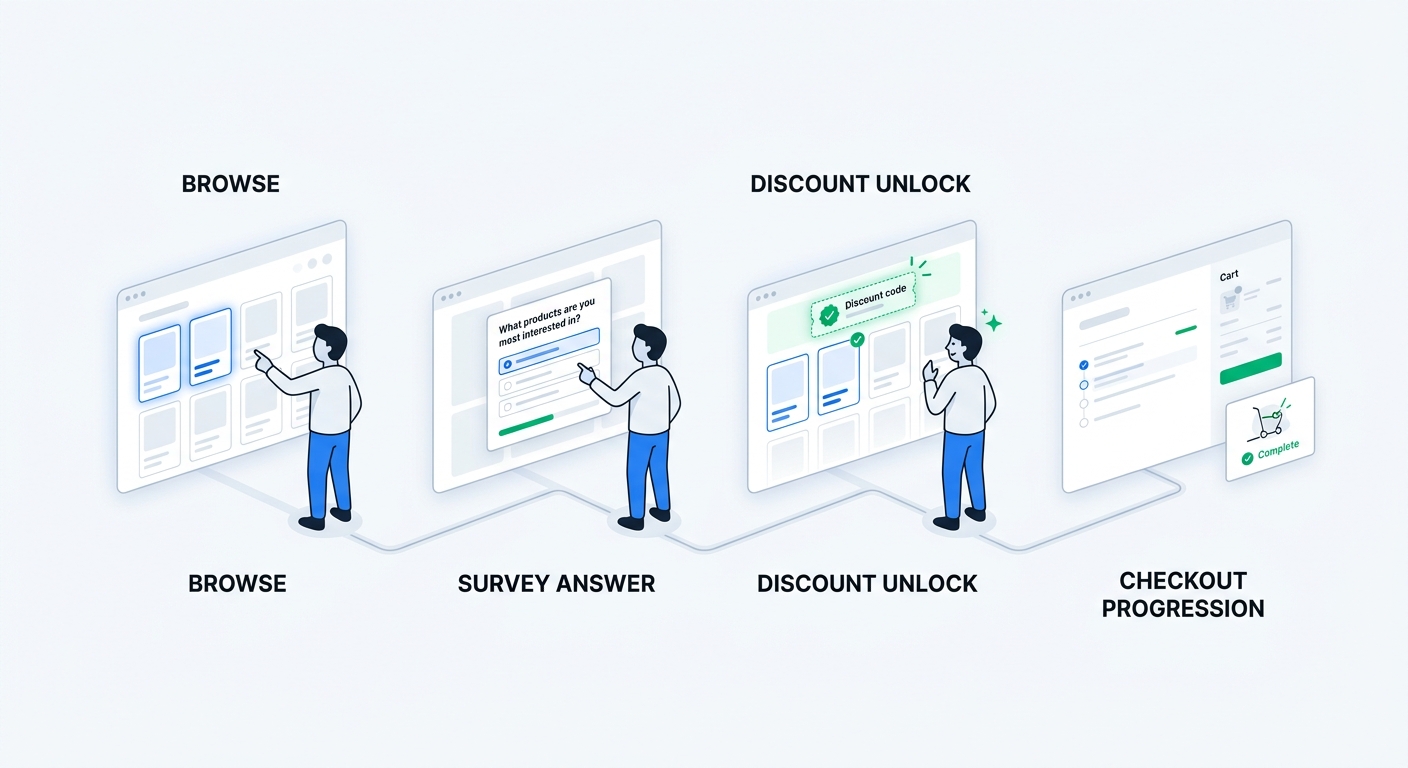
The real win is what happens after the answer
This is where most brands screw it up.
They collect responses, maybe glance at them later, and keep running the same generic flows.
No. Use the answer.
Personalize the first email
If the answer says the shopper cares most about sizing, ingredients, product compatibility, or gifting, your first email should reflect that.
Not in a creepy way. In a useful way.
Tailor the onsite path
After submission, direct the shopper to:
- a relevant collection
- a best-seller page for their use case
- a product education page
- a bundle or starter set
Improve your conversion diagnosis
After a few hundred responses, you will know whether your biggest barrier is price, trust, fit, shipping, product confusion, or timing.
That can influence:
- landing page copy
- offer structure
- FAQ placement
- review placement
- product merchandising
- paid ad messaging
That is why survey popups are not just a list-growth tool. They are a conversion research tool with revenue upside.
Feed the data into downstream segmentation
This is especially useful if you also run post-purchase surveys. Pre-purchase popup answers tell you what the shopper expected. Post-purchase answers tell you why they bought and whether the experience matched that expectation.
When both are connected, your lifecycle stack gets much smarter.
What kinds of offers work best with survey-triggered popups
It does not have to be 10% off.
Depending on your category, better offers might be:
- fixed dollar discount for higher AOV stores
- free shipping
- gift with purchase
- bundle unlock
- first-order discount only for qualified shoppers
The point is not to spray discounts everywhere. The point is to make the reward fit the economics of the store and the intent of the visitor.
This is another reason the survey format wins. You can use the answer to decide whether the person should even get the same offer as everyone else.
For example:
- first-time shoppers get a stronger incentive
- repeat visitors get a smaller nudge plus reassurance
- gift buyers get deadline and shipping guidance
- high-consideration shoppers get education before offer emphasis
That is a much smarter system than flat discounts for all.
When this strategy works best
Survey-triggered discount codes tend to work especially well for:
- stores with multiple product use cases
- brands that need education before purchase
- stores with frequent first-time traffic
- merchants trying to collect zero-party data without long quizzes
- brands frustrated by low-quality popup leads
They are also strong for stores that want to stop relying on just one blunt conversion tactic.
If your brand already offers a discount, you may as well learn something useful while doing it.
Common mistakes to avoid
Asking too many questions
One question is enough most of the time. Two if you are very disciplined. Beyond that, friction climbs fast.
Using bad answer choices
If your multiple-choice options are vague or self-serving, the data will be garbage.
Write answers that reflect real shopper language.
Showing the same follow-up to everyone
If every respondent sees the same path, you are not really using a survey. You are just putting a decorative question in front of a coupon.
Hiding the reward too aggressively
The shopper should clearly understand that answering unlocks the offer. Make the value exchange obvious.
Never reviewing the response data
If you are not looking at answer patterns weekly, you are missing the strategic value. This data should influence both marketing and merchandising decisions.
Why UserLoop fits this use case unusually well
A lot of popup tools can show a form. That is not impressive.
The useful part is what happens around the form.
UserLoop is strong here because merchants can combine popup surveys, discount incentives, segmentation, and deeper survey analysis in the same system. Instead of stitching together one popup app, one form app, one discount tool, and one separate feedback platform, you can run the workflow in one place.
That matters operationally.
It also matters analytically because your survey answers do not get stranded in some forgotten popup dashboard. They can become part of a broader customer feedback and conversion strategy.
If you want to see how the popup format works, start with UserLoop popup surveys. If you want the full Shopify app listing, it is here: https://apps.shopify.com/userloop-reviews-feedback.
The practical setup to start with this week
If you want the simplest version, use this.
Popup question: What is stopping you from ordering today?
Answer choices:
- I want a better price
- I am not sure which option is right
- I want to understand how it works
- I am just browsing for now
Reward: Unlock 10% off or free shipping
Follow-up logic:
- better price → show code and highlight best-value bundle
- not sure which option is right → show code and route to comparison or quiz page
- want to understand how it works → show code and route to explainer content
- just browsing → show lighter follow-up and avoid over-aggressive email pressure
That alone is already more intelligent than the average email popup on Shopify.
Then iterate from response data.
Final take
The usual email-for-discount popup is not dead, but it is badly overrated.
A survey-triggered discount code gives you the same conversion lever plus something much more useful: context.
And context is what lets you improve offers, personalize follow-up, diagnose friction, and make your discount strategy less blunt.
That is the whole game. Do not just buy an email address. Learn why the shopper is hesitating, then use that answer to help them move.
If you want to build this on Shopify, UserLoop lets you run popup surveys, collect zero-party data, and pair survey completion with discount incentives in one workflow. See the popup survey overview at pages.userloop.io/popups or install the Shopify app here: https://apps.shopify.com/userloop-reviews-feedback.


The agentic growth toolkit for Shopify
Ask your customers anything
UserLoop talks to your customers at scale with surveys and contests that feed one AI-queryable dataset. AI does the setup and the analysis.
- SurveysFind out why customers buy: checkout, email, link & QR.
- ContestsGiveaways that grow your list and social following.
Free plans on both apps · live in minutes