How to Optimize Your Use of Zero-Party Data
Zero-party data is one of the most important ways to get to know your customers today. It offers insight into customer preferences and choices and helps your online store brand better serve its audience. After all, if you don't know your customers and don't cater your products and services to their needs, you won't have a business for long.
Here at UserLoop, we know that getting answers to important marketing questions is essential, and even more important is getting that information directly from the customers themselves. This article will review what zero party data is, how to gather it, and what it can do for your business.
What is zero party data?
When running an online store, there are several ways to obtain information and insight about your customer base and their individual preferences. Data collection allows for varying levels of granularity when it comes to this information, and there are typically three types of data that business owners can leverage:
First-party data: This behavioral data reflects an individual's use of the website or app. It includes insights about their clicks, purchase history, depth, hovering, scrolling, and time spent on any page. By understanding how a user performs on a given website, business owners can learn that individual's preferences and needs, as well as the functionality of the website in that context.
Third-party data: This type of data is obtained from sources or websites other than your own and provides contextual information about a given consumer's demographics or buying signals. The downside? Since the data is not your own, its validity and quality can be questionable when you don't know the sources.
Zero-party data: This is data that a customer has intentionally and actively shared with your brand. It includes their preferences, purchase intentions, personal contexts, and interests and is obtained by asking consumers questions, directly.
The key difference between first-party data and zero-party data is that customers directly provide zero party data to you by answering questions. In contrast, first party data is inferred from their behaviour.
Why is it important?
Zero party data is essential in the current eCommerce world, as it offers a unique set of insights and features that set it apart in value from first- or third-party data. With zero party data, you benefit from it being:
Accurate: Because the customer provided the information, you can be confident that it is accurate and reflects their true response. Unlike first-party data, which is mainly based on inferences, or third-party data, where the source of information is possibly questionable, you know exactly where the information came from with zero party data.
Consensual: Customers are increasingly skeptical of data collection practices, and culture is moving toward evaluating personal data privacy. With zero party data, customers are willingly providing useful information. In turn, you are respecting their privacy and working in line with increasingly restrictive data privacy laws, like the GDPR in the EU.
In-depth: Because you are getting the information directly from the customer, you can expect to gain more insight than you may have from other data types. You can learn more granular personal stories and contexts as well as preferences and wish lists.
In exchange for offering their data, customers often expect something in return since they are doing your brand a favor. Your brand can provide benefits in the form of a coupon, discount, or small added item in their next order as a gesture of gratitude for their information.
How can you collect zero party data?
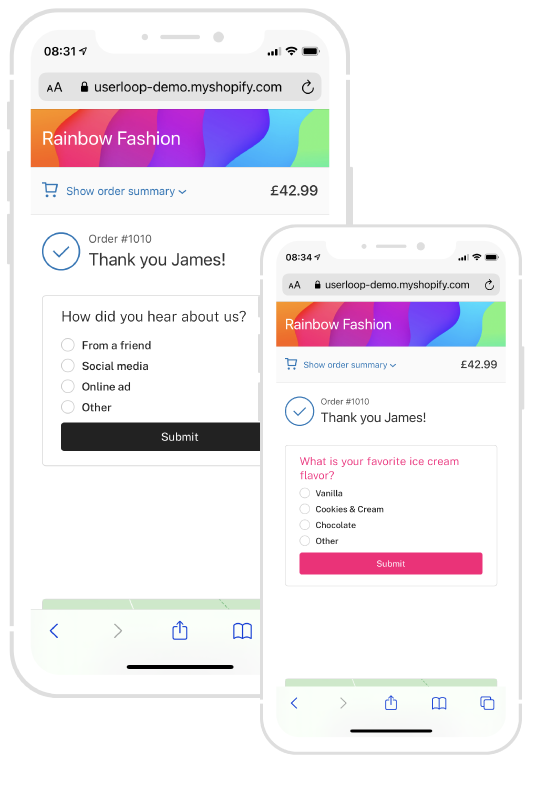
Unlike first-party data, collecting zero-party data does not require complex coding or data analysis. Brand owners and teams can collect zero party data in a way that is simple, engaging, code-free, and interactive. This can include quizzes, surveys, forms, and calculators about product preferences, buying intentions, communications preferences, and newsletter sign-ups.
What can zero party data do for your online store brand?
With this influx of primary source data, your eCommerce brand enters a world full of options for growth and improvement. From product offerings to site functionality, brands have a lot to learn from zero-party data.
Improve data quality
Instead of patching together information obtained through a combination of first-party data behavioral insights and third-party data that may or may not be accurate, you can tailor your data collection to answer the questions you need the most. You can collect direct insights about your brand's essential issues and gather suggestions from customers rather than making inferences from spotty data passed down to you.
Create personalized campaigns
Using your new insights, you will be able to cater your campaigns to the exact needs of your customer base. Rather than relying on purchase history and web engagement behaviors, you will know exactly what your customers want and be able to provide that to them by building services, products, and offerings that are personalized to your customer requests. Plus, you can cater your email newsletter to target various segments who have identified similar interests and develop a marketing product that customers will read, use, and value.
Inventory management and forecasting
With knowledge of what kind of products people are looking for, you can determine how to stock your store accurately and build future options that you are confident customers will love. As one of many zero party data examples, if you are an athleisure brand, you can ask your customers if they are looking for matching sets for the gym or clothes to lounge around in at home and use this insight to establish a product line that meets the needs of your audience and develop customer loyalty.
Start gathering useful data with surveys
Quick surveys and polls are the best way to collect zero-party data. Brands can tailor questions around a particular sales problem they are trying to solve and use pages and products that customers click on as a trigger to ask them specific questions about their experience, preference, and intentions.
At UserLoop, we provide a Shopify API that allows you to integrate survey questions into your eCommerce store while providing personal branding options, insightful analytics, and easy-to-access data results. Make the most of the zero-party data opportunity and start building surveys on your website today.


The agentic growth toolkit for Shopify
Ask your customers anything
UserLoop talks to your customers at scale with surveys and contests that feed one AI-queryable dataset. AI does the setup and the analysis.
- SurveysFind out why customers buy: checkout, email, link & QR.
- ContestsGiveaways that grow your list and social following.
Free plans on both apps · live in minutes