HDYHAU Survey: Meaning, Questions & Examples
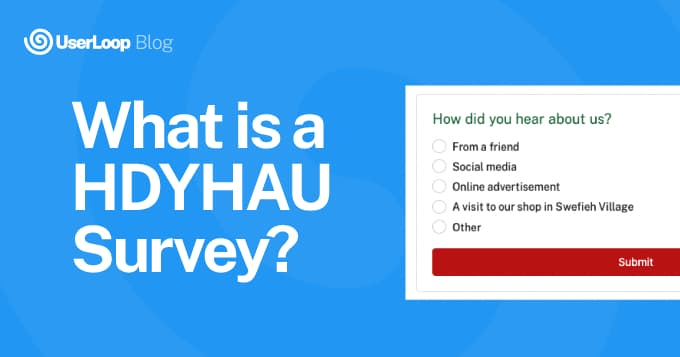
A HDYHAU survey is a “How Did You Hear About Us?” survey. It asks customers to report the source or influence that introduced them to a brand. Ecommerce teams often place it after checkout, when the order is complete and the experience is still fresh.
The answer adds a customer-reported view of attribution. It does not replace click and conversion data. Used together, the two sources help you see channels that tracking may miss and differences between what a platform records and what a customer remembers.
What does HDYHAU stand for?
HDYHAU stands for How Did You Hear About Us? You may also see the method described as a post-purchase attribution survey or self-reported attribution.
A basic question is: “How did you first hear about us?” A second, optional question can ask which source had the greatest influence on the purchase. Those are different ideas. “First heard” identifies discovery; “most influential” identifies the touchpoint the customer credits with helping them decide.
HDYHAU answer options
Start with the channels customers can realistically recognize. Keep the list short enough to scan and include an open option for sources you did not anticipate.
- Google or another search engine
- TikTok
- YouTube
- A friend or family member
- An influencer or creator
- Podcast, newsletter, or publication
- Retail store, event, or offline advertising
- Other (please specify)
Use names customers understand. A shopper may recognize “Instagram” but not your internal campaign taxonomy. Keep UTM, ad set, and campaign detail in analytics; use the survey for the human answer.
Where to place a How Did You Hear About Us survey
The Shopify thank-you or order-status experience is a strong default because the purchase is complete, the question is relevant, and the answer can be linked to the order. Keep the first question easy to complete on mobile.
Other placements can answer different questions:
- Pre-purchase popup: reaches visitors before conversion, including people who do not buy.
- Post-purchase email: gives more room for follow-up but introduces delay and email non-response.
- Customer account or link survey: supports later research with a known customer group.
Do not combine results from different placements without labeling the method. The audience and timing can change the response pattern.
How to analyze HDYHAU responses
- Normalize open text. Group “Insta,” “IG,” and “Instagram ad” into an inspectable channel without deleting the original response.
- Keep first-touch and influence separate. A podcast may introduce the brand while search closes the purchase.
- Join answers to order context. Compare response count, revenue, average order value, products, and repeat behavior without treating correlation as causation.
- Review changes over time. Keep question wording and choices stable when you want a trend, and record when the list changes.
- Inspect “Other.” Repeated open answers are candidates for a future named option.
Common HDYHAU survey mistakes
- Showing every campaign or platform in one overwhelming list
- Removing “Other” and forcing an inaccurate answer
- Changing choices frequently without noting the break in the trend
- Treating customer memory as a perfect record of every touchpoint
- Treating platform attribution as a perfect substitute for the customer’s account
- Comparing raw response counts without considering order or customer volume
HDYHAU survey template
Question 1: How did you first hear about us?
Question 2: Which source had the greatest influence on your decision to buy today?
Optional follow-up: What do you remember seeing or hearing?
Use UserLoop’s free survey question generator to adapt the wording, or explore the Shopify post-purchase survey platform to link responses with order context and analyze open text.
Reviewed 4 August 2026 by the UserLoop editorial team.


The agentic growth toolkit for Shopify
Ask your customers anything
UserLoop talks to your customers at scale with surveys and contests that feed one AI-queryable dataset. AI does the setup and the analysis.
- SurveysFind out why customers buy: checkout, email, link & QR.
- ContestsGiveaways that grow your list and social following.
Free plans on both apps · live in minutes