Self-Reported Attribution vs UTM Tracking: When to Trust What
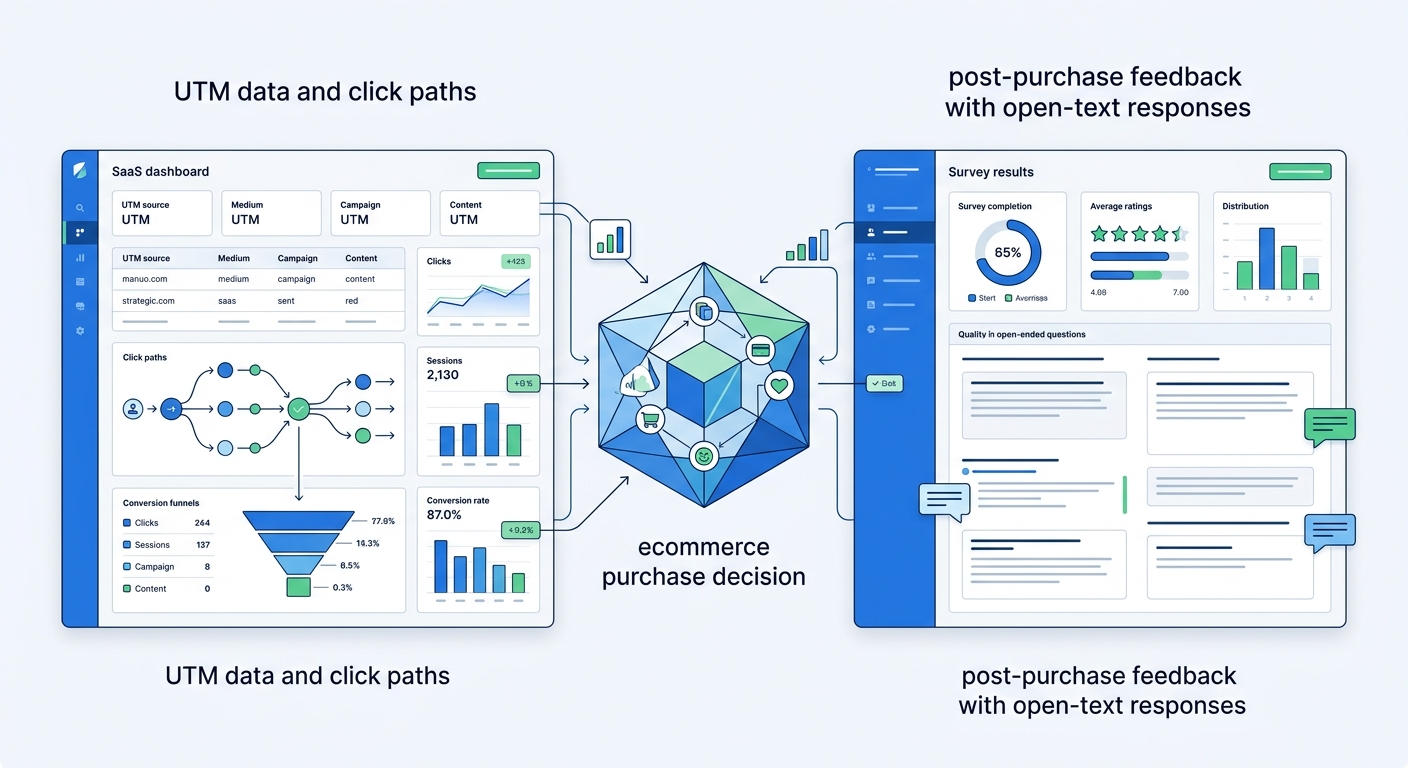
Most attribution arguments are fake fights.
Self-reported attribution is not trying to replace UTM tracking. UTM tracking is not trying to explain human memory. They answer different questions, break in different ways, and get dangerous when you ask either one to do a job it was never built for.
If you run a Shopify store, here's the short version:
- UTMs tell you what link was clicked
- Self-reported attribution tells you what the customer remembers influencing them
- Neither one is the full truth on its own
- If they disagree, that disagreement is usually the insight
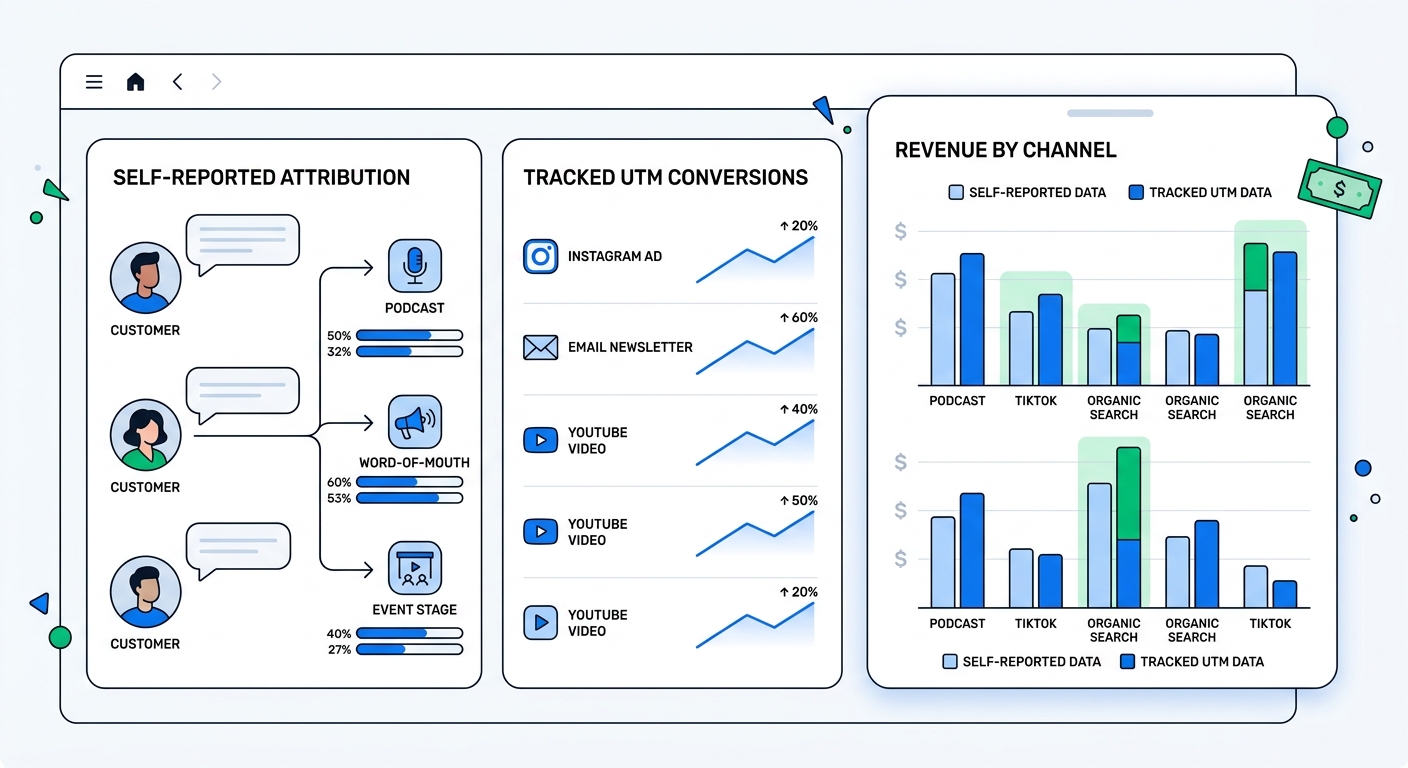
That last point matters. When a customer says they found you through a podcast, but your analytics says Google branded search, your data is not broken. Your customer heard about you on the podcast, then Googled you later. The podcast created demand. Search captured demand. Both things happened.
What UTM tracking is actually good at
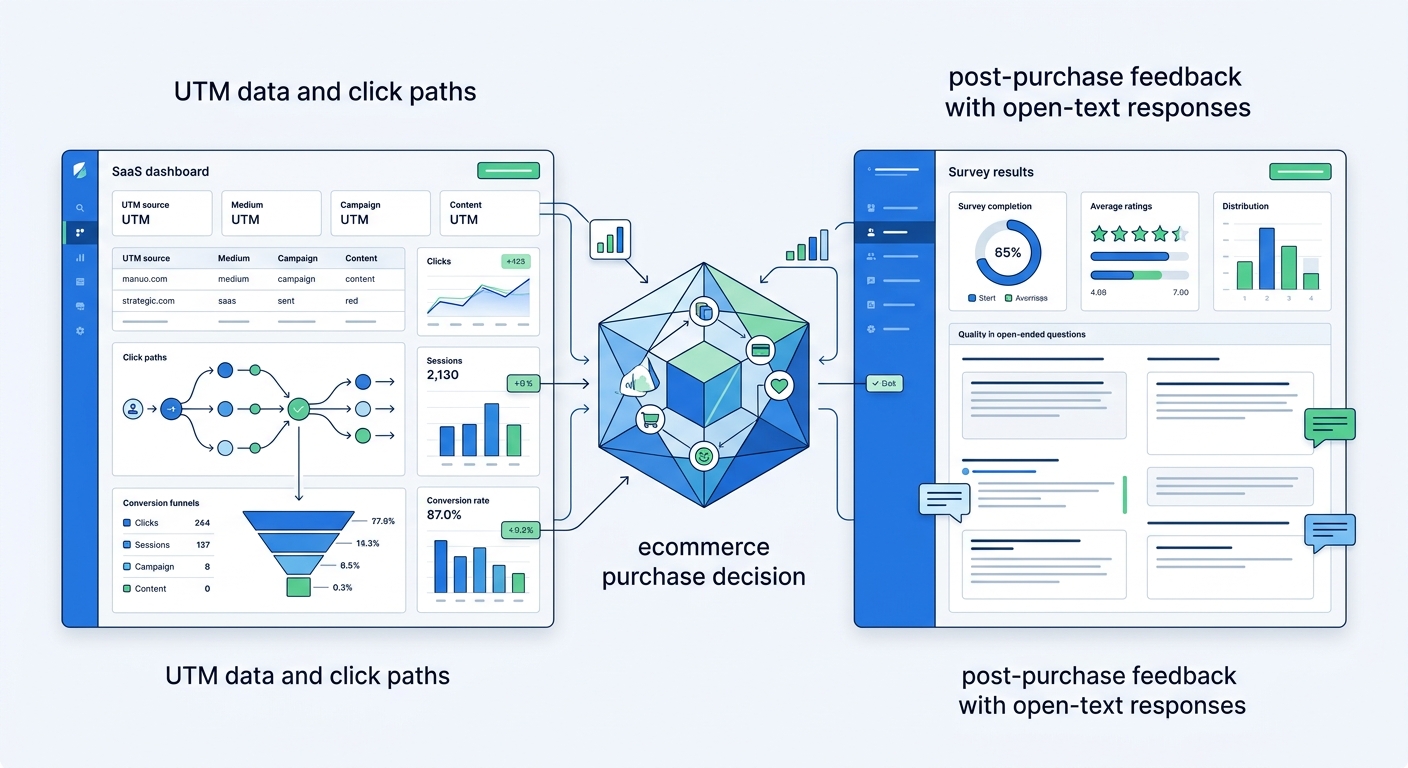
UTM tracking is brutally useful when you need operational clarity.
You add parameters to a link, somebody clicks it, your analytics platform records the source, medium, campaign, and sometimes content variation. That makes UTMs excellent for questions like:
- Which email campaign drove more purchases?
- Which Meta ad creative generated more sessions?
- Which affiliate link converted best?
- Which landing page variant produced more revenue from the same traffic source?
This is execution data. It helps you compare campaigns, creatives, placements, and links. If you spend money on paid acquisition, UTMs are mandatory.
They're also narrow. UTMs only know about the tracked click that happened. They do not know what made the person care in the first place.
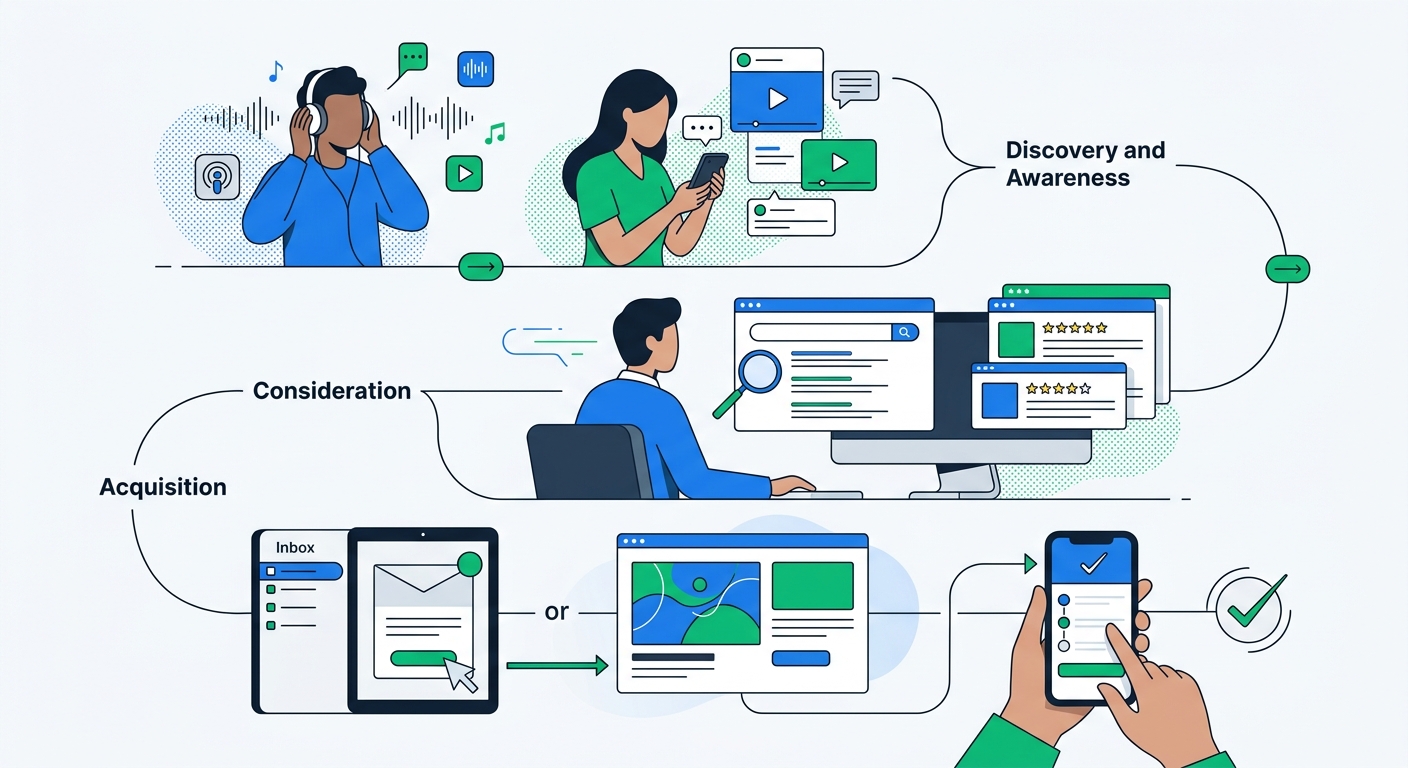
A customer might:
- Hear about your brand on a podcast
- See your product in a friend's kitchen
- Watch two TikTok reviews
- Get retargeted on Instagram
- Google your brand name
- Click an email two days later
- Purchase
Your UTM data will happily credit the email or the retargeting click. That's not fraud. It's just scope. UTM tracking records the tracked interaction, not the entire decision journey.
What self-reported attribution is actually good at
Self-reported attribution fills the gap left by click tracking.
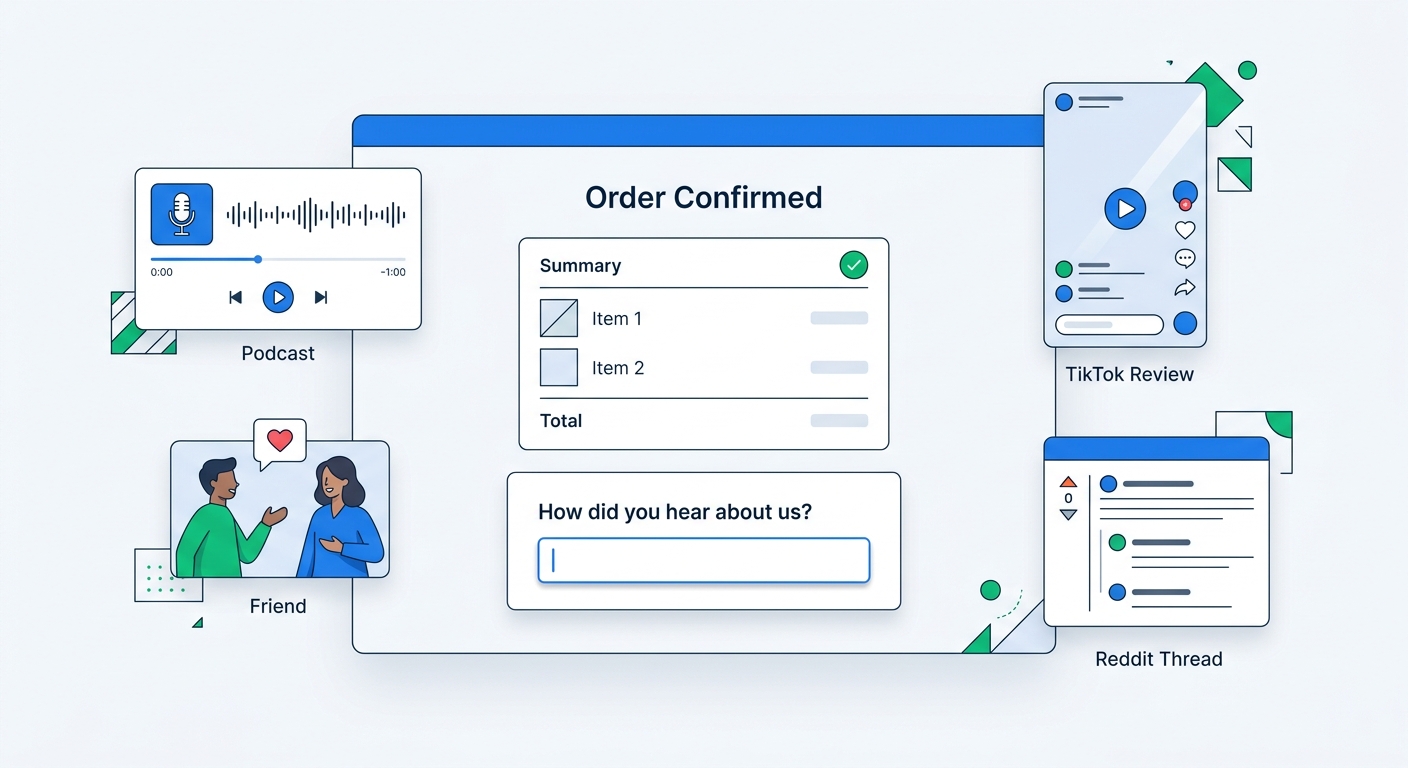
You ask a customer something like "How did you hear about us?" after purchase, ideally in open text. They tell you what they remember: a friend, a creator, a podcast ad, a Reddit thread, a Google search, a retail shelf, a newsletter mention.
That gives you access to channels analytics routinely misses:
- Word of mouth
- Podcasts
- Creator mentions without tracked links
- Organic social discovery
- PR and press mentions
- Offline retail or events
- Community posts in Slack, Discord, Reddit, and Facebook groups
This is why post-purchase attribution surveys are so useful. They capture demand creation, not just demand capture.
They're also messy. Customers forget things. They simplify. They misremember sequence. They say "Instagram" when it was actually a creator's TikTok reposted to Instagram Stories. They say "Google" when they mean they searched your brand after hearing about you elsewhere.
So self-reported attribution is not precise click data. It's directional influence data. Used correctly, that's incredibly valuable.
The real difference: click capture vs demand creation
This is the cleanest way to think about it.
UTM tracking is best at measuring demand capture. It tells you which tracked touchpoint converted an already interested person.
Self-reported attribution is best at measuring demand creation. It tells you what put your brand in the customer's head in the first place.
Those are not the same thing.
For a lot of Shopify brands, especially ones selling products with any consideration cycle at all, the highest-impact marketing work happens before the trackable click. That's why brands often overinvest in retargeting and underinvest in creator partnerships, podcast sponsorships, or referral systems. The click-based tools make the capture channels look smarter than the demand-generation channels that fed them.
If your attribution model only trusts tracked clicks, you end up funding the bottom of the funnel and starving the top and middle. Then everyone acts shocked when branded search and retargeting performance eventually flatten.
When to trust UTM tracking more
There are situations where UTM data should win the argument.
1. Comparing controlled campaign performance
If you want to know whether Email A outperformed Email B, or whether one paid social ad beat another, trust the tracked data first. Customers are not going to accurately remember which campaign variant they clicked.
2. Measuring short-path conversions
For low-consideration purchases, especially impulse buys, the click often is the story. If someone sees an ad, clicks it, buys in the same session, UTM data is probably your clearest source of truth.
3. Evaluating landing page and creative tests
A/B testing lives on clean event data. Self-reported attribution is too fuzzy for comparing a headline change or CTA variant. Use UTMs, session data, and conversion data here.
4. Auditing partner and affiliate links
If there's a specific link, code, or referral URL involved, track it. Do not replace deterministic link data with a memory-based survey answer.
In short, when the question is which tracked asset or click path performed better, trust UTMs more.
When to trust self-reported attribution more
There are also situations where survey data tells the truth your analytics stack can't see.
1. Word of mouth and dark social
A friend texts a link. A customer sees your product at someone else's house. A niche Slack group recommends you. None of that reliably shows up in UTMs.
If customers keep saying they heard about you from friends or communities, believe them.
2. Podcasts, creators, and PR
These channels create tons of assisted demand that shows up later as branded search, direct traffic, or unattributed sessions. If customers mention them repeatedly, that's not noise. That's the signal.
3. Longer buying journeys
The longer the consideration window, the less useful last-click style data becomes as a full explanation. Customers might discover you through one channel, research through another, and convert through a third.
4. Strategic budget allocation
If you're deciding whether to keep sponsoring podcasts, invest in creator seeding, or build a referral loop, self-reported data is often more useful than raw UTM dashboards. It helps you see what is causing awareness, not just harvesting it.
In short, when the question is what influenced this customer before the click, trust self-reporting more.
Where both methods break
Neither system is pure. Here's where people get burned.
UTM failure modes
- UTMs get stripped or overwritten
- Links are inconsistently tagged
- Apps and platforms create attribution fragmentation
- Last-click reporting gets treated like full-funnel truth
- Branded search absorbs credit from upper-funnel channels
- Retargeting looks stronger than it really is because it arrives late in the journey
Self-reported attribution failure modes
- Customers round off details into simpler answers
- Memory gets worse as the delay increases
- Open-text responses are messy and hard to categorize manually
- Some customers answer with the last thing they remember, not the first influence
- Multiple meaningful influences get compressed into one short answer
This is exactly why one-question surveys need AI analysis instead of spreadsheet cleanup. If you collect hundreds of responses, manual tagging falls apart fast. Different people bucket the same answer differently, and you lose consistency.
UserLoop's AI channel grouping is useful here because it turns messy open-text responses into clean channel buckets without forcing you into rigid multiple-choice options from the start. That's the right order: let customers answer naturally, then structure the mess afterward.
What disagreement between the two datasets usually means
This is the part most teams miss.
When self-reported attribution and UTM tracking disagree, don't pick one and throw out the other. Read the gap.
Here are common patterns:
Survey says podcast, UTMs say branded search
The podcast created awareness. Search closed the loop.
Survey says friend or coworker, UTMs say direct or none
Word of mouth drove the visit. Analytics had nothing trackable to grab onto.
Survey says TikTok, UTMs say email
TikTok created interest earlier. Email converted the already interested buyer.
Survey says Google, UTMs say Meta retargeting
The customer may have seen your ad, ignored it, then later searched your brand and bought. Or they may be simplifying the path and just remembering the search moment.
None of these are contradictions in the useful sense. They're partial views of the same journey.
If a channel shows up disproportionately in self-reported responses but weakly in UTMs, that's often an upper-funnel or demand-generation channel. If a channel dominates UTM conversions but barely appears in self-reporting, it's often acting more as a closer than a discoverer.
That distinction is gold when you're trying to decide where to cut or scale spend.
The practical Shopify setup that works
If you want sane attribution, do this.
1. Keep UTM hygiene boring and strict
Use a consistent naming system for every paid, email, affiliate, and partner link. Sloppy UTM conventions create fake complexity and garbage reporting.
2. Ask one open-text question after purchase
Use "How did you hear about us?" on the order status page or in the immediate post-purchase flow. One question, open text, minimal friction. That's usually enough to uncover what your click tracking misses.
If you want setup details, this guide on how to run a "How did you hear about us?" survey covers the mechanics.
3. Group survey responses into clean channels
Do not leave attribution answers as a pile of raw text forever. Normalize them into channels like word of mouth, paid social, organic social, podcast, creator, search, email, retail, and community.
4. Compare survey channels against tracked conversion channels monthly
You are looking for mismatches.
- Channels that create awareness but don't get click credit
- Channels that harvest conversions but rarely create discovery
- Budget allocations that no longer match reality
5. Tie attribution to revenue, not just response counts
A channel that drives fewer customers but much higher AOV can matter more than the channel with the biggest volume. Revenue-aware analysis changes the decision.
If your survey data is connected to order value, you can see whether word-of-mouth customers spend more, whether creator-sourced customers repeat more often, and whether paid social is actually bringing in your best buyers.
A simple decision framework
Use this when numbers clash.
Trust UTM tracking first when:
- You are comparing ads, emails, creatives, or landing pages
- You need deterministic link-level reporting
- The buying journey is short and click-to-purchase is immediate
Trust self-reported attribution first when:
- You want to know what created awareness
- You suspect dark social, word of mouth, creators, podcasts, or PR matter more than analytics shows
- The customer journey is long or multi-touch
Trust both most when:
- You are trying to separate discovery channels from closing channels
- You are deciding where to reallocate budget across the full funnel
- You want a realistic picture instead of a neat but misleading dashboard
The mistake to avoid
The biggest attribution mistake is not "using the wrong model."
It's pretending one dataset is complete because complete feels comforting.
UTMs are cleaner, so teams overtrust them. Self-reported data sounds human and direct, so some teams swing too far the other way and start ignoring tracking discipline. Both moves are dumb.
Clean click data without customer-reported context leads to underinvestment in real awareness channels. Self-reported answers without tracked performance data lead to fuzzy, hard-to-operationalize decisions.
The smart move is combining them.
Use UTMs to measure what got clicked. Use post-purchase surveys to understand what got remembered. Then compare the two until the actual shape of your funnel becomes obvious.
If you're running attribution surveys on Shopify, UserLoop makes this setup practical: open-text post-purchase questions, AI channel grouping for messy answers, and revenue-aware reporting tied back to orders. If you want to go further, UserLoop's AI chat and MCP workflows let you query your attribution data conversationally instead of wrestling it in spreadsheets.
And if you want the fastest way to test this without rebuilding your stack, start with one question after purchase and keep your UTM tagging clean. That alone will tell you more than most brands learn from six months of dashboard staring.
Try UserLoop on the Shopify App Store if you want to collect self-reported attribution without duct-taping surveys, exports, and manual tagging together.


The agentic growth toolkit for Shopify
Ask your customers anything
UserLoop talks to your customers at scale with surveys and contests that feed one AI-queryable dataset. AI does the setup and the analysis.
- SurveysFind out why customers buy: checkout, email, link & QR.
- ContestsGiveaways that grow your list and social following.
Free plans on both apps · live in minutes