How to Reduce Shopify Return Rates with Customer Feedback
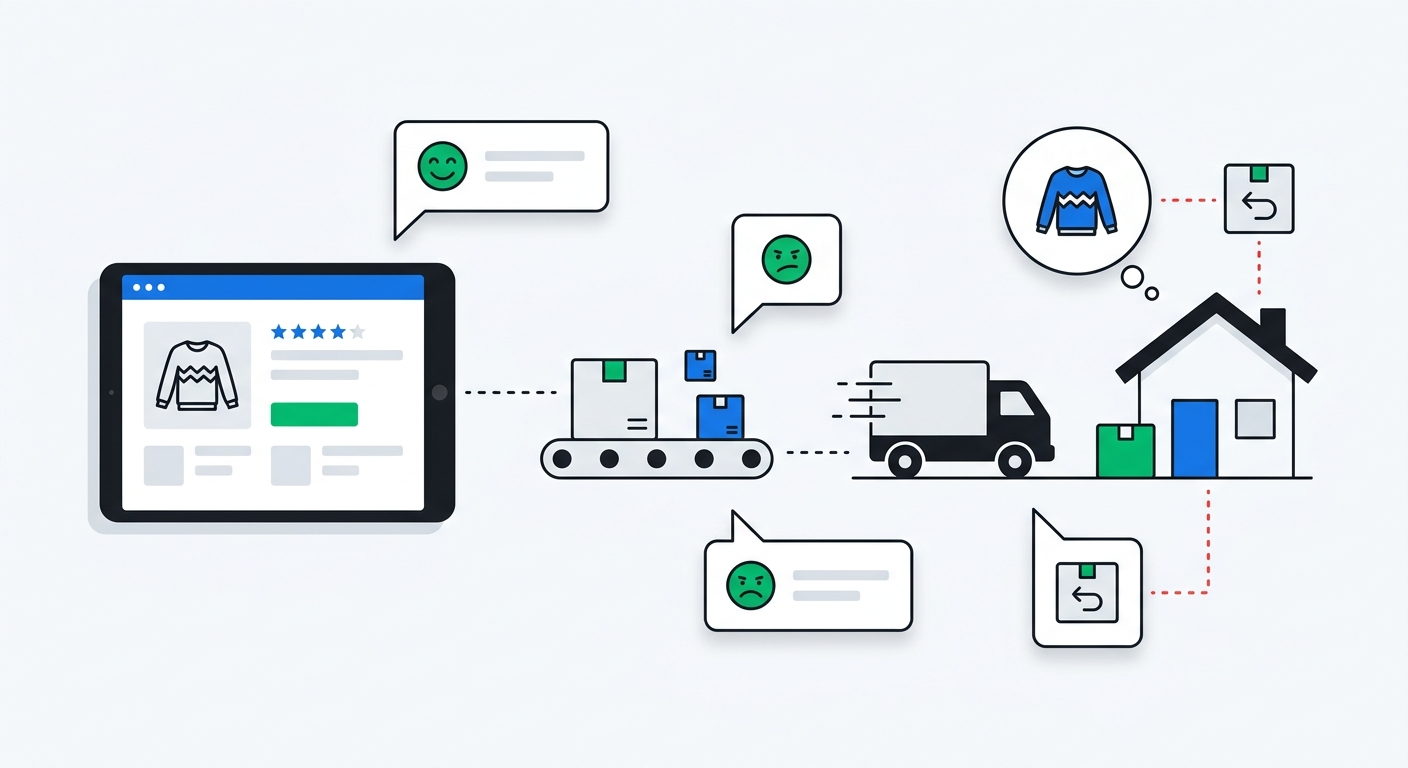
Returns are expensive, but the return itself is usually not the real problem.
The real problem started earlier.
It started when the product page oversold the fit. Or when the sizing guidance was too vague. Or when the customer expected one thing from the photos and got another thing in the box. Or when a discount pushed someone to buy before they were actually confident.
That is why most return-rate conversations go sideways. Teams treat returns like a warehouse issue or a policy issue when they are often a feedback issue.
If you run a Shopify store, customer feedback is one of the fastest ways to reduce return rates because it tells you where buyer expectations broke. Not in theory. In the customer's own words.
In this guide, I'll break down how to use customer feedback before and after purchase to spot return drivers, which questions to ask, which patterns matter, and how to turn survey responses into lower return rates instead of another pile of comments nobody uses.
Why return rates are mostly an expectation problem
Some returns are unavoidable.
A package gets damaged. A customer orders the wrong variant by mistake. Someone impulse-buys and changes their mind. Fine.
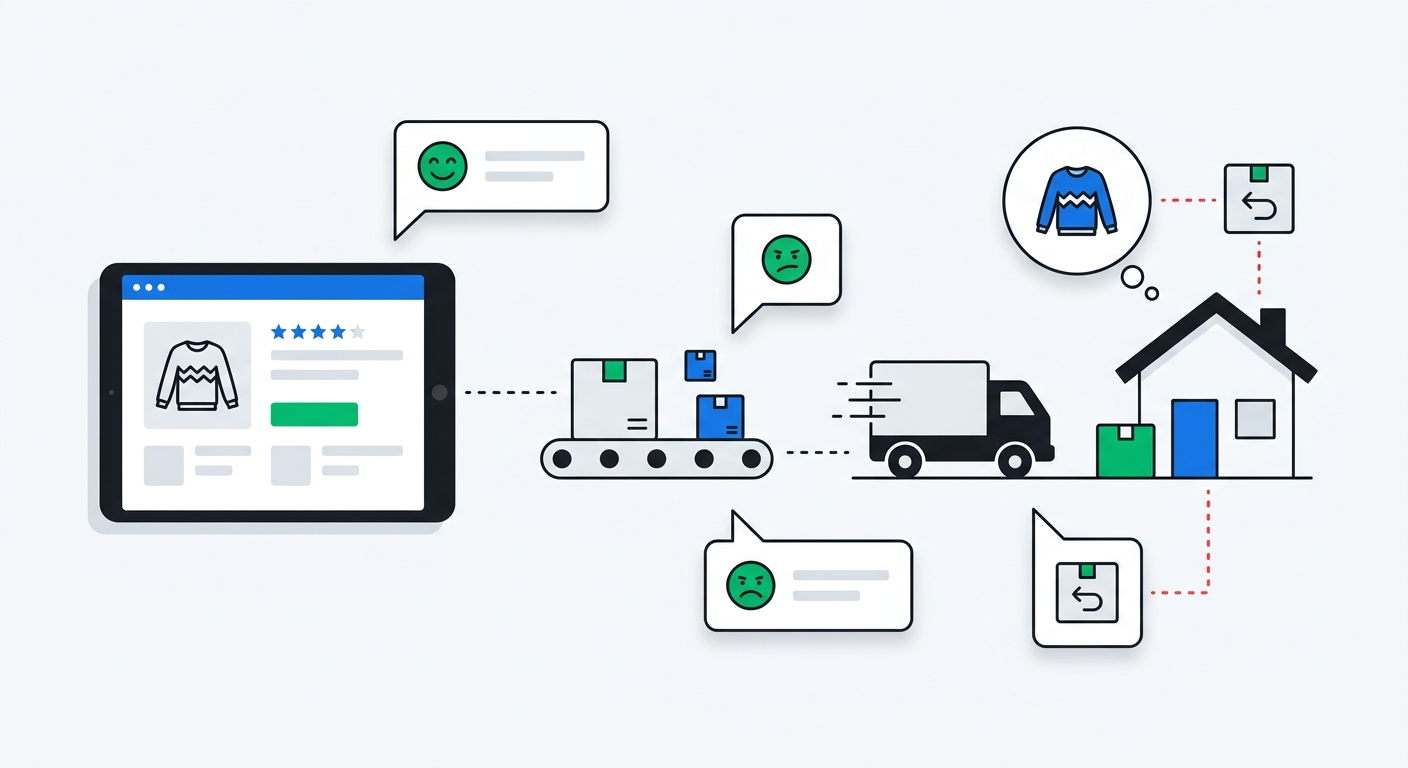
But a huge chunk of returns come from expectation mismatch. The customer thought:
- the item would fit differently
- the material would feel more premium
- the color would look closer to the photos
- the product would solve a problem faster than it actually does
- the size guide was clearer than it really was
- the product was right for them when it wasn't
That matters because expectation problems are fixable upstream.
If you only analyze returns at the policy or SKU level, you see the outcome but not the reason. Customer feedback fills in the gap. It tells you whether the issue is sizing, product education, merchandising, offer structure, or customer fit.
This is also why return reduction should not live only with ops. Marketing, merchandising, CX, and product all own a piece of it.
The smartest place to reduce returns is before the order
Most brands wait until after a return to learn something.
That is backwards.
The cheapest return is the one that never happens because the wrong customer did not buy, or because the right customer bought with clearer expectations.
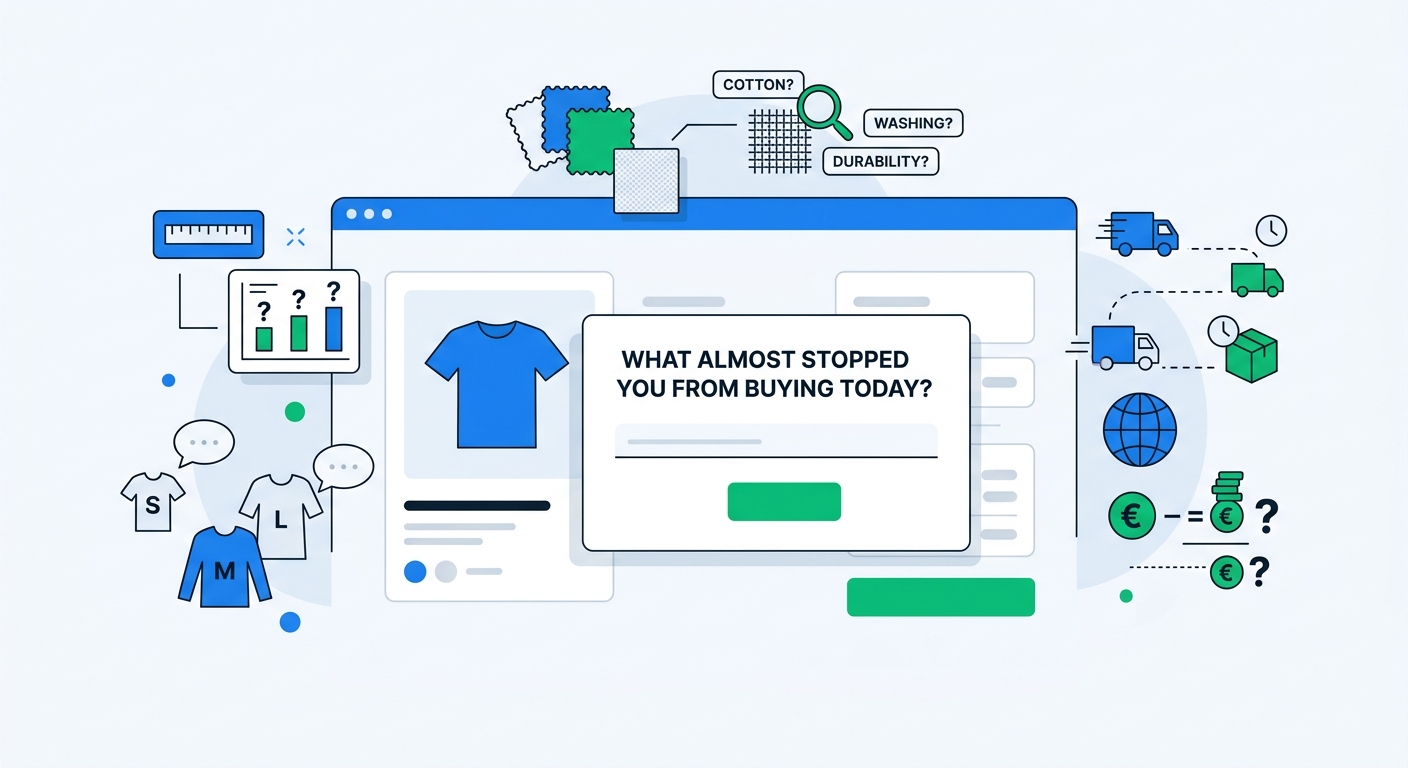
Pre-purchase surveys are useful here because they surface hesitation before checkout. If visitors keep saying they are unsure about fit, ingredients, dimensions, durability, or compatibility, you already have the clue. The return reason is being whispered before the order exists.
A popup survey like "What almost stopped you from buying today?" can tell you more about future return risk than another dashboard full of average return percentages.
This is one reason survey popups for zero-party data are underrated. They're not just for conversion lifts. They're also for filtering demand and learning where your product page is accidentally setting people up to be disappointed.
The four feedback buckets that usually drive returns
Most return reasons look unique at the order level, but they usually collapse into a few repeat themes.
1. Fit and compatibility confusion
This is the classic one.
For apparel, it is sizing. For supplements, it is use case fit. For home goods, it is dimensions. For beauty, it is skin type or shade match. For tech accessories, it is compatibility.
Customers return products when they think, "This is not what I thought it would be for me."
Useful feedback questions:
- What information is missing from this page?
- How confident do you feel that this product is the right fit?
- What almost stopped you from buying today?
If answers cluster around uncertainty, the problem is not just the product. The problem is that your store is allowing low-confidence purchases through.
2. Message-to-product mismatch
Sometimes the product is fine. The marketing is the liar.
Maybe the copy implies instant results when the product takes two weeks. Maybe the photography makes the item look larger, softer, or shinier than real life. Maybe the ad promises an outcome the product only partially supports.
That gap creates returns fast.
This is why post-purchase surveys are so useful. Ask "What convinced you to buy today?" and compare the answers against later return reasons. If the same promise keeps pulling buyers in and the same disappointment keeps pushing products back out, you found the leak.
3. Low-intent discount buyers
Not every sale is a good sale.
If your main conversion mechanic is blunt discounting, you may be training uncertain shoppers to buy before they're ready. That can juice conversion rate and quietly wreck margin later through returns.
A better approach is qualifying intent while offering the incentive. A survey-first discount flow lets you learn what the customer wants before you hand over the code.
That is one reason the survey-for-a-discount model is stronger than the usual email-for-10%-off bribe. It collects intent signals and friction signals at the same time, which helps you spot whether discounts are pulling in the wrong buyers.
4. Post-delivery experience gaps
Some return issues only show up after the box lands.
Examples:
- setup is harder than expected
- material feels different in person
- instructions are weak
- packaging creates a bad first impression
- the product works, but not for the customer's specific use case
These are perfect for follow-up email surveys after delivery. If you ask the right question quickly, you can spot themes before they swell into support tickets and returns.
The feedback system that actually lowers return rates
You do not need a giant research project. You need a simple loop.
Step 1: collect pre-purchase hesitation
Use an on-site survey to capture uncertainty before the sale. Keep it short.
Best options:
- What almost stopped you from buying today?
- What information is missing from this page?
- What are you unsure about before ordering?
This tells you what buyers need in order to make a confident purchase.
Step 2: collect post-purchase expectation data
Immediately after checkout, ask:
- What convinced you to buy today?
- What will you use this product for first?
- How confident are you that this is the right fit?
Now you know what story the customer bought into.
Step 3: collect post-delivery reality
After the product has had time to be used, ask:
- Did the product meet your expectations?
- Was anything different from what you expected before ordering?
- What has been frustrating so far?
This is where return causes become visible in plain English.
Step 4: connect feedback to Shopify outcomes
Do not stop at reading comments.
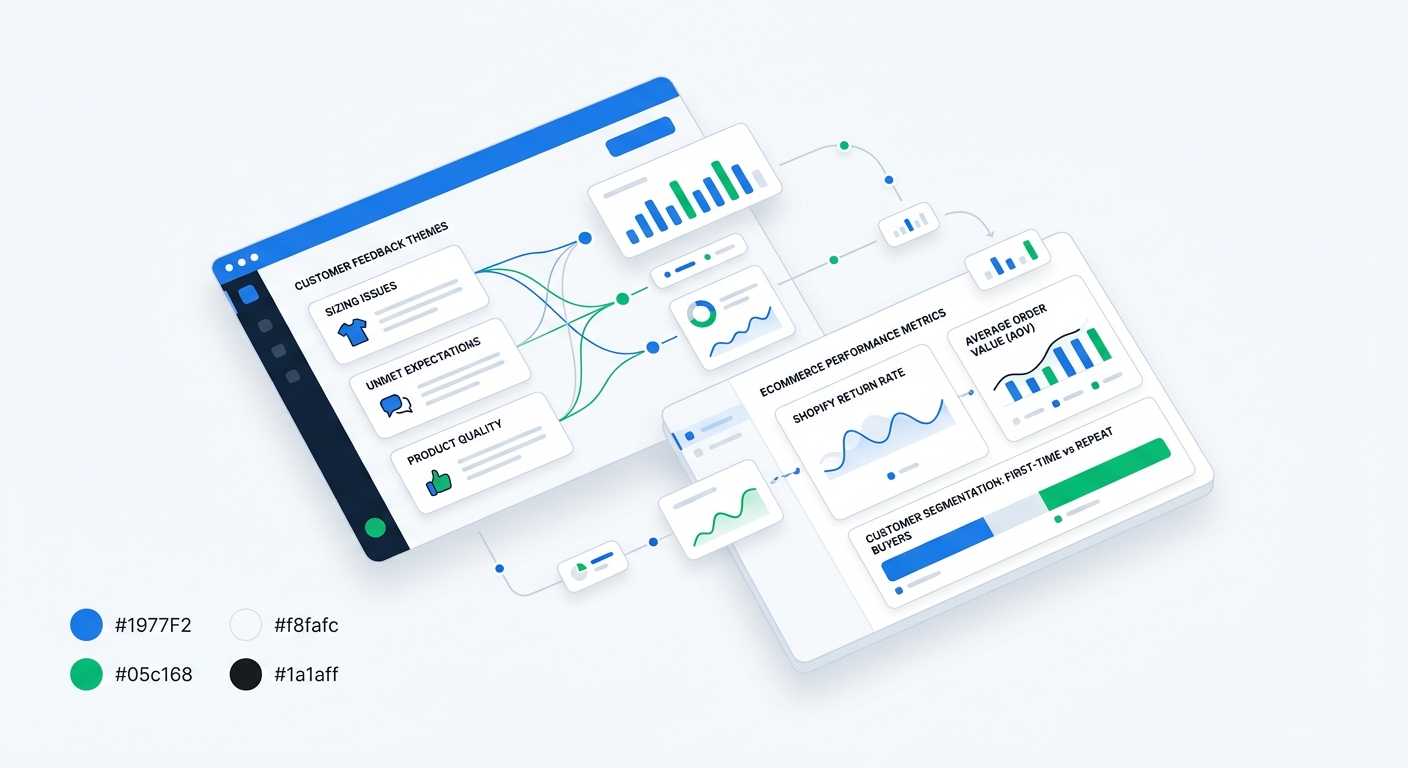
Connect responses to:
- SKU or product family
- return status
- order value
- first-time vs repeat customer
- discount usage
- acquisition source
Once you do that, patterns get much sharper. Maybe return-heavy orders came from one campaign. Maybe one product has normal satisfaction overall but terrible fit confidence for first-time buyers. Maybe discounted first orders are returning at twice the normal rate.
That is the difference between anecdote and diagnosis.
The best survey questions for reducing returns
You do not need 20 questions live at once. That would be obnoxious. Pick the questions that match the stage.
Before purchase
What almost stopped you from buying today?
This question is fantastic because it uncovers the exact uncertainty that later becomes a return.
Expected answers:
- not sure on sizing
- hard to tell color
- worried it won't work for me
- shipping felt slow
- wasn't sure if it was worth the price
Each one maps to a different fix.
What information is missing from this page?
If customers keep asking for measurements, usage instructions, side-by-side comparisons, ingredient details, or material close-ups, your PDP is under-explaining the purchase.
That is not just a conversion problem. It is a future return problem.
What are you shopping for today?
This one looks simple, but it helps identify mismatch between customer intent and the product they are viewing. Intent data is powerful when paired with returns because you can see whether certain use cases consistently disappoint.
Right after checkout
What convinced you to buy today?
If buyers say things like "looked easy to use" or "seemed like the perfect fit," then later return because setup was confusing or fit was off, your positioning needs work.
How confident do you feel that this product is the right fit?
Low confidence right after checkout is a warning light. You can use this to trigger better post-purchase education, sizing reminders, setup guidance, or proactive support.
What will you use this product for first?
Customers often reveal the exact scenario they expect. That gives you a chance to guide them before disappointment hits.
After delivery
Did the product meet your expectations?
Simple works.
The gold is in the follow-up. If no, ask what fell short. If yes, ask what matched best. That helps you separate message problems from product problems.
Was anything different from what you expected before ordering?
This might be the sharpest question in the whole system. It goes directly at expectation mismatch, which is where many returns are born.
What has been frustrating so far?
This catches the practical annoyances that support teams already know but marketers often miss.
For stores using automated email surveys on Shopify, this question works especially well 7 to 14 days after delivery, depending on the product.
How to turn messy feedback into actual fixes
Collecting feedback is the easy part. The hard part is not drowning in it.
Group responses into themes
Raw text gets messy fast.
One customer writes "too small," another writes "fit tighter than expected," another writes "runs narrow in the shoulders." Same problem, three different phrasings.
This is where AI theme extraction helps. Instead of manually tagging every answer, group them into usable buckets like:
- sizing runs small
- color mismatch
- quality below expectation
- unclear setup
- wrong use-case fit
- shipping delay expectation
That is a much better way to prioritize fixes.
Segment by revenue and customer type
Not all return feedback should carry the same weight.
If a complaint mainly comes from low-intent discount buyers, that suggests a different solution than a complaint coming from loyal high-AOV customers. Revenue-aware analysis matters here. You want to know which issues are hurting your best customers, not just which issues get mentioned most.
This is where a system that links responses to orders is miles better than a detached form tool. If your survey answers sit next to Shopify revenue and return behavior, you can ask smarter questions.
For example:
- Which return reasons are rising fastest for first-time buyers?
- Which products have the biggest expectation gap?
- Which complaints correlate with refunded orders over $100?
- Are discount-driven orders returning more often than full-price orders?
That is the kind of analysis AI-powered feedback workflows should be doing for you.
Route each theme to the right team
A lot of feedback programs fail because all insights die in one inbox.
Do this instead:
- sizing confusion -> merch and PDP updates
- setup friction -> onboarding and CX content
- quality disappointment -> product or supplier review
- misleading expectations -> ad and copy revision
- low-confidence buyers -> stronger pre-purchase qualification
If every insight turns into "interesting" and nothing changes, the surveys are just decorative guilt.
A practical example of how this works
Say you sell premium leggings on Shopify and returns are high for one bestselling style.
Your return portal says the reason is mostly didn't fit as expected.
Useful, but still shallow.
Now add feedback:
- Pre-purchase popup answers say shoppers are unsure whether the fabric is compressive or relaxed.
- Post-purchase answers say they bought because the product looked supportive and sculpting.
- Post-delivery answers say the waistband rolled more than expected and sizing felt inconsistent.
Now the problem is obvious.
It is not just "returns are high." It is that the product page promised one fit experience and the delivered experience felt different.
Your fixes become clearer:
- update size guide with stronger fit descriptors
- add on-body photos for multiple body types
- rewrite product copy to clarify compression level
- create a pre-purchase fit quiz or survey
- trigger a post-purchase sizing guide email before delivery
That is a real return-reduction plan, not just a grim spreadsheet.
The biggest mistakes brands make when trying to lower return rates
Blaming the customer
If lots of customers misunderstand the product, the customer is not the only problem. Your merchandising or messaging probably sucks.
Only looking at return portal reasons
Return reason dropdowns are too blunt on their own. They tell you the category, not the story.
Optimizing conversion rate without tracking return quality
Higher conversion is not a win if the extra orders come back. A campaign that converts worse but produces fewer returns can be more profitable.
Asking for feedback but not connecting it to orders
If you cannot tie comments back to products, discounts, and revenue, you will miss the patterns that matter.
Treating all returns as unavoidable
Some are. Many are not. That is the whole point.
A simple weekly workflow for Shopify teams
If you want something practical, do this once a week:
- Review top returned SKUs.
- Pull related pre-purchase and post-purchase survey responses.
- Group comments into the top 3 to 5 themes.
- Check whether those themes cluster by campaign, customer type, or discount usage.
- Make one upstream fix per week.
That upstream fix might be:
- better fit copy
- a clearer size chart
- new product photography
- stronger FAQ content
- a survey-triggered qualification step
- better post-purchase education
Small fixes compound. Return-rate improvement is usually not one grand gesture. It is a bunch of boring truth-telling.
Reduce returns by fixing expectations, not just processing refunds faster
Fast returns processing is nice. Lower returns are nicer.
Customer feedback helps you get there because it exposes the mismatch between what customers thought they were buying and what they actually got. That mismatch is where margin leaks.
If you want to reduce Shopify return rates, stop treating feedback like a support afterthought. Use it before purchase, after checkout, and after delivery. Then connect those answers to return behavior so the pattern smacks you in the face.
If you want one place to run popup, post-purchase, email, link, app block, NPS, and video surveys tied back to Shopify orders, UserLoop's ecommerce survey tools make that workflow a lot less painful. You can also install UserLoop on the Shopify App Store and start collecting the feedback that prevents bad-fit purchases before they become returns.


The agentic growth toolkit for Shopify
Ask your customers anything
UserLoop talks to your customers at scale with surveys and contests that feed one AI-queryable dataset. AI does the setup and the analysis.
- SurveysFind out why customers buy: checkout, email, link & QR.
- ContestsGiveaways that grow your list and social following.
Free plans on both apps · live in minutes