What to Do with Your HDYHAU Survey Data: Actionable Next Steps
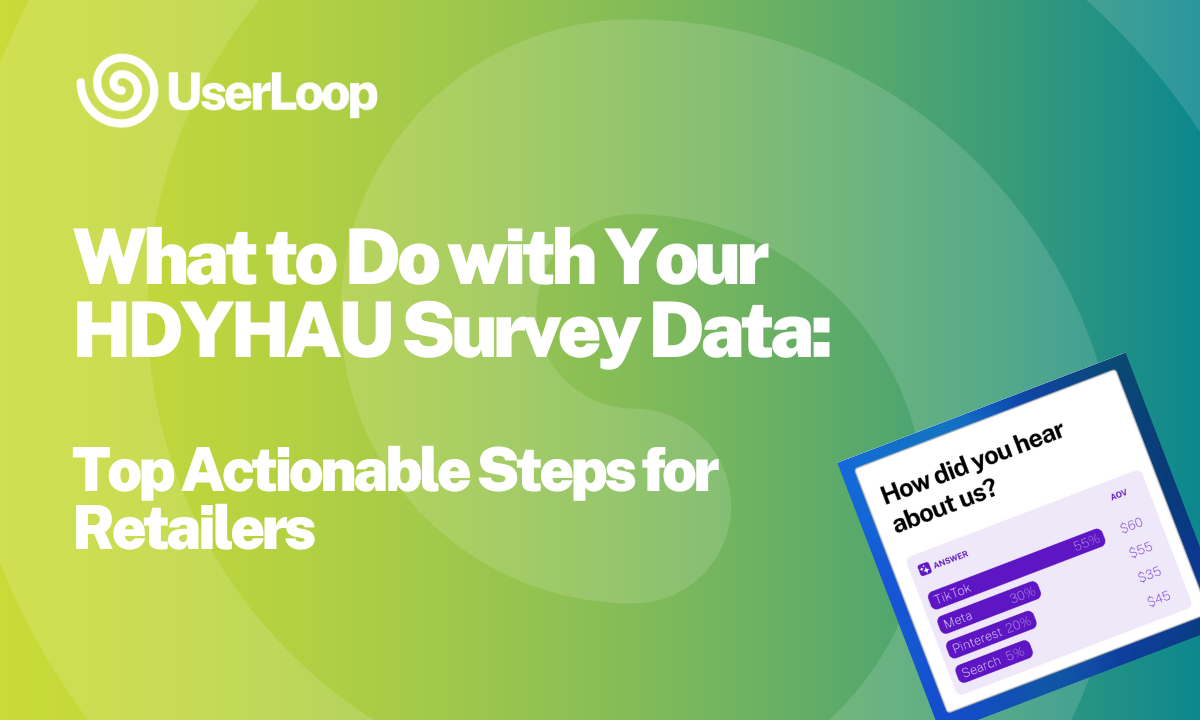
Its such a simple question - How Did You Hear About Us (HDYHAU)? And yet, this simple HDYHAU survey data helps retailers understand how customers find their business amongst a mass of ever growing competitors.
If you’ve already implemented a HDYHAU survey, you’ve taken a critical first step toward uncovering insights about your customer acquisition channels. But collecting the data is only half the battle—the real value lies in knowing what to do with it. This follow-up article will guide you through actionable next steps to analyze, interpret, and leverage your HDYHAU survey data to optimize your marketing efforts and drive business growth.
💡 Want to learn the basics first - read our top performing article What is a HDYHAU Survey?
Step 1: Organize and Analyze Your HDYHAU Data
Before you can act on your HDYHAU survey data, you need to transform raw responses into meaningful insights. Here’s how to get started:
1.1 Categorize Responses
- Group Similar Answers: Customers may use different phrasing for the same discovery channel. For example, "Google search" and "found you online" both likely point to search engines. Standardize these by grouping them into categories like "Social Media," "Paid Ads," "Referrals," or "Organic Search."
- Use Tags or Tools: If you’re using survey platforms like UserLoop or Aftercare, take advantage of their tagging or categorization features to streamline this process.
 Group Customers on the HDYHAU response
1.2 Identify Patterns and Trends
- Spot Dominant Channels: Calculate the percentage of respondents for each category. If 35% mention "Instagram," it’s a clear indicator of where your audience is coming from.
- Track Emerging Sources: Look for smaller but growing channels—like TikTok or niche forums—that could signal untapped opportunities.
- Segment the Data: If your survey captures demographic or behavioral details, break down responses by customer type (e.g., age, location, purchase size) to uncover channel preferences among specific groups.
1.3 Leverage Analytical Tools
- AI-Powered Insights: Tools like UserLoop provide AI-driven analysis to automatically highlight trends and suggest actions
- CRM Integration: Sync your survey data with your customer relationship management (CRM) system to tie acquisition channels to long-term metrics like customer lifetime value.
💡 Learn how UserLoop uses AI to analyze customer data for our retail clients
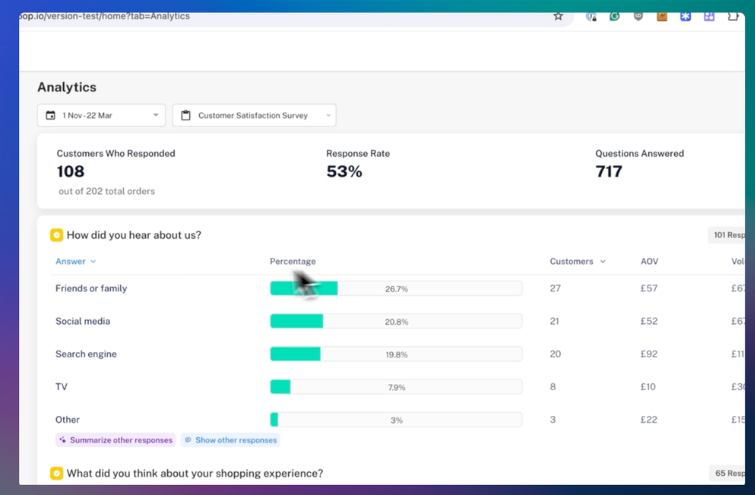 AI analysis of HDYHAU data
Step 2: Interpret the Results for Strategic Insights
With your data organized, it’s time to uncover what it’s telling you about your business. Here’s how to interpret the findings:
2.1 Assess Marketing Channel Effectiveness
- Highlight Top Performers: Channels with the most responses are likely your strongest. For instance, if 40% of customers cite "Email Campaigns," that’s where your efforts are paying off.
- Measure ROI: Compare survey results with your marketing budget. A low-cost channel driving high traffic is a winner, while an expensive one with few mentions may need reevaluation.
2.2 Discover Surprises and Opportunities
- Unexpected Channels: If a notable percentage of customers mention an untracked source (e.g., a podcast or a friend’s recommendation), it’s worth exploring further.
- Dig Into Follow-Ups: If your survey includes open-ended questions like "Why did you choose us?" (enabled by AI tools like Aftercare), analyze these answers to understand motivations beyond the "how."
2.3 Benchmark Your Performance
- Industry Comparison: Use available industry data to see how your channel mix compares. If your reliance on paid ads exceeds the norm, consider diversifying into organic channels like content marketing.
Step 3: Take Action Based on Your Insights
Now that you understand your data, it’s time to put it to work. Here are actionable steps to optimize your strategy:
3.1 Adjust Your Marketing Strategy
- Invest in Winners: Shift resources to high-performing channels. If social media drives 50% of your traffic, increase ad spend or content efforts there.
- Revamp Underperformers: Don’t ditch struggling channels immediately—experiment with new tactics (e.g., better targeting or creative formats) to boost their impact.
- Test New Waters: If an emerging channel shows promise, launch a pilot campaign to assess its potential before scaling up.
3.2 Enhance Your Acquisition Funnel
- Refine Messaging: Tailor your marketing copy based on survey insights. If customers mention a specific problem your product solves, highlight it in your campaigns.
- Improve Attribution: Pair HDYHAU data with tools like Google Analytics to map the full customer journey, accounting for multiple touchpoints.
3.3 Boost Customer Experience
- Personalize Outreach: If a customer found you via a blog post, send them related content post-purchase to deepen engagement.
- Encourage Referrals: If word-of-mouth is a key channel, launch a referral program with incentives to amplify this organic growth.
Step 4: Plan for Continuous Improvement
Your HDYHAU survey isn’t a one-and-done tool—it’s a living resource. Keep it relevant and effective with these steps:
4.1 Update Your Survey Regularly
- Add New Options: As marketing evolves, include emerging channels like VR ads or influencer marketplaces.
- Sharpen Questions: Based on past responses, tweak follow-ups to probe deeper into customer behavior or preferences.
4.2 Monitor Trends Over Time
- Track Shifts: Review your data quarterly to catch changes in channel performance or customer habits.
- Set Goals: Define KPIs based on your insights, like boosting referral traffic by 15% in six months.
4.3 Inform Long-Term Strategy
- Guide Product Development: If customers mention competitors or features in open-ended responses, use this to shape your offerings.
- Refine Brand Positioning: Insights into how customers discover you can clarify how they perceive your brand, helping you hone your messaging.
Conclusion: From Insights to Impact
Your HDYHAU survey data holds the key to smarter marketing, better customer experiences, and long-term success—but only if you act on it. By organizing and analyzing your responses, interpreting their meaning, and implementing targeted strategies, you can turn raw data into a powerful growth engine.
Make it a habit to revisit and refine your survey process, keeping pace with customer trends and marketing innovations. With these actionable steps and AI analysis from tools such as UserLoop, your HDYHAU survey data will evolve from a simple question into a cornerstone of your business strategy.


The agentic growth toolkit for Shopify
Ask your customers anything
UserLoop talks to your customers at scale with surveys and contests that feed one AI-queryable dataset. AI does the setup and the analysis.
- SurveysFind out why customers buy: checkout, email, link & QR.
- ContestsGiveaways that grow your list and social following.
Free plans on both apps · live in minutes