Ecommerce Questionnaires: Guide to Crafting the Perfect Survey and Boosting Conversions
If you're running an ecommerce business, you already know how important it is to understand your customers. After all, a happy customer is a loyal customer, and loyal customers are the backbone of any successful business.
But how do you get to know your customers in detail? Sure you've got analytics, measurement tools and tracking pixels - but there's no better way of understanding customers than asking them simple questions at exactly the right moment.
That's where ecommerce questionnaires come in! A well placed questionaire can help you find valuable insights about your customers' behavior, preferences, and pain points, allowing you to make informed decisions and optimize your online store for success.
In this comprehensive guide, we're going to take a deep dive into the world of ecommerce questionnaires, exploring the different types, when and where to use them, and how to craft the most effective questions.
By the end of this guide, you'll be equipped with the knowledge and tools needed to create questionnaires that truly resonate with your customers and provide you with actionable insights to grow your business. So, let's get started!
Types of Ecommerce Questionnaires and Their Benefits
Ecommerce questionnaires come in various shapes and sizes, each designed to gather specific information about your customers and their experiences. Knowing which type of questionnaire to use and when can help you collect valuable data that will ultimately improve your business. In this section, we'll explore some of the most common types of ecommerce questionnaires and the benefits they offer.
Pre-Purchase Questionnaires
Pre-purchase questionnaires are designed to collect information from potential customers who have not yet made a purchase. They can help you understand your target audience better, identify potential roadblocks in the buying process, and discover new opportunities for improvement.
What do they help you do?
Gain insights into customer preferences and needs
Identify areas for improvement in your marketing and sales strategies
Discover new product or service opportunities
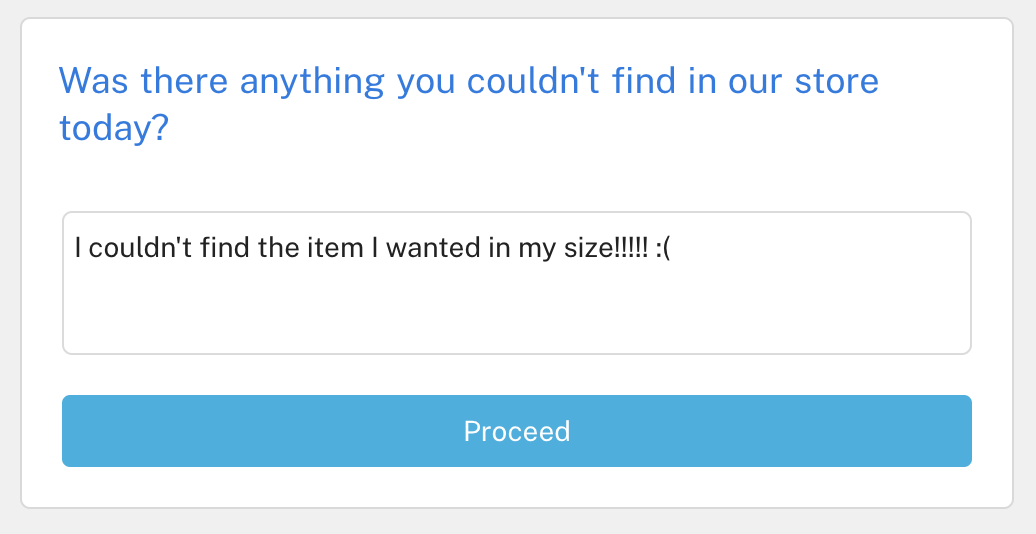
The questionaires can help you identify reasons why customers ultimately don't end up purchasing too. Maybe your shipping rates arent clear, or there's a problem with your checkout process. Asking simple survey questions before the customer buys can help you answer questions like these.
Post-Purchase Questionnaires
Post-purchase questionnaires are aimed at gathering feedback from customers who have already made a purchase. These questionnaires can help you understand the overall shopping experience, satisfaction with the product or service, and the likelihood of repeat business.
What can you learn with post purchase questions?
Evaluate the effectiveness of your sales process and customer service
Identify areas for improvement in the customer experience
Build customer loyalty by demonstrating your commitment to their satisfaction
An example of a post purchase questionaire for a beauty brand with multiple questions.
You can send post purchase questionaires through various channels such as SMS, Email or even right in your checkout flow, we'll cover all these later in the guide.
Customer Satisfaction (CSAT) Surveys
CSAT surveys are designed to measure customer satisfaction with a specific aspect of your business, such as product quality, customer service, or website usability. These surveys can help you pinpoint areas for improvement and track progress over time.
What do they help you do?
Monitor customer satisfaction levels and identify trends
Improve customer retention by addressing concerns promptly
Compare your performance to industry benchmarks or competitors
An example of a post purchase CSAT survey.
Tracking your CSAT score is an easy way to track how happy your customers are over time, you should always be aiming for a CSAT score over 80%. We wrote another blog post all about CSAT questionaires and how to run them here.
Net Promoter Score (NPS) Surveys
NPS surveys measure customer loyalty by asking how likely they are to recommend your business to others. A high NPS indicates a strong likelihood of repeat business and positive word-of-mouth marketing.
Benefits:
Gauge customer loyalty and predict future growth
Identify your most enthusiastic customers (promoters) and leverage their advocacy
Address concerns of dissatisfied customers (detractors) and win them back
Understanding the benefits of each type of questionnaire will help you choose the right one for your specific needs and make the most of the data you collect. In the next section, we'll dive into how to create effective ecommerce questionnaire questions and strategies.
NPS scores help you benchmark your brand against other brands. Lots of the big brands make their scores public so you can see how you compare, we've written an entire guide on NPS scores here.
HDYHAU Surveys
This stands for 'How Did You Hear About Us' and is one of the most common forms of ecommerce questionnaire. It's typically embedded into your checkout process and can help give you accurate insights into where your customers are coming from. Relying on tracking pixels and analytics doesn't give you the full picture but running one of these surveys can help you fill in the gaps. We've written a complete guide to HDYHAU surveys if that's the kind of questionnaire you're interested in running.
Writing Effective Ecommerce Questions
Creating impactful ecommerce questionnaire questions is crucial to getting the insights you need. In this section, we'll explore some tips and strategies to help you craft effective questions and maximize the value of your questionnaires.
Here's the basic rules you need to follow. It's worth noting some tools have built in AI assistants to help you write best practice questions. For example our app UserLoop uses OpenAI ChatGPT to write survey questions for you, and it's free to sign up and start!
Keep Questions Clear and Concise
Ensure your questions are easy to understand and answer. Avoid using jargon or complex language that could confuse respondents. Keep questions short and to the point to make it easier for respondents to provide accurate and thoughtful responses.
Use a Mix of Question Types
Incorporate a variety of question types, such as multiple-choice, rating scales, and open-ended questions, to gather a range of information. Each question type has its advantages and limitations, so using a mix will help you capture a more comprehensive view of your customers' experiences.
Start with General Questions and Progress to Specifics
Begin your questionnaire with general questions and gradually move to more specific ones. This approach helps respondents become more comfortable with the survey and provides context for the more detailed questions that follow.
Avoid Leading or Biased Questions
Ensure your questions are neutral and don't lead respondents towards a particular answer. Leading or biased questions can skew your data and make it difficult to draw accurate conclusions from the results.
Test and Refine Your Questionnaire
Before launching your questionnaire, test it with a small group of people to ensure the questions are clear, relevant, and provide valuable information. Use their feedback to refine your questionnaire and make any necessary adjustments.
Optimize the Timing and Delivery of Your Questionnaires
Choose the right moment to send your questionnaires to maximize response rates and collect the most relevant data. For instance, post-purchase surveys should be sent soon after the transaction to capture fresh impressions, while post-delivery surveys should be sent after the product has arrived and the customer has had a chance to use it.
Encourage Honest Feedback
Let your customers know that their honest feedback is essential for improving your business. Assure them that their responses will be used to make positive changes and that you value their opinions.
By following these tips and strategies, you'll be well on your way to crafting effective ecommerce questionnaires that provide actionable insights for your business. In the next section, we'll explore how to analyze and act on the data you collect to drive meaningful improvements.
Channels for Ecommerce Questionnaires
To effectively gather valuable information from your customers, it's crucial to choose the right channel for your ecommerce questionnaires. Different channels offer unique opportunities for engaging customers and collecting feedback at various touchpoints. Here are some popular channels for conducting ecommerce questionnaires:
Website
Your ecommerce website is an ideal platform for collecting feedback both before and after a purchase. You can use various types of website widgets to display your surveys:
Feedback Button: A feedback button can be placed anywhere on your website. When clicked, it opens a survey inside a pop-up window, allowing customers to share their thoughts on your site.
Popup Survey: Also known as intercept surveys, these surveys appear based on predefined triggers, such as after a transaction. They help capture relevant feedback at specific moments during a customer's browsing experience.
Side Tab Survey: This type of survey slides out from the side of the screen, taking up minimal space. It appears when users click on a feedback button located on a side tab.
Embedded Survey: Unlike other feedback widgets, an embedded survey is inserted directly into a webpage. The questions are usually specific to the page and appear as part of the site's content. Apps like UserLoop let you embed surveys right into your checkout process.
Email surveys are a convenient way to capture feedback after transactions. You can also use them for collecting general or page-specific website feedback, although the participation rate may be lower. Here are some ways to conduct email surveys:
Email Survey Link or Button: Add a link or button to your emails that, when clicked, opens the survey in the user's web browser.
Email Embedded Survey: This method allows you to insert a survey question directly into the email body. Participants can answer the question within the email, but they will be redirected to a web browser to complete the rest of the survey.
In-Signature Survey: Embed a survey button or question in your email signature. This approach is especially useful for gathering customer service feedback, as it can be included in ongoing communication with customers.
SMS
Sending ecommerce questionnaires via SMS enables faster feedback collection and higher response rates, thanks to the 98% open rate of text messages. An SMS survey typically includes a link that opens in a browser, allowing participants to share their responses.
By using AI-based SMS survey software, you can automate the process and send surveys to customers at the right time, such as after a purchase or product delivery.
When sending SMS messages to customers, it's important to make sure you're doing it in a fully compliant way - as it's easy to fall foul of the rules and end up on blocklists. This guide from leading SMS platform Postscript shows you how to pick and evaluate your SMS app provider.
Analyzing and Acting on Ecommerce Questionnaire Data
Once you've collected data from your ecommerce questionnaires, it's crucial to analyze and interpret the results to identify trends, areas for improvement, and opportunities for growth.
In this section, we'll discuss how to analyze your data effectively and turn insights into actionable steps.
**Example of ecommerce questionnaire analytics.
Organize and Visualize Your Data**
Begin by organizing your data in a way that's easy to understand and analyze. Use data visualization tools, such as charts and graphs, to help identify patterns and trends at a glance.
Identify Key Performance Indicators (KPIs)
Determine the KPIs relevant to your ecommerce business, such as conversion rate, average order value, or customer satisfaction score. These metrics will help you evaluate the success of your questionnaire and track improvements over time.
Look for Patterns and Trends
Examine your data for recurring themes, patterns, and trends. This could include common customer pain points, frequently asked questions, or areas where customers are particularly satisfied. Identifying these patterns can help you focus your improvement efforts and prioritize changes that will have the greatest impact.
Segment Your Data
Break down your data by customer demographics, such as age, gender, or location, to identify any differences in responses among different customer groups. This can help you tailor your marketing strategies, product offerings, or customer support approaches to better meet the needs of specific segments.
Prioritize and Take Action
Use the insights gained from your analysis to prioritize areas for improvement and develop a plan of action. Addressing the most critical issues first will help you make the most significant impact on customer satisfaction and overall business performance.
Monitor Progress and Iterate
Regularly review your questionnaire results and track the progress of your improvement efforts. Make adjustments as needed to ensure you're continuously optimizing your ecommerce business based on customer feedback.
Share Your Findings with Your Team
Involve your team in the analysis process and share the insights you've gained. Collaborating with your team can lead to new ideas and innovative solutions for addressing customer feedback.
By effectively analyzing and acting on your ecommerce questionnaire data, you'll be able to make data-driven decisions that enhance the customer experience, improve your products and services, and ultimately grow your business.
Examples of Effective Ecommerce Questionnaire Questions
In this section, we'll provide some examples of effective ecommerce questionnaire questions that you can use or modify to fit your specific needs. These questions cover a range of topics, including website experience, customer support, and product satisfaction.
We've written a small sample of questions below, but you can also download a CSV of ecommerce questionaire questions from our free Question Library here.
Website Experience Questions
How easy was it to navigate our website?
Were you able to find the information you were looking for?
How would you rate the overall design and layout of our website?
Did you experience any technical issues while using our website?
How likely are you to recommend our website to a friend or colleague?
Customer Support Questions
How satisfied were you with the customer support you received?
Was your issue resolved in a timely manner?
How knowledgeable was the customer support representative?
How would you rate the communication skills of the customer support representative?
What can we do to improve our customer support experience?
Product Satisfaction Questions
How satisfied are you with the quality of the product you received?
Did the product meet your expectations?
How does our product compare to similar products from other companies?
Would you consider purchasing from us again in the future?
How likely are you to recommend our products to a friend or colleague?
Remember, the key to an effective ecommerce questionnaire is to ask relevant and targeted questions that align with your survey goals.
Customize these questions to fit your specific needs, and use them to gather valuable customer insights that will help you make data-driven decisions and grow your business.
If you're not sure where to start, we highly recommend trying out our own app UserLoop - it's a fully integrated survey platform designed for commerce. It lets you send out surveys based on customer actions by email, embed and link. It even has AI built in to help you write your survey questions according to best practice. You can install the app here and start collecting responses for free.


The agentic growth toolkit for Shopify
Ask your customers anything
UserLoop talks to your customers at scale with surveys and contests that feed one AI-queryable dataset. AI does the setup and the analysis.
- SurveysFind out why customers buy: checkout, email, link & QR.
- ContestsGiveaways that grow your list and social following.
Free plans on both apps · live in minutes