5 Must-Ask Question Areas in Your Post Purchase Survey for 2024
Ever wondered how to peek into your customers' minds after they've hit that "buy" button? Enter the post-purchase survey, your secret weapon for unlocking a treasure trove of customer insights. It's not just about asking questions; it's about asking the right ones that can accelerate your ecommerce strategy and boost customer satisfaction. In 2024, understanding your shoppers' experience is more crucial than ever for staying ahead in the competitive online marketplace.
Ready to turn your thank you page into a goldmine of zero-party data? These five must-ask question areas will give you the lowdown on everything from your website performance to product selection. These survey questions are designed to help you fine-tune your marketing channels, improve your shopping experience, and gather valuable customer feedback. So, let's discover how these carefully crafted queries can ramp up your survey response rate and provide you with actionable insights to take your online store to the next level.
The Power of Post-Purchase Feedback
Post-purchase surveys provide a host of valuable insights that can accelerate your ecommerce strategy. By tapping into your customers' minds right after they hit the "buy" button, you gain access to fresh, honest feedback that can help you make data-driven decisions to improve your business.
Customer Insights Generation
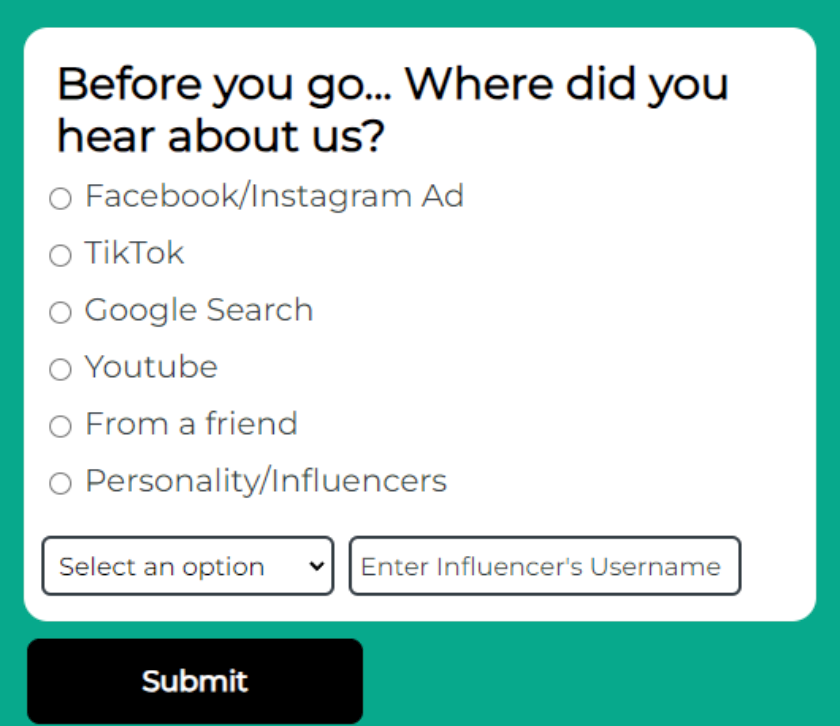
One of the key benefits of post-purchase surveys is the generation of customer insights. These surveys allow you to gather feedback on various aspects of the customer experience, such as product quality, delivery, and customer service . By analyzing this feedback, you can identify patterns, trends, and areas for improvement, enabling you to make informed decisions that enhance the overall customer experience .
Business Improvement Opportunities
Post-purchase surveys also provide opportunities for business improvement. By asking targeted questions, you can uncover insights that help you optimize your marketing channels, fine-tune your product offerings, and streamline your operations . For example, if customers consistently mention a specific issue with your checkout process, you can take steps to address it and reduce friction in the buying journey.
Customer Relationship Enhancement
In addition to generating insights and identifying improvement opportunities, post-purchase surveys play a crucial role in enhancing customer relationships. By actively seeking feedback, you demonstrate that you value your customers' opinions and are committed to meeting their needs . This fosters a sense of trust and loyalty, increasing the likelihood of repeat purchases and positive word-of-mouth recommendations.
Furthermore, by closing the feedback loop and acting on the insights gained from post-purchase surveys, you show your customers that their voices are heard and their feedback matters. This creates a virtuous cycle of continuous improvement, where your business evolves based on the needs and preferences of your customers, leading to higher levels of customer satisfaction and loyalty.
Essential Question 1: Was There Anything That Almost Stopped You from Purchasing?
This question helps you identify potential conversion barriers that may be causing customer hesitation during the checkout process. By asking shoppers what nearly prevented them from completing their purchase, you gain valuable insights into areas that need optimization.Some common conversion barriers include:
- Complex navigation
- Slow loading times
- Unclear calls-to-action
In fact, 1 out of every 5 shoppers abandon their cart due to a too long or complicated checkout process. By identifying these barriers through post-purchase surveys, you can take steps to streamline your checkout process and reduce friction points.
Conversion Barrier Identification
Listening to customer feedback is crucial for pinpointing conversion barriers. Their experiences provide a goldmine of information that can help you optimize your ecommerce strategy . Analyzing customer responses to this question allows you to identify patterns and trends in the obstacles shoppers face during checkout.
Checkout Process Optimization
Once you've identified the conversion barriers, it's time to optimize your checkout process. Some effective techniques include:
- Simplifying navigation
- Improving page load speeds
- Providing clear calls-to-action
Implementing these optimizations can significantly reduce cart abandonment rates and increase conversions. For example, offering multiple payment options, displaying trust signals, and allowing guest checkout are all proven strategies for streamlining the checkout process.
Customer Hesitation Analysis
Understanding the reasons behind customer hesitation is key to overcoming conversion barriers. This question provides valuable insights into the factors that make shoppers second-guess their purchase decision. Common causes of hesitation include:
- Unexpected fees and shipping costs
- Lack of trust in the website's security
- Insufficient product information
By addressing these concerns head-on, you can build trust with your customers and encourage them to complete their purchases with confidence. Clearly communicating shipping costs, displaying security badges, and providing detailed product descriptions are all effective ways to reduce customer hesitation.
Essential Question 2: How Easy Was It to Find the Product You Were Looking For?
This question helps you assess the effectiveness of your website's navigation, search functionality, and product categorization. By understanding how easily customers can find what they're looking for, you can optimize your site's user experience and increase conversions.
Website Navigation Assessment
Intuitive navigation paths are crucial for creating a seamless shopping experience. They should align with the user's natural expectations and thought processes, making it easy to move through different sections and find products .
For example, a well-structured navigation menu might feature broad product categories like 'Furniture', 'Kitchenware', and 'Home Decor', with drop-down menus revealing subcategories. Clicking on 'Furniture' would lead to a page with further breakdowns like 'Living Room', 'Bedroom', and 'Dining' .
Search Functionality Evaluation
Effective search functionality is essential for helping customers find specific products quickly. Advanced search features like filters, facets, auto-complete, auto-suggest, and fuzzy search can greatly enhance the user experience .
Filters allow users to narrow down results based on attributes like size, color, price, or brand, while auto-complete and auto-suggest provide predictive search suggestions. Fuzzy search accounts for potential typos or phonetic entries, ensuring relevant results even with imperfect queries .
Product Categorization Effectiveness
Proper product categorization is key to creating an organized and searchable shopping experience. By breaking products down into intuitive categories and subcategories, you make it easier for customers to find what they need .
For instance, a pair of women's sneakers might be categorized under Clothing & Apparel > Women's Footwear > Women's Sneakers. Further attributes like size and color can then be assigned to refine the categorization .
Accurate categorization not only improves the customer experience but also aids in advertising campaigns and operational processes. It increases the likelihood of your products being recommended to interested customers and allows for streamlined inventory distribution across marketplaces .
Essential Question 3: How Satisfied Are You with the Product Selection?
Asking customers about their satisfaction with your product selection provides valuable insights into your inventory management and helps you align your offerings with customer demand.
By evaluating customer feedback on your product range, you can identify gaps in your assortment and make data-driven decisions to optimize your inventory . This question allows you to assess whether your current product mix meets customer expectations and preferences.
Analyzing customer satisfaction with your product selection also enables you to uncover opportunities for improvement. If customers express dissatisfaction with certain aspects of your product range, such as limited variety or missing key items, you can take proactive steps to address these concerns and enhance your assortment.
Moreover, gathering insights on customer satisfaction with your product selection helps you understand their evolving needs and preferences. By staying attuned to customer demand, you can make informed decisions about which products to keep, replace, or remove from your inventory . This ensures that you are offering a curated selection that resonates with your target audience.
Effective inventory management is crucial for maintaining customer satisfaction and loyalty. By regularly seeking feedback on your product selection, you can optimize your inventory levels, reduce stockouts, and improve overall customer experience . This question serves as a valuable tool for aligning your product offerings with customer expectations and driving long-term success.
Essential Question 4: How Would You Describe Our Pricing Compared to Competitors?
This question helps you understand how customers perceive your pricing compared to your competitors. By gathering insights into your pricing strategy's effectiveness, you can make informed decisions to stay competitive in the market.
Competitive pricing is a key factor in driving sales and customer loyalty. In fact, 49% of consumers say they would switch to a competitor offering a better price . By asking customers to compare your prices to your competitors, you gain valuable information to refine your pricing strategy.
Pricing Strategy Assessment
Assessing your pricing strategy involves analyzing how your prices align with your overall business objectives and target market. Some key considerations include:
- Are your prices in line with the perceived value of your products or services?
- How do your prices compare to your competitors' prices for similar offerings?
- Are you targeting price-sensitive customers or focusing on premium pricing?
By understanding how customers perceive your pricing strategy, you can make adjustments to better meet their expectations and drive sales.
Perceived Value Analysis
Perceived value is the worth that a customer assigns to your product or service based on their perception of its benefits . Analyzing perceived value helps you determine if your prices are justified in the eyes of your customers.
To assess perceived value, consider factors such as:
- The unique features and benefits of your offerings
- The quality and durability of your products
- The level of customer service and support you provide
If customers perceive your products or services as high-value, they may be willing to pay a premium price. However, if the perceived value is low, you may need to adjust your prices or improve your offerings to remain competitive.
Competitive Pricing Insights
Gathering competitive pricing insights is crucial for making informed pricing decisions. By monitoring your competitors' prices and analyzing customer feedback, you can identify opportunities to optimize your pricing strategy.
Some effective techniques for gathering competitive pricing insights include:
- Conducting market research to compare prices across your industry
- Monitoring competitor websites and marketing materials for pricing information
- Analyzing customer reviews and feedback to gage perceptions of value and pricing
By staying attuned to the competitive landscape and customer sentiment, you can adapt your pricing strategy to maintain a competitive edge and drive customer loyalty.
Essential Question 5: What Additional Products or Services Would You Like to See?
This question provides valuable insights into your customers' unmet needs and desires. By understanding what additional products or services your customers are looking for, you can identify opportunities for product development and expansion.
Asking customers about their wish list items not only helps you gage demand for potential new offerings but also demonstrates your commitment to meeting their evolving needs. It shows that you value their input and are actively seeking ways to enhance their shopping experience.
Analyzing customer responses to this question can reveal trends and patterns in their preferences. You may discover that a significant portion of your customers are interested in a particular product category or service that you currently don't offer. This information can guide your product development strategy and help you prioritize which new offerings to introduce.
Moreover, gathering insights on desired additional products or services can help you identify cross-selling and upselling opportunities. By understanding what complementary items your customers are interested in, you can tailor your product recommendations and marketing efforts to drive additional sales.
For example, if a customer who purchased a yoga mat expresses interest in yoga blocks and straps, you can showcase these items as recommended accessories on your product pages or in post-purchase email campaigns. This targeted approach not only enhances the customer experience but also increases the likelihood of additional purchases.
In addition to product development and cross-selling opportunities, asking customers about their desired additional offerings can help you identify gaps in your current product selection. If a significant number of customers mention a specific product or service that you don't currently provide, it may indicate an unmet need in the market that you can capitalize on.
By staying attuned to your customers' evolving needs and preferences, you can make data-driven decisions to expand your product line, introduce new services, and ultimately drive customer satisfaction and loyalty. This question serves as a powerful tool for understanding your customers' wishlist items and aligning your offerings with their expectations.
Conclusion
Crafting effective post-purchase surveys has a significant impact on understanding customer experiences and driving business growth. By asking these five essential questions, you gain valuable insights into conversion barriers, website navigation, product selection, pricing strategies, and potential new offerings. These insights enable you to fine-tune your ecommerce strategy, enhance customer satisfaction, and stay ahead in the competitive online marketplace.
Implementing these survey questions allows you to tap into the goldmine of customer feedback, helping you make data-driven decisions to improve your business. By actively seeking and acting on customer input, you show your commitment to meeting their needs and fostering long-term loyalty.
To start surveying customers and unlock the power of post-purchase feedback, sign up to UserLoop for free. Remember, the key to success lies in continuously listening to your customers and adapting your strategies to meet their evolving expectations.
FAQs
What are the essential questions to include in a survey?
A well-structured survey should include the following questions:
- What was the purpose of your visit today?
- Were you able to accomplish what you came here for today?
- What additional products or services should we consider offering?
- How did you first learn about us?
- How would you describe our company to a friend?
Can you provide some examples of questions to ask after a purchase?
Effective post-purchase survey questions may include:
- How did you find out about us?
- What prompted you to visit our store today?
- When did you first become aware of our brand?
- Where do you most frequently see our brand?
- Which description fits you best?
- Who was this purchase intended for?
- What gender do you identify as?
- What was the occasion for this purchase?
Is a five-question survey sufficient?
The adequacy of five questions in a survey depends on the survey's goal. Generally, surveys should be brief, ideally taking less than five minutes, and consist of about 5–10 questions to be effective without being burdensome.
What are the six primary types of survey questions?
Surveys typically include six main types of questions to gather the necessary data effectively:
- Open-ended
- Closed-ended
- Nominal
- Likert scale
- Rating scale
- Yes/no questions


The agentic growth toolkit for Shopify
Ask your customers anything
UserLoop talks to your customers at scale with surveys and contests that feed one AI-queryable dataset. AI does the setup and the analysis.
- SurveysFind out why customers buy: checkout, email, link & QR.
- ContestsGiveaways that grow your list and social following.
Free plans on both apps · live in minutes