"UGC vs. Paid Influencer Content: Why Real Customer Videos Convert Better"
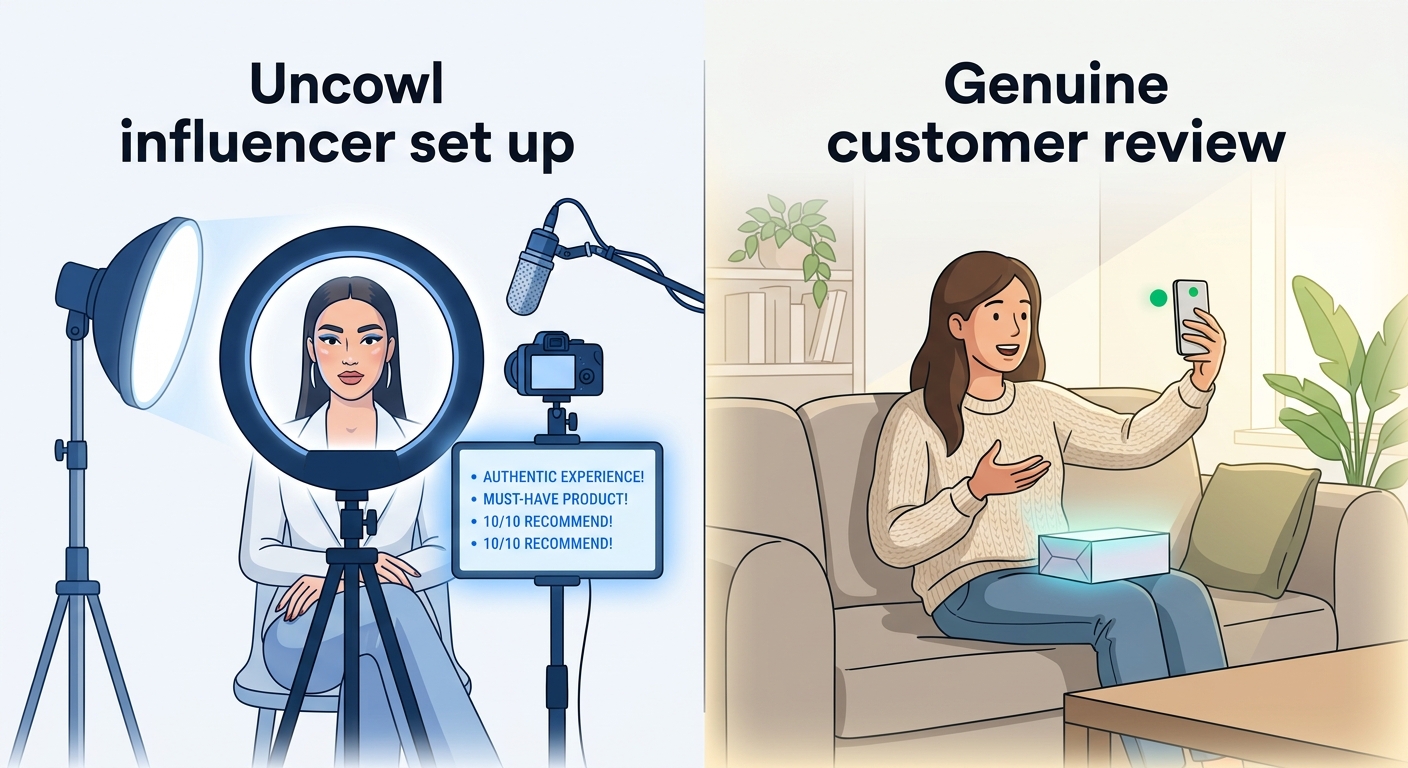
There are two ways to get "authentic" video content for your ecommerce brand. You can pay creators to fake it, or you can collect it from real customers.
The paid influencer route is familiar. You find creators on a UGC platform, send them your product, they follow a brief, and you get a polished 30-second video that looks like a customer testimonial but isn't one. The creator has never bought from you. They might not even use your product category. But the video looks good on Instagram.
Real UGC is different. It comes from people who spent their own money, received the product, used it, and recorded their honest reaction. The lighting is worse. The framing is off. The audio has background noise. And it consistently outperforms influencer content in conversion rate, click-through rate, and cost per acquisition.
This post breaks down why real customer content wins, what the cost and performance differences actually look like, and how to build a system that generates authentic UGC automatically.
The terminology problem: "UGC" doesn't mean what it used to
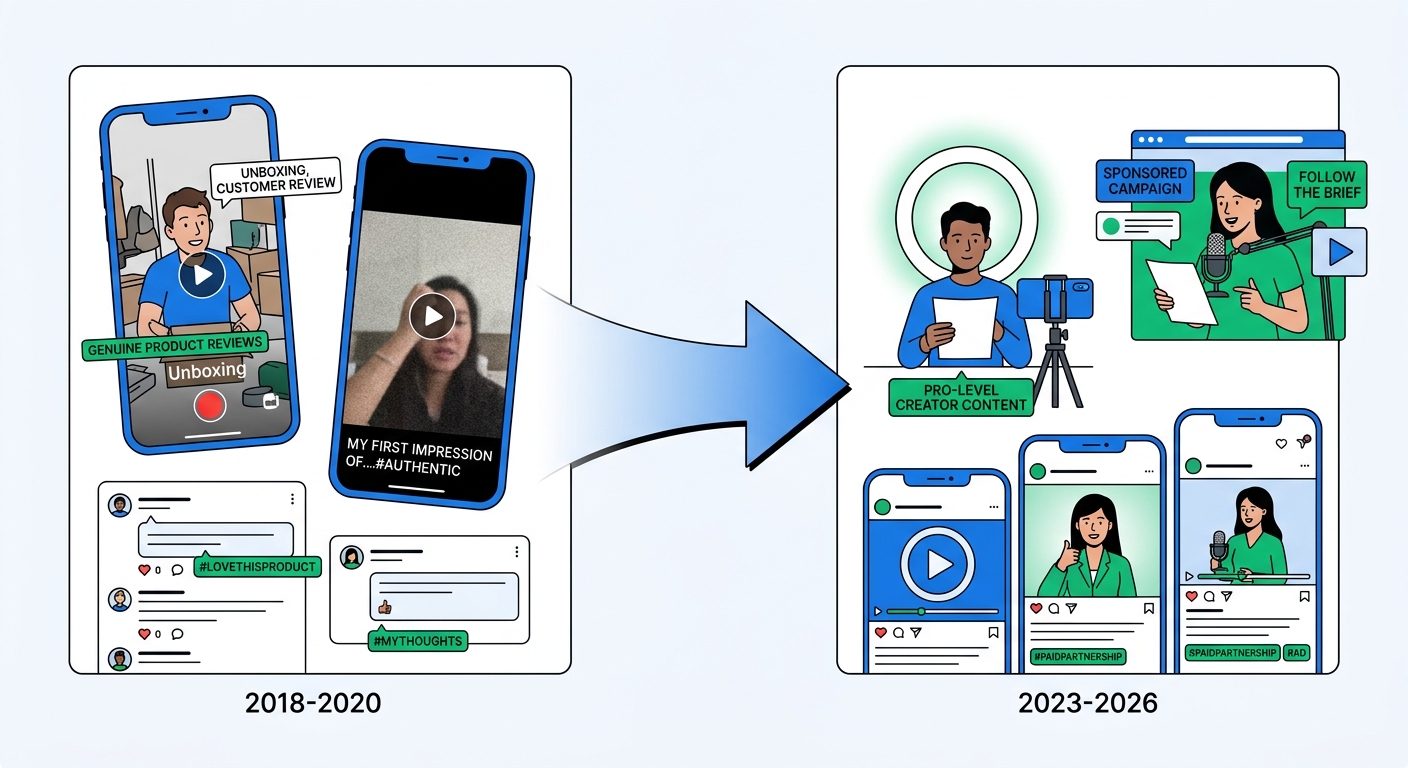
The term "UGC" has been co-opted. In 2020, it meant user-generated content: photos, videos, and reviews created by real customers without compensation. By 2024, an entire industry had sprung up around "UGC creators" who produce content that mimics customer testimonials but is actually paid advertising.
This matters because the two types of content perform differently. When studies show that "UGC outperforms brand content by 4x," they're talking about genuine customer content, not paid creators reading a script on their couch. The distinction is critical for understanding what actually drives conversions and why.
For this post, we'll use clear labels:
- Real UGC: Content from actual customers who bought and used your product.
- Paid creator content: Videos produced by hired creators who may or may not have used your product.
- Influencer content: Posts from influencers with established audiences, typically involving sponsored posts or affiliate deals.
Why real customer videos outperform paid content
Audiences can spot the difference
Consumers have developed sharp instincts for detecting paid content. A 2025 survey found that 86% of consumers say authenticity matters when deciding which brands to support, and 68% say they can tell the difference between genuine customer content and paid promotions.
The tells are subtle but consistent. Paid creator videos tend to have suspiciously good lighting, follow a predictable structure (hook, problem, solution, CTA), and feature creators who look like they stepped out of a casting call. Real customer videos have messy kitchens in the background, kids interrupting, and the person genuinely struggling to describe why they like the product. That struggle is the authenticity signal.

Trust translates directly to conversion
When someone trusts the content, they're more likely to buy. It's that simple. Real customer videos generate trust because the viewer knows there's no financial incentive behind the recommendation. The person bought the product, liked it, and took the time to say so. That's the strongest social proof available.
The conversion impact is measurable. Brands that use real customer videos on product pages see 20-40% higher conversion rates compared to pages using only professional content. In Meta ads, authentic customer videos typically deliver 30-50% lower cost per acquisition than polished brand creative or paid UGC.
Specificity beats scripts
Paid creators follow briefs. The brief says "mention three key benefits" and "include a before/after." The result is a video that hits the talking points but lacks the specific, unscripted details that make testimonials compelling.
Real customers say things no brief would include: "I was skeptical because the last three products I tried didn't work" or "My husband actually noticed the difference, and he never notices anything." These specific, personal details create emotional resonance that scripted content can't replicate.
The cost comparison: what you're actually paying for
Paid creator content costs
The typical cost structure for paid UGC creators:
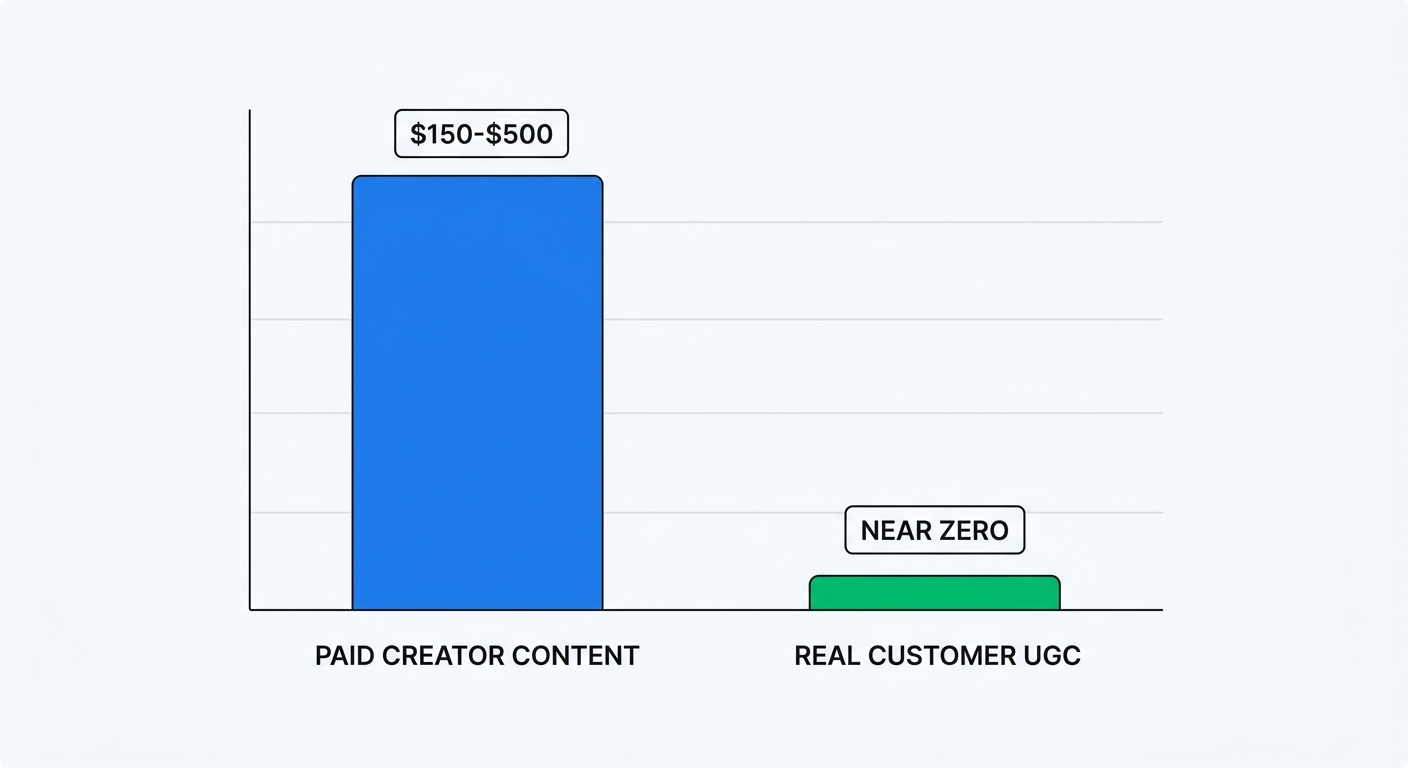
- Per-video rate: $150-500 for a single video from a mid-tier creator
- Agency management fee: 20-30% on top of creator rates if you use a platform like Billo, Insense, or JoinBrands
- Product cost: You ship free product to each creator ($20-100+ depending on your product)
- Revision rounds: Most contracts include 1-2 revisions, but reshoots are extra
- Volume pricing: Bulk deals might bring per-video costs down to $100-200, but you still need to manage relationships and review output
For a Shopify store that wants 10 fresh videos per month, that's $1,500-5,000/month in creator costs alone. And each video has a shelf life. Ad fatigue sets in after 2-4 weeks, so you're on a constant treadmill of producing new content.
Real UGC costs
Collecting real customer videos through surveys costs the infrastructure fee for your survey tool plus any incentive you offer.
With UserLoop, video is a built-in question type in your post-purchase surveys. The cost breaks down to:
- Survey tool: You're already paying for it if you're doing post-purchase surveys or attribution
- Incentive: A 10-15% discount code on the next purchase (which also drives repeat purchases)
- Per-video cost: Effectively $0 in marginal cost, since the survey infrastructure exists for other purposes
If you send 1,000 post-purchase surveys per month and 3-5% of customers record a video, that's 30-50 videos per month at zero marginal cost. Compare that to $3,000-10,000/month for the same volume from paid creators.
The hidden cost: creative fatigue
Paid content has a half-life. A great creator video might perform well for 2-4 weeks in your ad account before audiences stop responding. Then you need new content. This creates a constant demand for fresh creative that keeps costs high and makes budgeting unpredictable.
Real customer content has a different fatigue curve. Because each video is genuinely different (different person, different home, different product use case), you build a library of diverse content that stays fresh longer. When you have 100+ customer videos, you can rotate through them without any single one burning out.
Where paid influencer content still makes sense
This isn't a blanket dismissal of paid content. There are specific scenarios where paying creators is the right move.
Product launches. You need content before customers exist. Paid creators can fill the gap until you have enough real customer videos to work with.
Complex products that need demonstration. If your product requires a specific setup process or technique, a paid creator can follow instructions to show it correctly. Real customers might skip steps or use it wrong.
High-production brand campaigns. For brand awareness campaigns where you want a specific aesthetic or narrative, professional content has its place. But this is brand building, not direct response.
Influencer audiences. True influencer partnerships (not "UGC creators") give you access to an established audience. The value is distribution, not authenticity. This is a fundamentally different play from testimonial content.
For direct response advertising, product pages, email marketing, and conversion-focused placements, real customer content wins.
How to build a real UGC collection system
The biggest objection to real UGC is that it's hard to collect. Emailing customers individually and asking for videos has a response rate near zero. That's why most brands default to paying creators.
But there's a middle ground: automated collection through post-purchase surveys. Instead of asking customers to go out of their way to create content, you embed a video question in a survey they're already completing.
Step 1: Add video questions to post-purchase surveys
If you're already running post-purchase surveys for attribution or feedback, adding a video question is one click. Place it toward the end of the survey, after the customer has already answered 2-3 questions and is in a feedback-giving mindset.
Good video prompts for UGC:
- "Would you record a quick video showing us your [product]?"
- "What would you tell a friend who's thinking about buying this?"
- "Can you show us your favorite way to use [product]?"
The key is making the ask specific and low-effort. "Record a 30-second video" feels manageable. "Create a testimonial" feels like homework.
Step 2: Incentivize with discount codes
Attach a discount code reward to survey completion. Customers who complete the full survey, including the optional video question, receive a unique Shopify discount code. This typically doubles or triples video submission rates.
A 10-15% discount on their next purchase is enough. The customer already likes your product (they just bought it), so the discount is a nudge, not a bribe. And it drives repeat purchases, making the discount a revenue driver rather than a pure cost.
UserLoop generates unique Shopify discount codes automatically for each survey completion, so there's no manual code management.
Step 3: Let volume compound
The math works in your favor over time. If you collect 30 videos per month:
- Month 1: 30 videos. Enough for initial testing in ads and a few product pages.
- Month 3: 90 videos. You can segment by product, use case, and customer demographic.
- Month 6: 180 videos. You have a full creative library. Ad fatigue becomes a non-issue because you're constantly rotating fresh content.
- Month 12: 360+ videos. You have more authentic content than most brands could produce with a $50,000 creator budget.
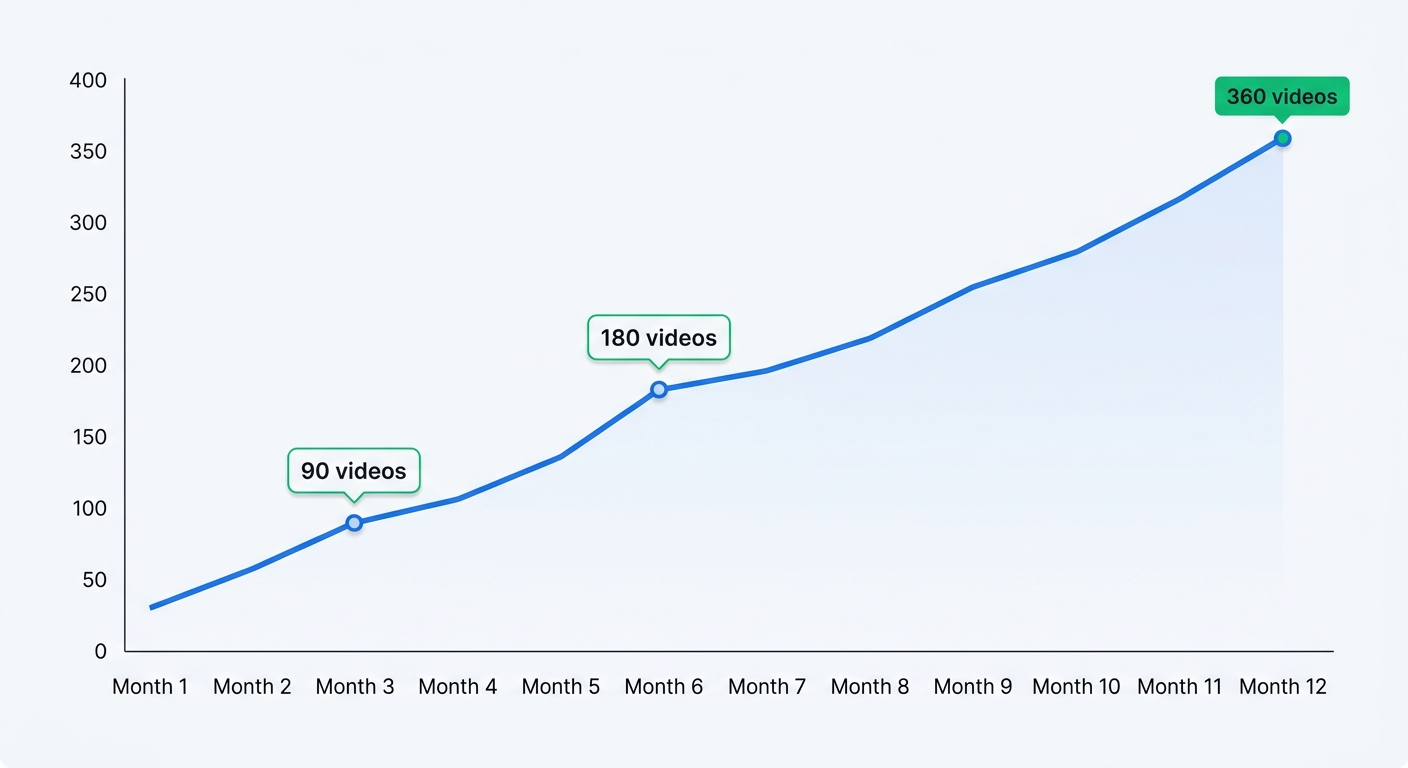
This compounding effect is the real advantage of survey-based collection. Paid creator content is linear: you pay for X videos, you get X videos. Customer video collection is cumulative: the system runs automatically and the library grows every month.
Step 4: Organize and deploy
As your video library grows, organize it by:
- Product. Which product is featured in the video?
- Use case. Is the customer showing an unboxing, daily use, before/after, or comparison?
- Sentiment. How enthusiastic is the customer? (UserLoop's AI insights can help categorize this automatically.)
- Demographics. Different audiences respond to different people. Having diversity in your video library lets you match creative to audience segments in your ads.
Deploy your best videos across channels: Meta ads, product pages, email campaigns, and organic social. A single 30-second customer video can be repurposed across 4-5 placements.
Measuring UGC performance vs. paid content
If you're running both real UGC and paid creator content, here's how to measure the difference.
In your ad account
Run A/B tests with identical targeting and budgets. Put real customer videos in one ad set and paid creator videos in another. Compare:
- CTR (click-through rate). Real UGC typically wins by 20-40% because it stops the scroll with authenticity rather than polish.
- CPA (cost per acquisition). The metric that matters most. Real UGC usually delivers 30-50% lower CPA.
- ROAS (return on ad spend). Factor in the cost of the content itself. When the video is free (collected via survey), even a similar conversion rate means significantly better ROAS.
On product pages
If you're testing customer videos on product pages, track:
- Conversion rate. Compare product pages with and without video testimonials.
- Time on page. Video content increases engagement time, which correlates with purchase intent.
- Add-to-cart rate. Often the most sensitive metric to social proof changes.
Attribution back to source
With UserLoop, you can close the loop between content collection and performance. Because video testimonials are collected alongside attribution survey data, you know which acquisition channels produce your best video content. If customers from Instagram consistently record better testimonials than customers from Google Ads, that's useful information for both your creative and media strategies.
The authenticity advantage compounds
The shift from paid creator content to real customer content isn't just a cost optimization. It's a strategic advantage that deepens over time.
Brands that rely on paid creators are in an arms race. As consumers get better at detecting paid content, creators have to work harder to seem authentic, which costs more and delivers diminishing returns. Meanwhile, brands collecting real customer videos are building an asset that appreciates. Each video is genuine by definition. No amount of consumer skepticism can undermine a real customer holding your product in their living room and telling you why they love it.
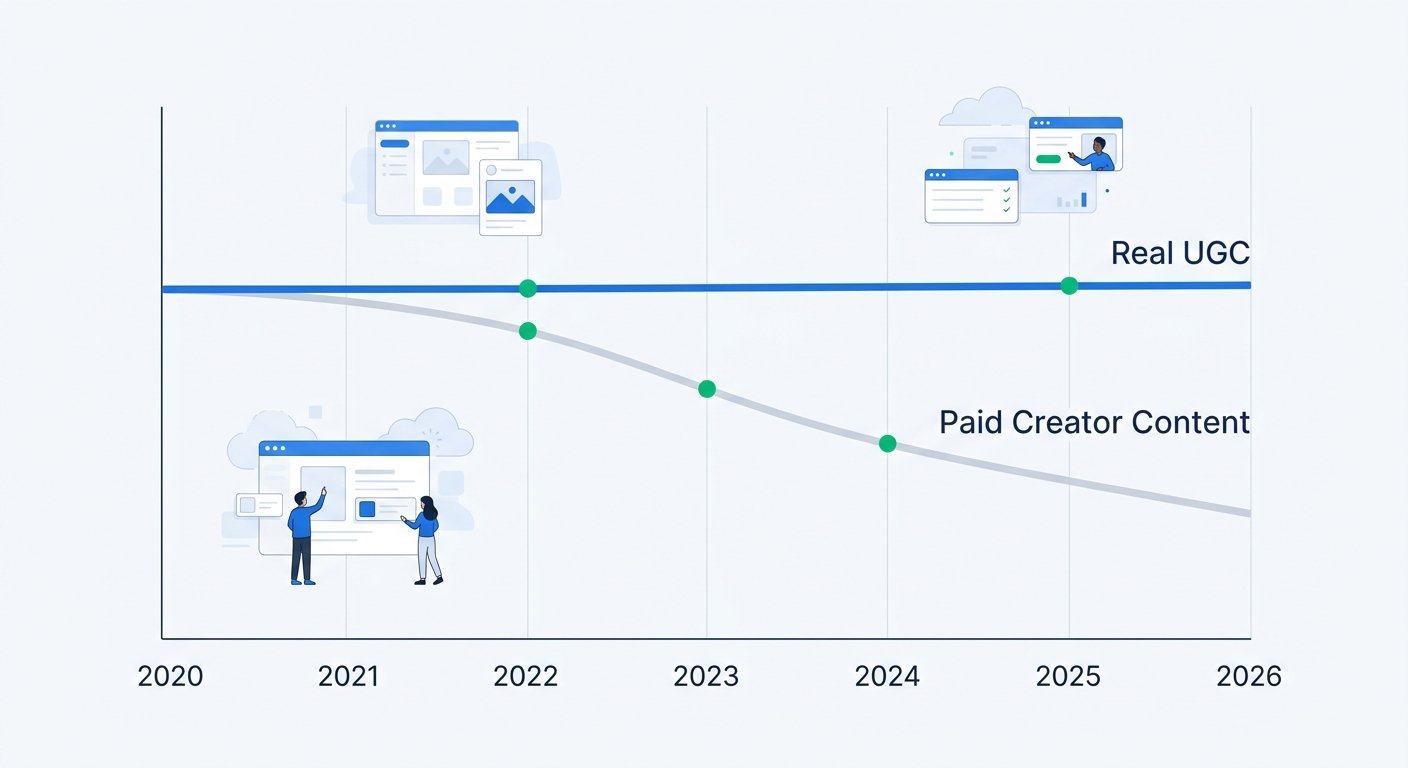
The practical playbook is straightforward. Stop treating video collection as a separate initiative. Make it a question in your post-purchase surveys. Incentivize it with a discount. Let the library compound. Use the videos everywhere.
UserLoop's video testimonial collection is built into the same surveys you use for attribution, NPS, and product feedback. No separate tool, no agency fees, no per-video costs. Install UserLoop from the Shopify App Store to start collecting real customer videos today.


The agentic growth toolkit for Shopify
Ask your customers anything
UserLoop talks to your customers at scale with surveys and contests that feed one AI-queryable dataset. AI does the setup and the analysis.
- SurveysFind out why customers buy: checkout, email, link & QR.
- ContestsGiveaways that grow your list and social following.
Free plans on both apps · live in minutes