Surveys in Action: Lessons from Top DTC Food and Beverage Brands
If you’re building an online food or beverage brand, it’s important to clearly understand the specific needs that your customers are aiming to address by using your product. Rather than assuming, ask customers directly for insights to tailor your product offering, you'll be surprised how many are happy to answer!
This is especially true for food and beverage brands, it's essential to note that they serve different 'jobs-to-be-done' for the consumer.
This could be anything from adding some variety in the kitchen, to boosting their nutritional intake, providing comfort, or simply offering a quick snack.
In this post, we’re going to take a look at some of the surveys being run by leading DTC food and beverage companies, to see how they're using zero-party data to fine-tune their offering.
We’ll be taking a look at examples from MyProtein, Athletic Brewing, Chamberlain Coffee and M&S.
Let’s take a look at the different kinds of questions you can ask customers, depending on your product.
Purchase motivation.
What are customers buying your product for, is there a specific goal they’re trying to achieve? Asking this question can help you fine-tune your positioning and marketing messages to speak to customer’s goals.
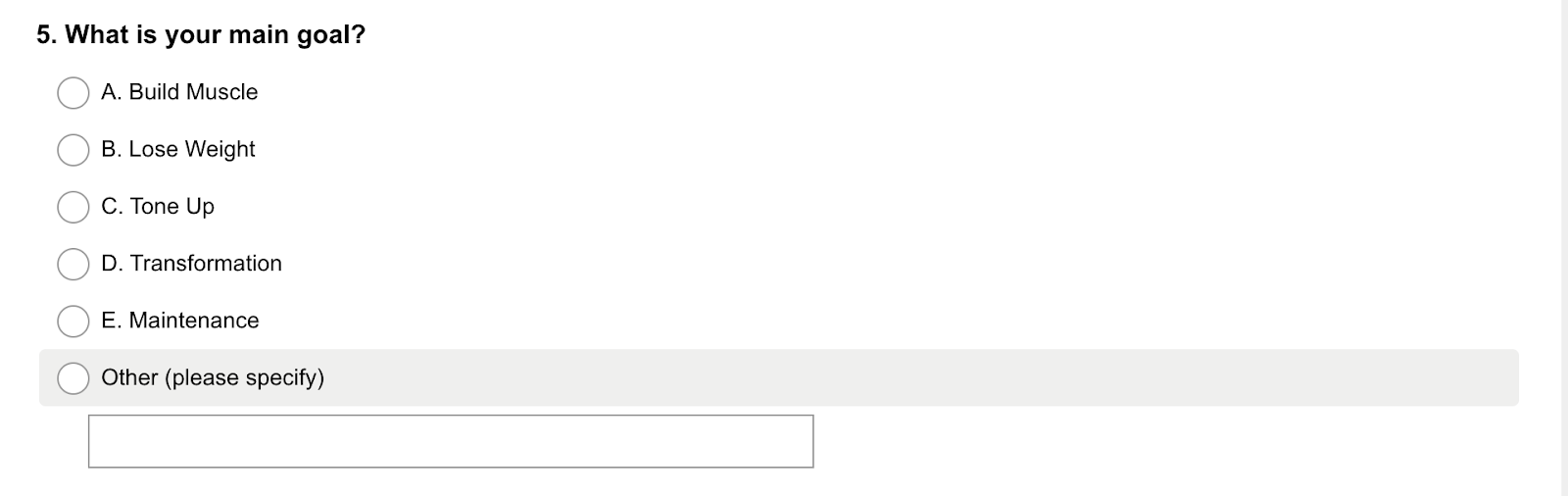
Here’s an example from huge online fitness brand MyProtein.
What is your main goal?
Building muscle
Managing cholesterol
Satisfying hunger
Losing weight
Improving brain function
Strengthening bones
Enhancing sleep quality
Improving digestion
Seeking indulgence
Needing to cool down
Asking a question like this can not only help with recommending relevant products to the customer in the future - but could also be used to segment them and deliver targetted marketing messages that match their stated goal.
Example: MyProtein
Tastes and Preferences
For certain products, customer preferences can vary widely depending on their own tastes. For example - what is their favorite flavor?
Understanding your customers' flavor preferences is crucial for your product's success.
If they had the chance to replace one of your existing flavors, knowing which one they would choose and what they would like in its place would be interesting.
To collect this kind of feedback, you could list all the flavors you currently offer, along with a selection of potential new options that you've been contemplating.
Encourage your customers to select the flavor they'd prefer to swap out and suggest what they'd like to see as a replacement. This will provide you with direct insights into your customers' tastes and preferences, aiding you in making informed decisions about your product lineup.
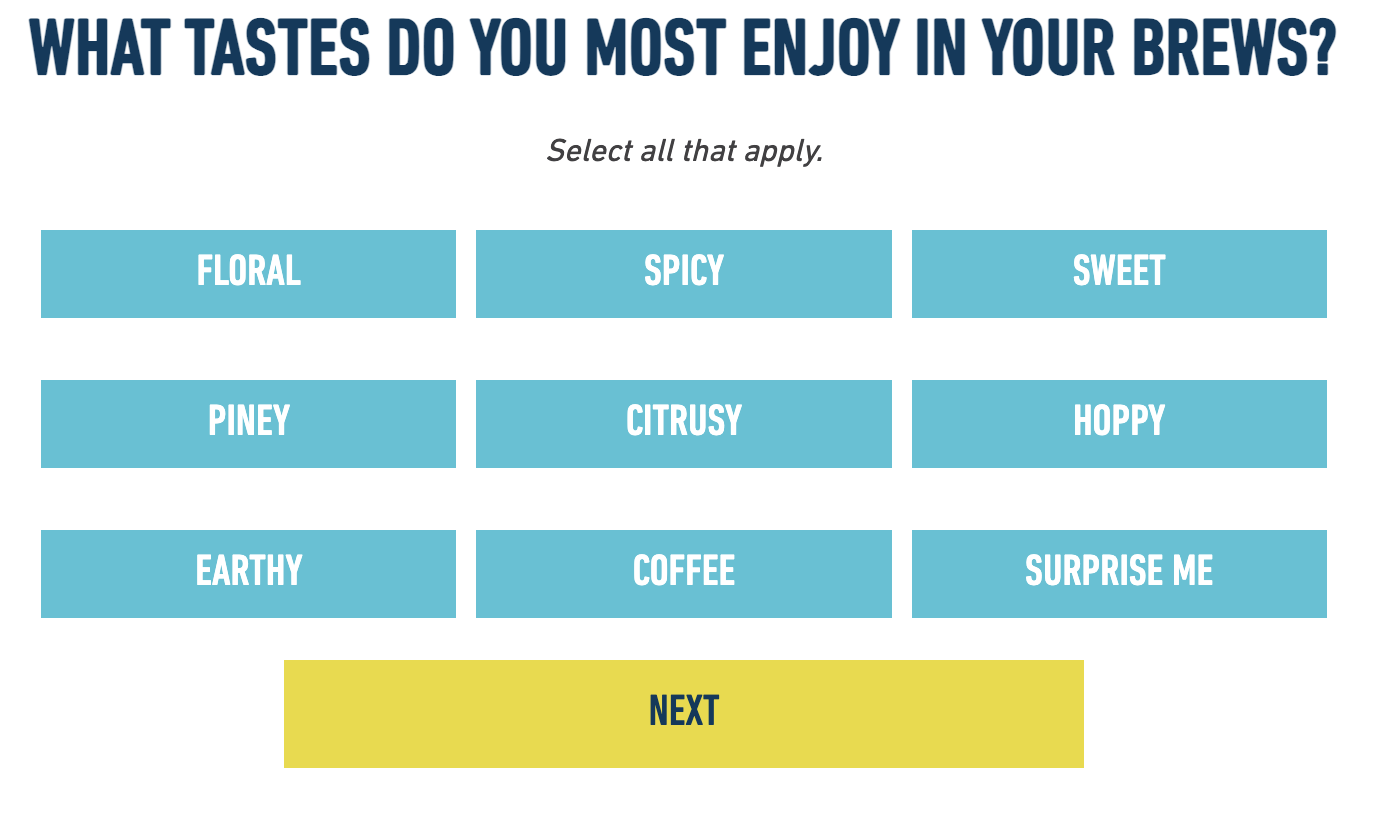
We’ve picked an example from Athletic Brewing. In the survey they ask ‘What tastes do you enjoy in your brews?’
Then the customer can pick from options like floral, spicy, sweet, piney and earthy.
This not only helps Athletic Brewing tweak their formulations based on customer preference - it allows them to recommend the most appropriate brews for that customer.
You can do this by segmenting the customer based on their survey response. Survey tools like UserLoop allow you to send customer survey responses back to Klaviyo or
Shopify to allow you to build up segments based on response.
So for example, if a customer selected they liked floral and sweet flavors, they could be automatically added to a drip email campaign which highlights those kinds of brews.
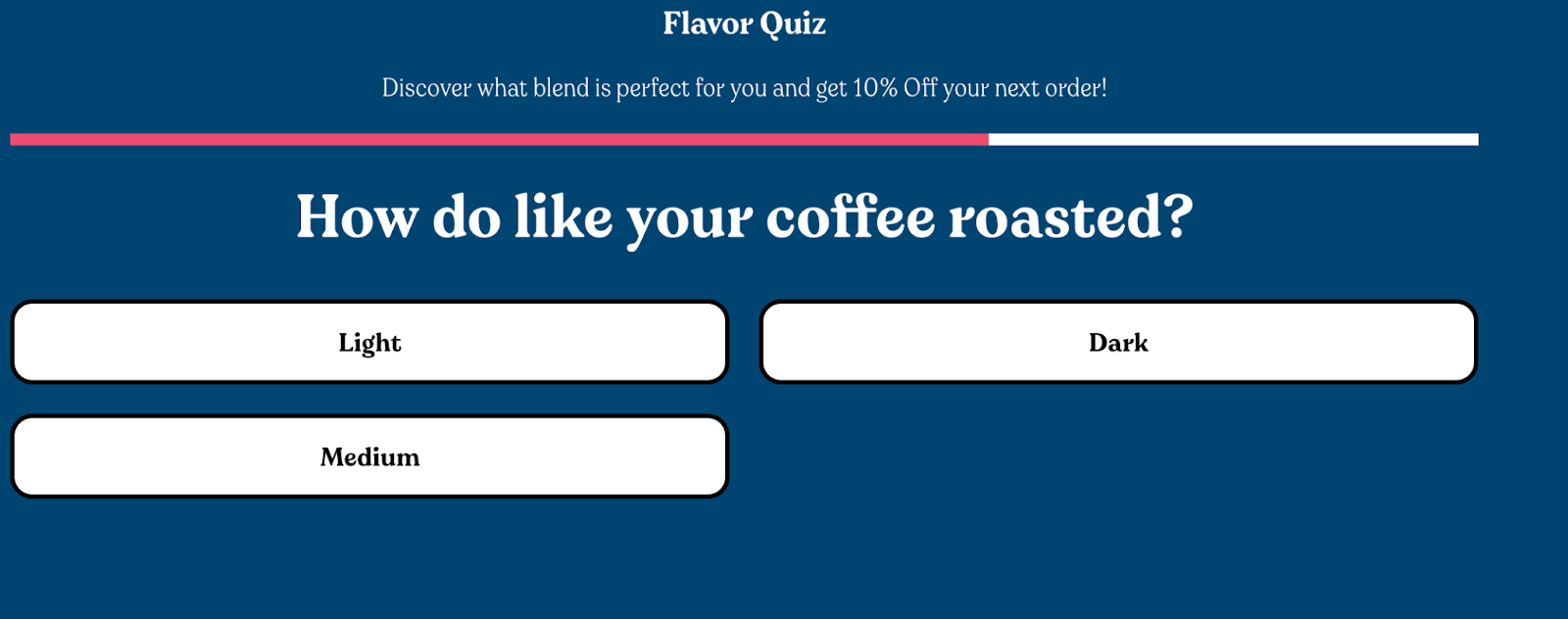
Similarly, this example from Chamberlain Coffee does a similar thing, but instead of looking at flavour profile, it asks what level of roast the customer typically prefers in their coffee.
Product Combinations
Discovering how your customers use your product in combination with other foods can yield valuable insights, potentially revealing unexpected pairings.
Sometimes, customers might come across a perfect pairing that wasn't initially considered during the product's creation - classic examples include the timeless peanut butter and jelly, or the divisive combination of pineapple on pizza.
To uncover these golden combinations, ask your customers about the foods they enjoy pairing with your product.
This feedback can provide fresh ideas for marketing campaigns, packaging suggestions, or even new product development. It's another way to engage your customers and further understand their usage habits and preferences.
Asking this question could also inspire brand partnerships with other brands who sell complementary products - and who likely have a similar ICP to your brand.
Example: Athletic Brewing
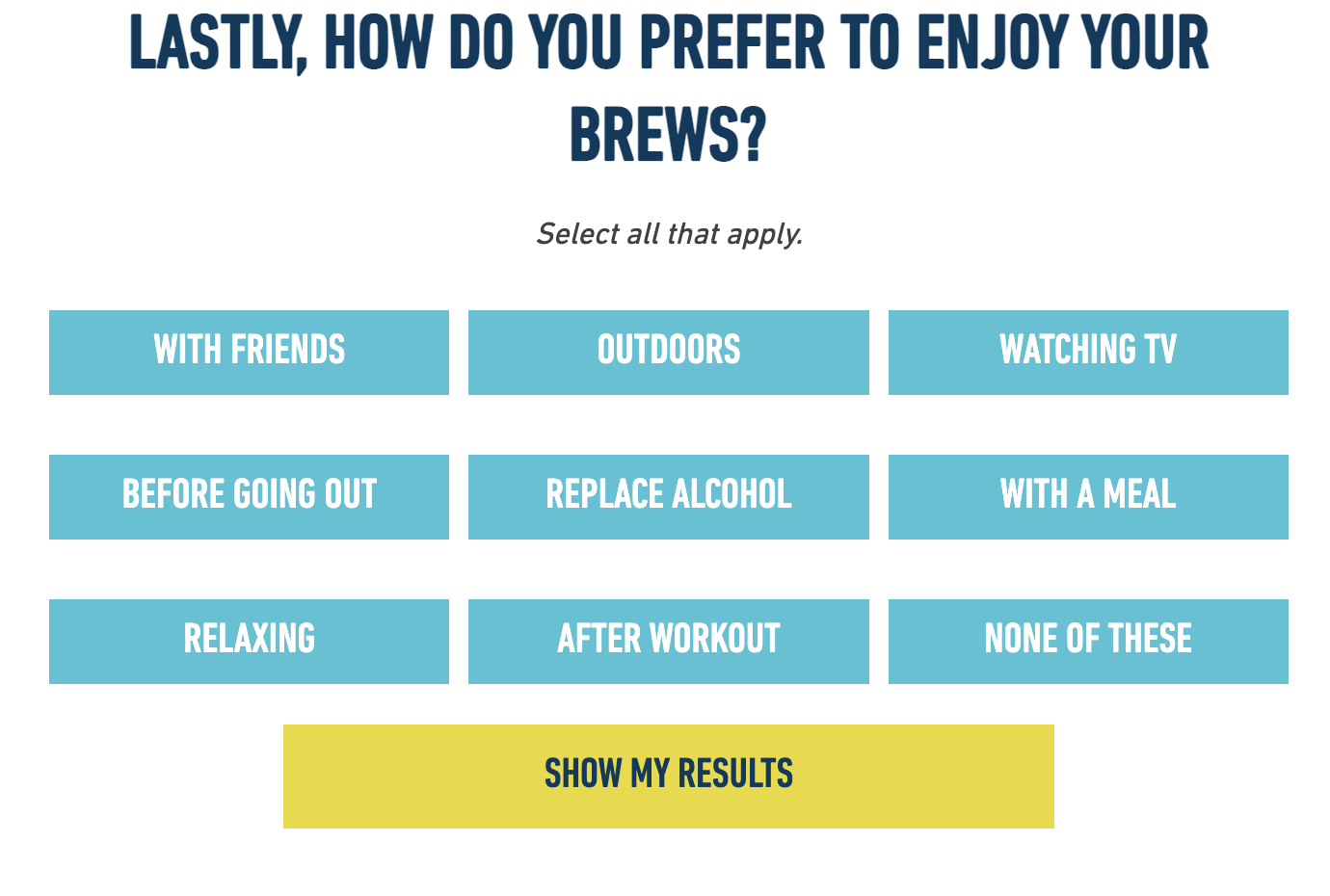
_Understanding what aspects of your product customers would most like to change can offer valuable direction for future improvements.
You could either guide your respondents with a list of feasible options — like variations in size, price, packaging — or give them the freedom to think broadly, allowing for all ideas.
If you could modify one aspect of our product, what would be your top choice?
This feedback can provide key insights into their preferences and expectations, empowering you to make the most impactful changes. Remember, even the most out-of-the-box suggestions could spark innovation and lead to successful product enhancements._
Consumption Habits
Understanding how and when your customer use your product can help inform your marketing, and even help with ideas of how you could expand your product range.
Usually, once a customer purchases your product - it’s a bit of a black hole for information. You don’t actually know a huge amount about how they actually use your product in their day to day lives.
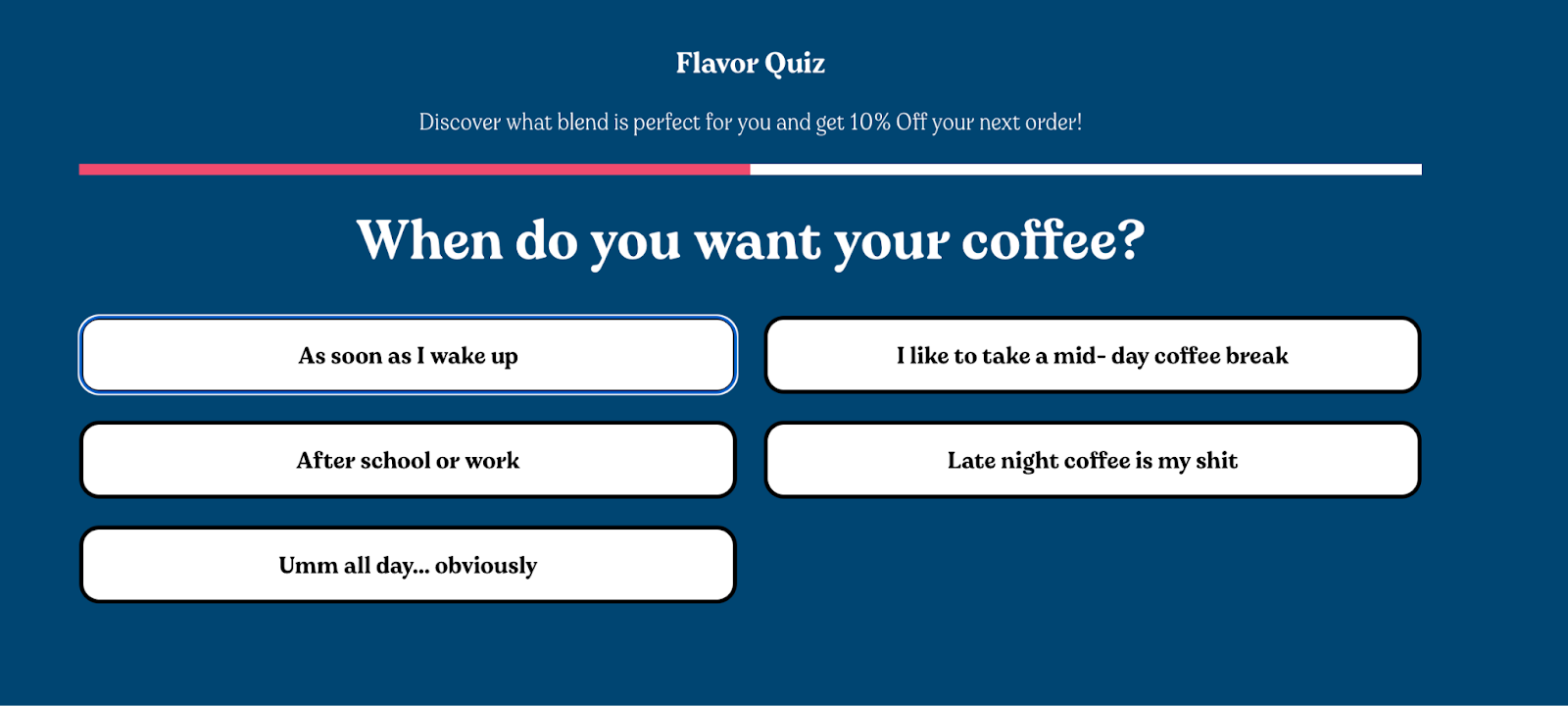
Let’s take a look at another example for this kind of question from Chamberlain Coffee.
When do you want your coffee?
As soon as I wake up
I like to take a mid- day coffee break
After school or work
Late night coffee is my shit
Umm all day... obviously
You can also ask questions about how they use your product, in this example we’re looking at how they brew the coffee.
How do you brew?
French press
Cold brew
Single serve on the go
I use my own coffee grinder
I have a coffee maker
Pour over
Chemex
Espresso
Aeropress
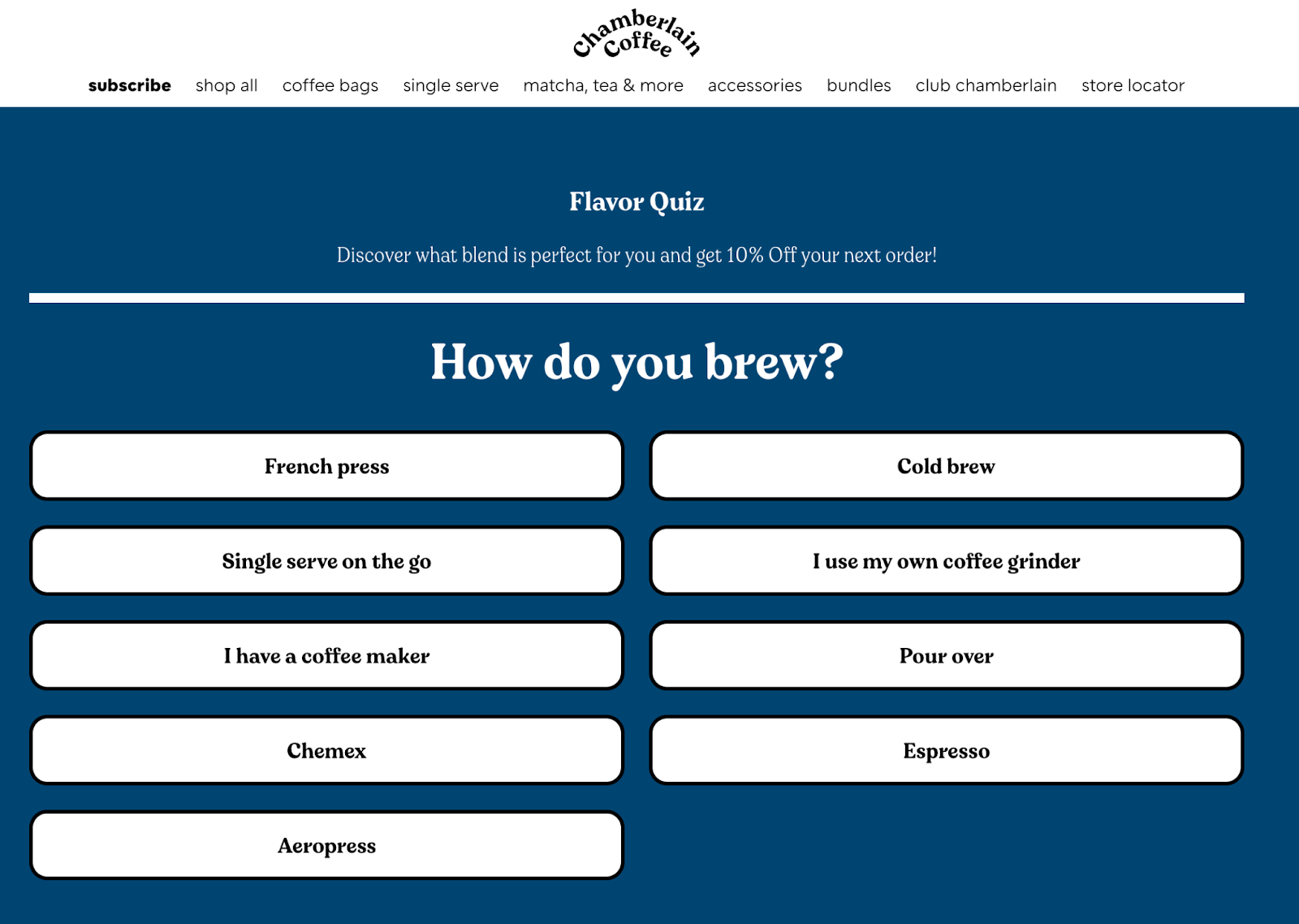
Depending on your product you could tweak this question, for example, alcohol brands might want to ask what mixers you use and if you serve the drink on ice, and in which kind of glass.
Activities and Interests
This is a valuable question that can give you some insight into the lives of your customers, and what they do with their time. This can be really helpful when thinking up new marketing campaigns or how to target your ads.
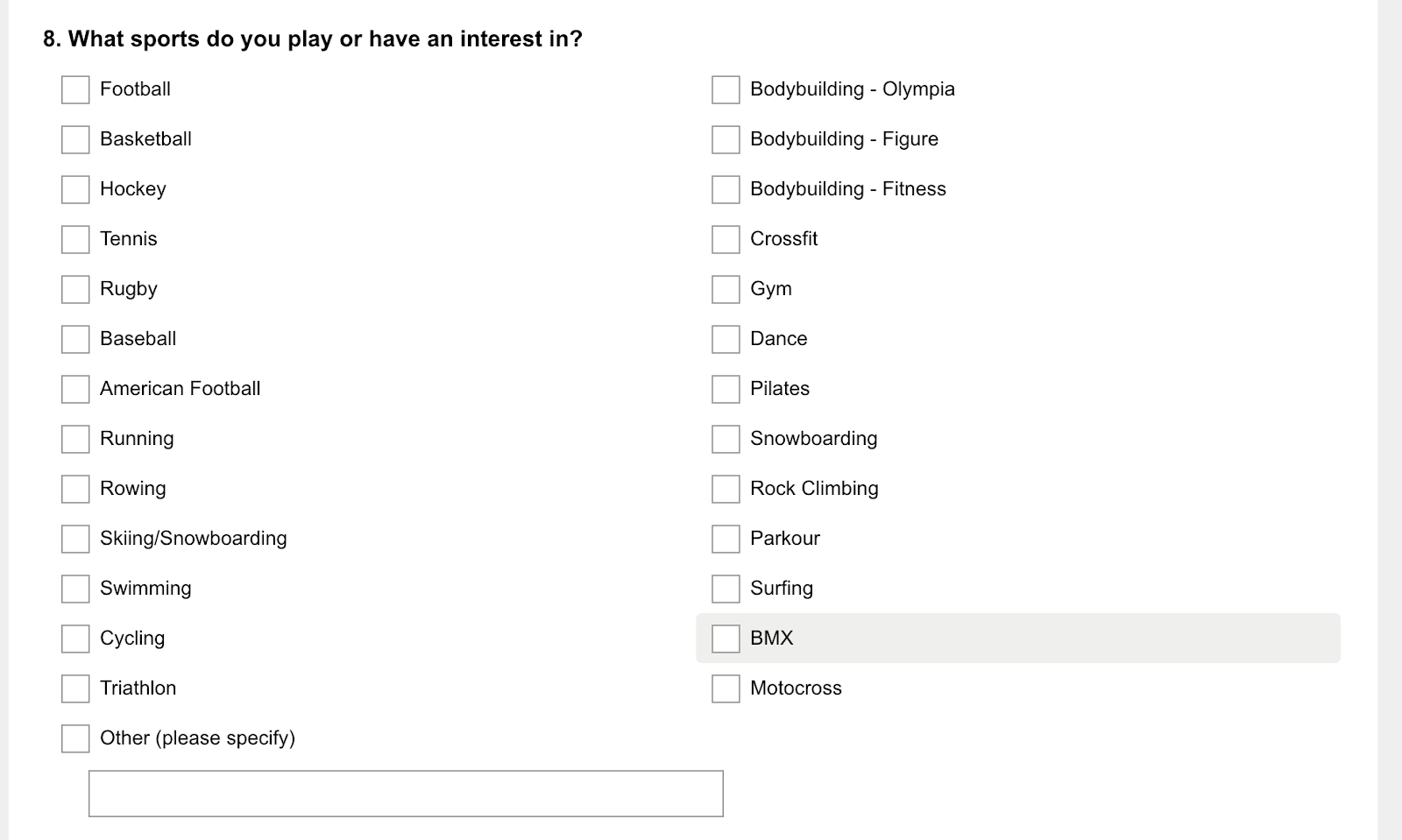
Let’s take a look at an example from MyProtetin.
Here they ask ‘What sports do you play or have an interest in’? Given this is a fitness brand, we can assume we will have a good uptake on this question.
The answers could help us not only work out how to market the product, but could also give us ideas of events we could sponsor or attend.
If you’re using a survey platform like UserLoop - customer responses are automatically linked with the products the customer purchased.
This can be really useful with identifying cohorts of customers - for example do swimmers purchase a specific type of protein? Linking response data to purchase history lets you identify this kind of trend.
Motivations
Lastly, lets take a look at customer motivations. Why have they bought your product in the first place?!
Here, we’ll take a look at an example from Marks & Spencer.
This is a question from a survey sent to Food store customers after they visited a store.
And it asks a simple question - what was the main purpose of your visit to the store?
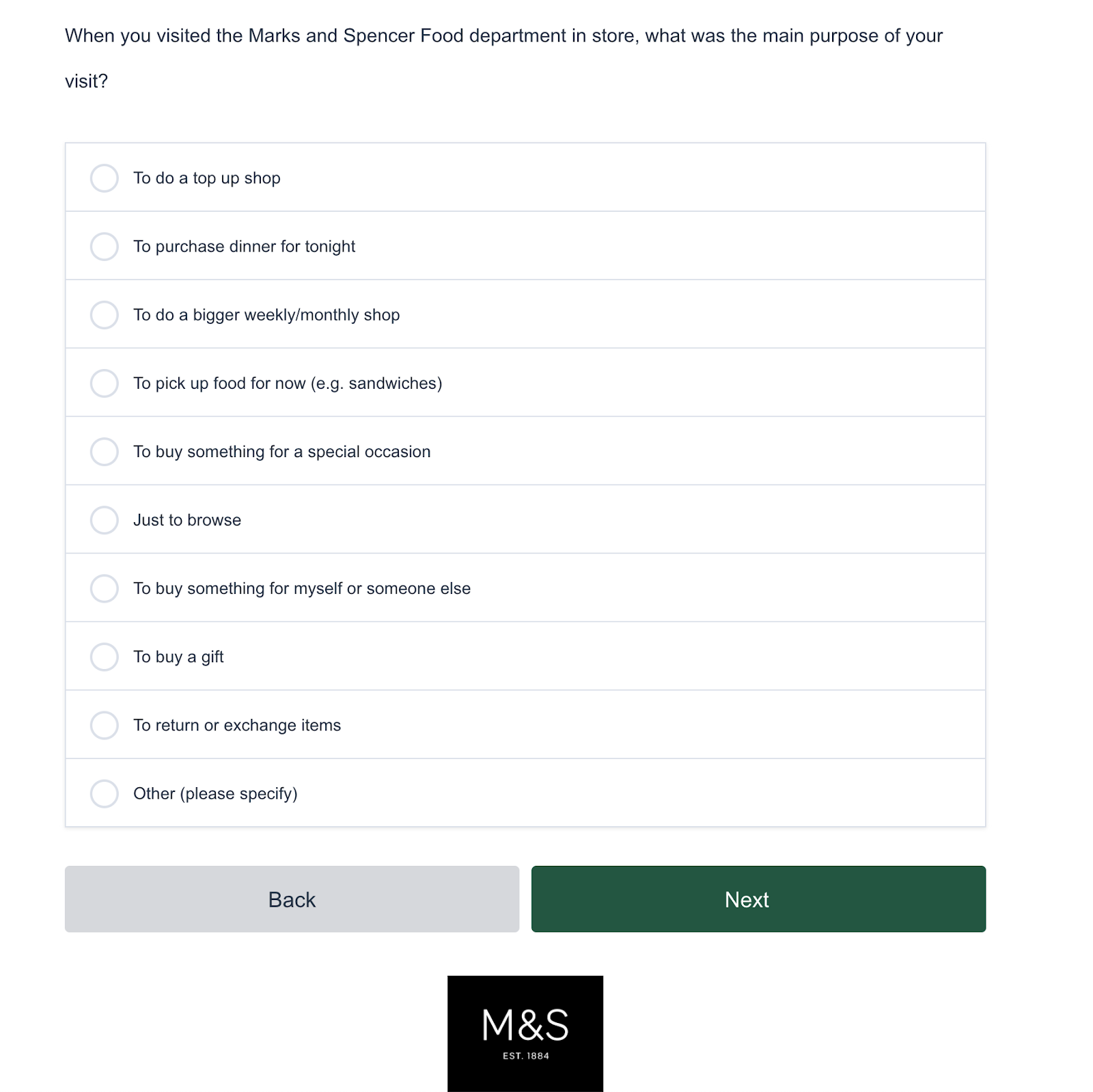
This question can provide a ton of insight around what your customers are looking to get from their shopping experience. Are they shopping for a gift? Are they doing a big shop? Are they just browsing? Do they have a special event in mind?
When you ask a question like this, it’s important to make sure you have high-quality follow-up questions in place to get the full context from the customer.
For example if the customer says they’re shopping for a special occasion, we should then ask them what kind of occasion.
Is it a wedding, birthday, or anniversary - all of these could be used to segment the customer and target them with relevant messages.
Wrapping up
In conclusion, the importance of zero-party data in fine-tuning your brand's offering cannot be overstated.
From examples highlighted from leading Direct-to-Customer (DTC) food and beverage companies, we learn that understanding a customer's specific needs, tastes and preferences, consumption habits, motivations, and interests can lead to more targeted and personalized product and marketing strategies.
Surveys are a fantastic tool for gathering this type of data, enabling companies to gain insights into aspects like purchase motivation, product combinations, desired product changes, and daily product usage.
These insights help brands shape their offerings in ways that best meet the customer's needs.
As exemplified by companies like MyProtein, Athletic Brews, Chamberlain Coffee, and M&S, surveys can reveal the why behind the buy, uncovering unique insights into product use and the customer's lifestyle. By segmenting customers based on their survey responses, companies can deliver targeted marketing messages that align with the customer's needs and preferences, increasing engagement, loyalty, and ultimately, sales.
Furthermore, leveraging platforms like UserLoop can help link customer responses with purchase history, aiding in identifying valuable customer cohorts and trends - you can signup for a free trial here.


The agentic growth toolkit for Shopify
Ask your customers anything
UserLoop talks to your customers at scale with surveys and contests that feed one AI-queryable dataset. AI does the setup and the analysis.
- SurveysFind out why customers buy: checkout, email, link & QR.
- ContestsGiveaways that grow your list and social following.
Free plans on both apps · live in minutes