Different Types of NPS Surveys for Retailers: what to use when
For retailers, every customer interaction counts. Net Promoter Score (NPS) surveys are a powerful tool for understanding customer sentiment and improving the overall customer experience. By using various types of NPS surveys—such as transactional, relationship, touchpoint, product, and employee surveys—retailers can gain targeted insights at every stage of the customer journey. But not all NPS surveys are created equal. To truly harness the power of customer feedback, it’s important to choose the right type of NPS survey for each situation.
In this article, we’ll explore the main types of NPS surveys and how retailers can use them to drive growth and improve customer satisfaction. We’ll also provide real-world examples of retailers using these surveys effectively.
💡 To discover the basics on NPS surveys head to NPS Best Practices Article Here
Contents
- Introduction
- Transactional Survey
- Relationship Survey
- Touchpoint Survey
- Product Survey
- Employee Survey
- How best to leverage NPS Surveys
1. Transactional NPS Surveys: Capturing Customer Sentiment After Each Interaction
Definition:
Transactional NPS surveys are sent right after a specific customer interaction, such as a purchase, a support interaction, or a product delivery. These surveys aim to measure the customer’s experience with that particular interaction, rather than their overall relationship with the brand.
Use Case for Retailers:
Transactional NPS surveys are particularly useful for identifying immediate areas for improvement. For example, if a customer gives a low NPS score right after receiving a product, it may indicate issues with shipping or product quality. On the other hand, high scores could signify that customers are happy with their purchase and are more likely to become repeat buyers.
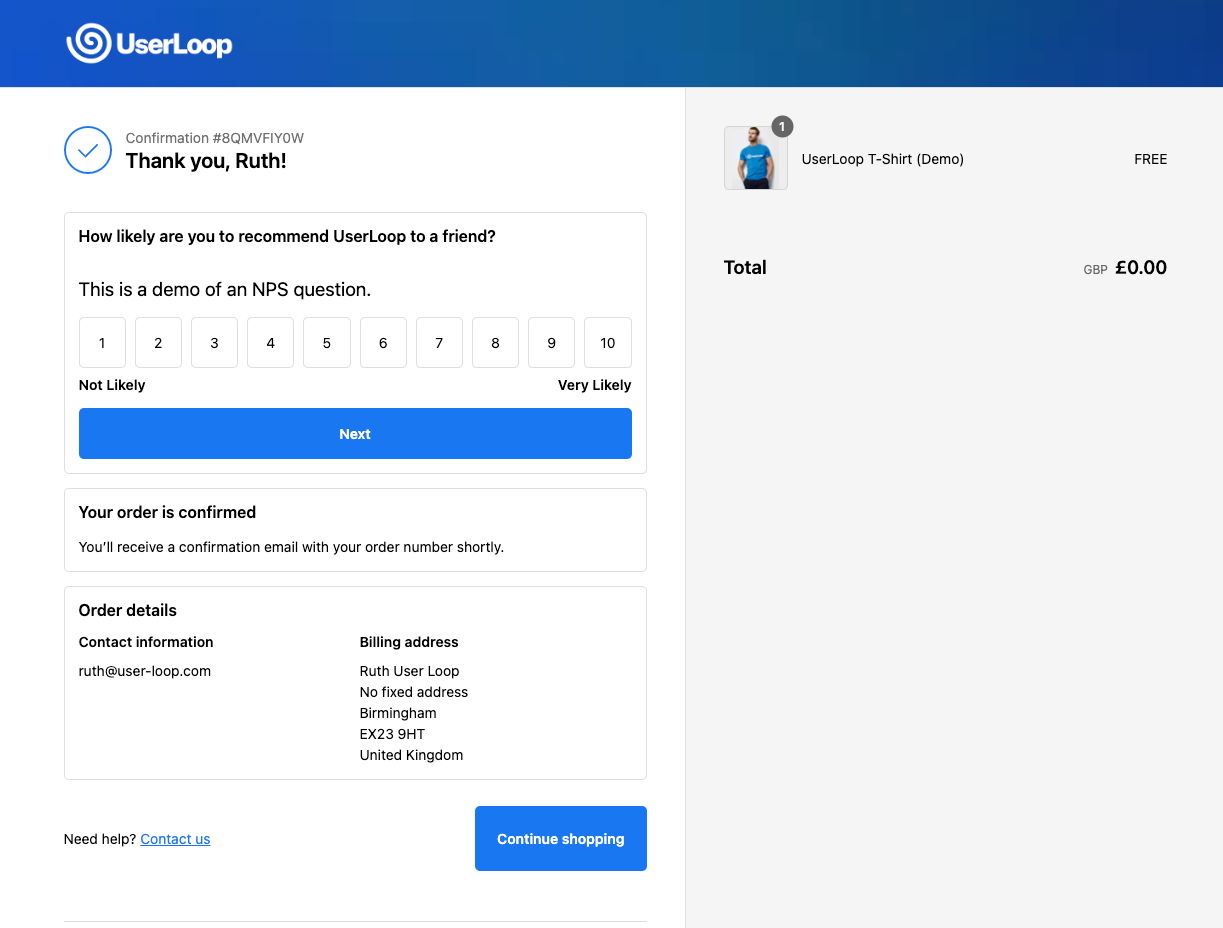 Transactional NPS Survey
Retailer Example:
Aventon Bikes, an independent bike brand based out of southern California uses transactional surveys post purchase. They appear on the order page helping them gather immediate feedback on customer satisfaction and understand what attracted the customer to Aventon.
"If you're looking for actionable, data-driven insights to enhance customer satisfaction and boost profitability, UserLoop is an exceptional tool." Jason Quey, Growth Lead at Aventon
2. Relationship NPS Surveys: Understanding the Overall Customer Sentiment
Definition:
Relationship NPS surveys are sent periodically (e.g., quarterly or annually) to assess a customer’s overall relationship with the brand. Unlike transactional surveys, these surveys do not focus on a single interaction but rather evaluate long-term customer loyalty and satisfaction.
Use Case for Retailers:
Relationship NPS surveys help retailers understand how their customers feel about the brand as a whole. They can also track changes in customer sentiment over time, allowing brands to identify trends and adjust their strategies accordingly.
Retailer Example:
Apple uses relationship NPS surveys to gauge customer loyalty at a brand level. Every few months, they send out NPS surveys to their customers to assess overall satisfaction. The results are used to refine everything from product development to customer support strategies.
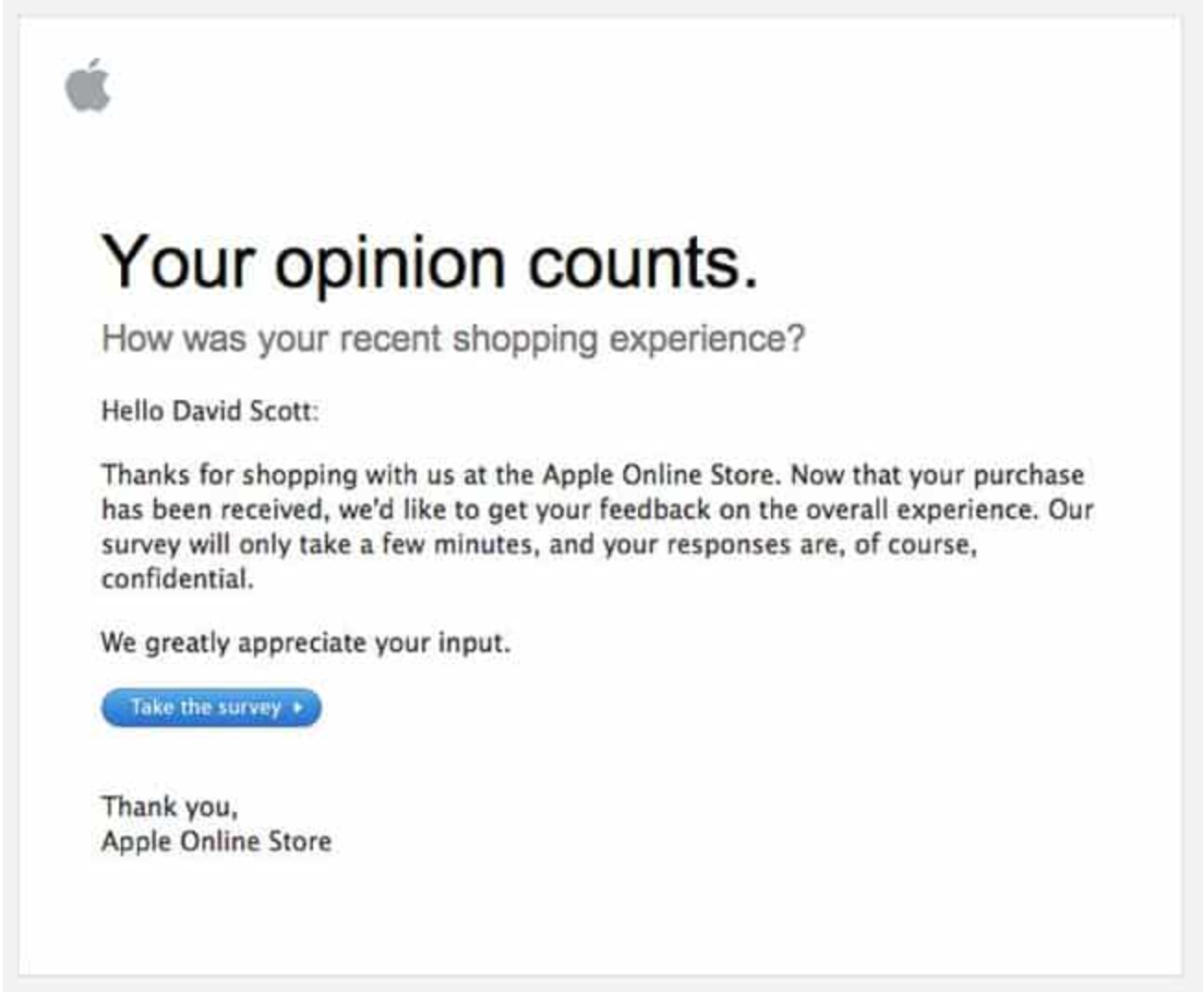 Apple NPS Survey
3. Touchpoint NPS Surveys: Measuring Customer Experience at Various Stages of the Customer Journey
Definition:
Touchpoint NPS surveys are designed to capture feedback at different stages of the customer journey, such as product discovery, onboarding, post-purchase, or product returns. These surveys help businesses identify specific touchpoints where they excel or need improvement.
Use Case for Retailers:
For example, a retailer can send a touchpoint NPS survey immediately after a customer completes an online checkout to understand if there were any issues during the purchase process. Similarly, a survey can be sent after a product return to gauge the ease of the return process and the customer’s satisfaction with the service.
Retailer Example:
Warby Parker, the eyewear retailer, uses touchpoint NPS surveys at various stages, including when a customer tries their Home Try-On program and after the purchase is completed. This approach helps Warby Parker understand if customers are satisfied with the trial experience and if there are any issues that need to be addressed to improve conversion rates.
4. Product NPS Surveys: Understanding Product-Specific Sentiment
Definition:
Product NPS surveys focus on customer satisfaction with a specific product rather than the overall brand. This type of survey is ideal for understanding how well a particular product is received by the market, identifying product-related issues, and gathering feedback on product features.
Use Case for Retailers:
Retailers can use product NPS surveys to determine which products resonate most with customers and why. For example, if a product receives consistently high NPS scores, it can be highlighted in marketing campaigns or used as a benchmark for developing new products. Conversely, low scores may indicate the need for product improvement or discontinuation.
Retailer Example:
Sephora, a leading beauty retailer, uses product NPS surveys to evaluate new product launches. After a customer makes a purchase, Sephora sends a survey asking how satisfied they are with the product. The feedback is used to fine-tune product offerings and improve inventory management by stocking items that customers love.
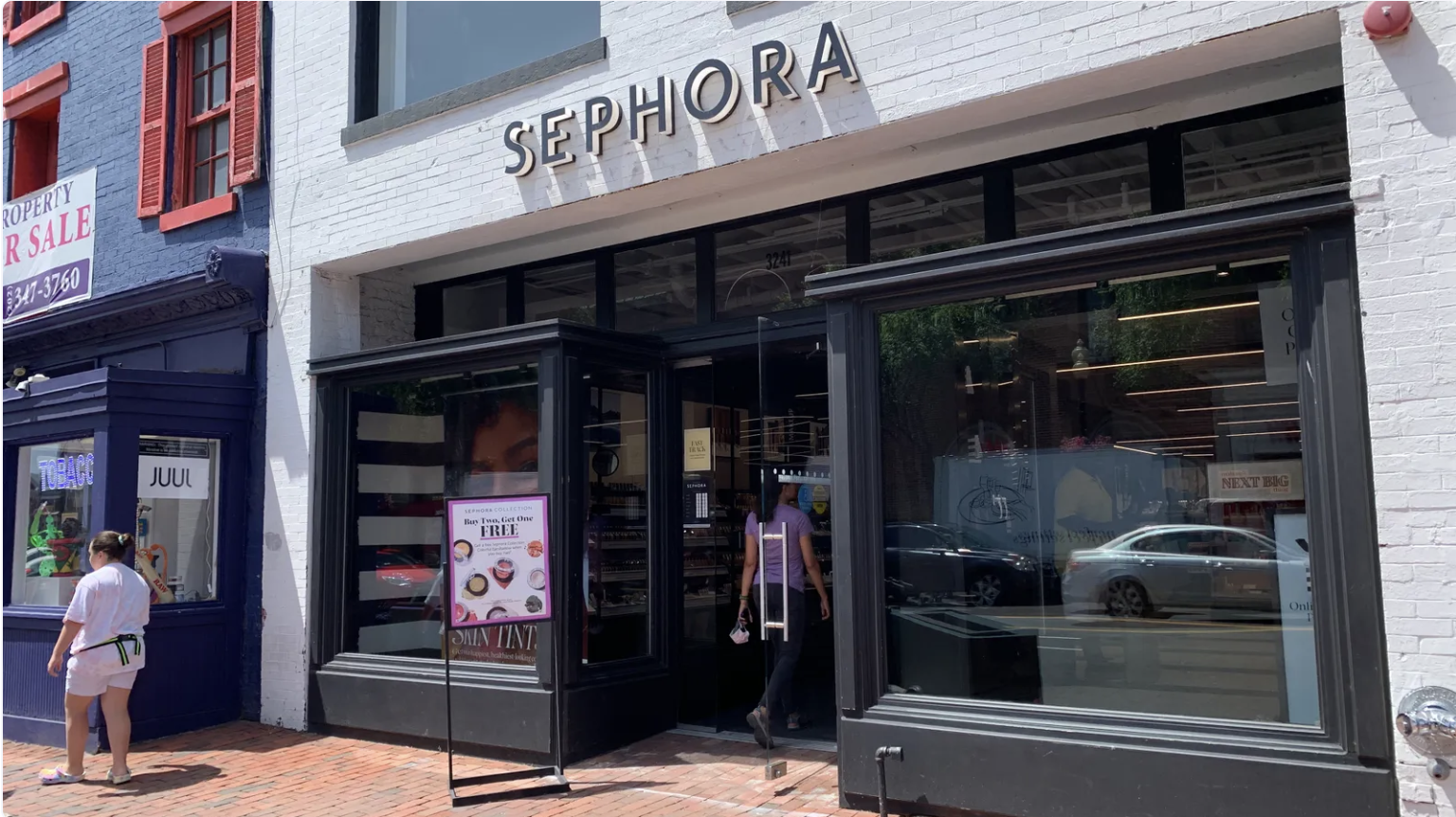 Sephora - Popular Beauty Online and Store Destination
5. Employee NPS (eNPS) Surveys: Gauging Employee Loyalty and Satisfaction
Definition:
Employee NPS (eNPS) surveys are used internally to measure employee satisfaction and engagement. While these surveys do not directly impact customer experience, happy employees often translate into better customer service, which in turn can lead to higher customer NPS scores.
Use Case for Retailers:
Retailers can use eNPS surveys to identify internal issues and areas for improvement within the workforce. This is especially important for retail stores where customer interactions with staff are a crucial part of the experience.
Retailer Example:
Starbucks uses eNPS surveys to monitor employee satisfaction across its numerous outlets. By regularly surveying their baristas and store managers, Starbucks ensures that employees feel valued and engaged, which helps maintain a consistent and positive experience for customers.
💡 Understand your NPS Score with the UserLoop NPS calculator
How Retailers Can Leverage NPS Surveys to Improve Customer Experience
To make the most out of NPS surveys, retailers should:
- Segment Surveys Based on Customer Profiles and Stages:
Use different types of NPS surveys to segment customers based on their profiles and interactions. For example, high-spending customers might receive relationship NPS surveys, while first-time buyers might get a transactional survey after their first purchase. - Act on Customer Feedback Quickly:
Set up triggers and workflows to respond to negative feedback quickly. This could mean reaching out to dissatisfied customers personally or implementing changes based on repeated feedback trends. - Use NPS Data to Identify High-Value Customers:
NPS survey responses can be linked to purchase data to identify customers who are likely to spend more and refer others. Retailers can create targeted marketing campaigns for these high-value customer segments. - Incorporate Employee Feedback into Customer Experience Strategies:
Employee NPS scores can be used alongside customer NPS scores to get a holistic view of how internal satisfaction correlates with customer experience. This can help in designing better training programs and improving in-store customer interactions.
💡 For a complete best practice guide head to our blog - NPS Survey Best Practices: How to Maximize Customer Insights
Conclusion
NPS is the foundation of most customer experience (CX) measurement programs. The surveys are a versatile tool that retailers can use to capture customer sentiment and drive meaningful improvements across various areas of the business. By utilizing transactional, relationship, touchpoint, product, and employee NPS surveys, retailers like Aventon Bikes, Apple, Warby Parker, Sephora, and Starbucks have been able to enhance customer experience, boost loyalty, and ultimately, increase revenue.
By choosing the right type of NPS survey for each situation, retailers can gain deeper insights into customer behavior, identify key areas for improvement, and build stronger, long-lasting relationships with their customers.
UserLoop
UserLoop offers powerful customer feedback tools for Shopify that help store owners collect insights at every stage of the customer journey. With UserLoop, you can run NPS and other customer experience surveys at checkout, through email, or via links. These surveys gather valuable data on customer satisfaction, product preferences, and more. The platform uses AI to help craft survey questions and analyze responses, making it easy to understand and act on customer feedback. Store owners can use the data to identify high-value customer segments, uncover issues affecting conversion, and optimize the overall shopping experience. Features like automated discount codes and integrations with Shopify make it simple to boost response rates and leverage feedback to drive growth.
💡 Head to the Shopify App Store to start your UserLoop free trial


The agentic growth toolkit for Shopify
Ask your customers anything
UserLoop talks to your customers at scale with surveys and contests that feed one AI-queryable dataset. AI does the setup and the analysis.
- SurveysFind out why customers buy: checkout, email, link & QR.
- ContestsGiveaways that grow your list and social following.
Free plans on both apps · live in minutes