Cross Selling vs Upselling: Which Strategy Works Best?
Making the right choice between cross selling vs upselling can dramatically impact your store's bottom line.
These strategies are not just sales tactics - they're crucial to deepening customer relationships, understanding customer segmentation, and maximizing profits.
Cross-selling and upselling can be among the most effective tools in your arsenal to increase order values, but knowing when to implement each can be the difference between success and overload for your customers.
In this post, we'll explore the nuances of cross selling vs upselling, including definitions like cross selling meaning and how it contrasts with upselling.
We'll delve into identifying the differences between these approaches, such as upsell vs cross sell, and understand the significance of each in the context of customer segmentation.
You'll learn effective strategies for both cross selling and upselling, aimed at e-commerce businesses - and in particular, Shopify store owners.
Whether it's exploring upsell cross sell techniques or understanding the dynamic between cross sell up sell, this guide will provide an actionable roadmap to optimize your sales strategy for better customer engagement and increased revenue.
Understanding Cross-Selling
Definition and Basic Concept
Cross-selling is a sales technique where you offer additional products to customers to complement their initial purchase.
This strategy involves suggesting related, supplementary products based on the customer's interest in, or purchase of, one of your company's products. It is a method that persuades prospective shoppers to buy supplementary products, often seen in online shops like Amazon, which suggests relevant products based on customer behaviors.
Key Benefits
The primary reason to implement cross-selling is to generate more revenue.
By increasing the average order value, businesses can significantly boost their profit margins.
For instance, using cross-sells to bump up the average order value by $5 can lead to a 6% increase in profit margin over a year.
Cross-selling can enhance customer experience, making it a win-win situation; customers get better value for money, and businesses increase their revenue.
Cross-selling also plays a crucial role in improving customer lifetime value and retention, which is vital for business growth. It increases sales revenue, improves customer satisfaction, and, in B2B scenarios, deepens integration in a customer's business, thereby increasing Customer Lifetime Value (CLV). Additionally, effective cross-selling can help differentiate your brand by offering unique packaged selling products, which can bring back many customer insights.
Common Scenarios and Examples
You might encounter cross-selling in everyday scenarios without even recognizing it. For example, a food restaurant might ask if you want burgers with your order, or an eCommerce store might display a "customers also bought" section. Another classic example is an electronics retailer offering a deal on a computer case, mouse, and screen cleaning wipes to a customer who purchases a new laptop.
Cross-selling is not limited to physical products; it also applies to services. For instance, an insurance provider might offer renters' insurance to its car policyholders as part of a cross-selling strategy. These practices not only help in increasing the immediate sale value but also build a long-term relationship with the customer, increasing their loyalty and potentially turning them into brand advocates.
Understanding Upselling
Definition and Basic Concept
Upselling is a sales technique where you encourage customers to purchase a more expensive item, an upgrade, or add extra features to their original choice, aiming to increase the business's revenue. This strategy is not just about selling higher-priced items but about enhancing the customer's experience by offering better value or more comprehensive solutions. For example, if a customer is considering a basic model of a product, you might suggest a premium version that offers additional features or benefits, thus potentially increasing your average order value.
Upselling Explained by Patrick Dang
Key Benefits
One of the primary advantages of upselling is the significant boost it can give to your revenue. It's more cost-effective to sell to existing customers than to acquire new ones, making upselling a critical component of customer retention and profitability. Additionally, upselling can enhance customer satisfaction as it provides them with upgrades that are tailored to their needs, often improving the overall user experience. By effectively upselling, you can increase the Customer Lifetime Value (CLV), which is the total value a customer contributes to your business over the entirety of their relationship.
Common Scenarios and Examples
Upselling is prevalent across various industries. In the hospitality sector, for example, a hotel might offer a room upgrade with better views or additional amenities for an extra charge. In retail, a customer purchasing a laptop might be offered an extended warranty or a software upgrade at the point of sale. Another common scenario is in online services, where companies offer basic services for free but promote paid versions with more features or fewer restrictions. These strategies not only increase the transaction value but also improve customer engagement by providing options that more closely meet their needs and expectations.
Cross-Selling vs. Upselling: Identifying the Differences
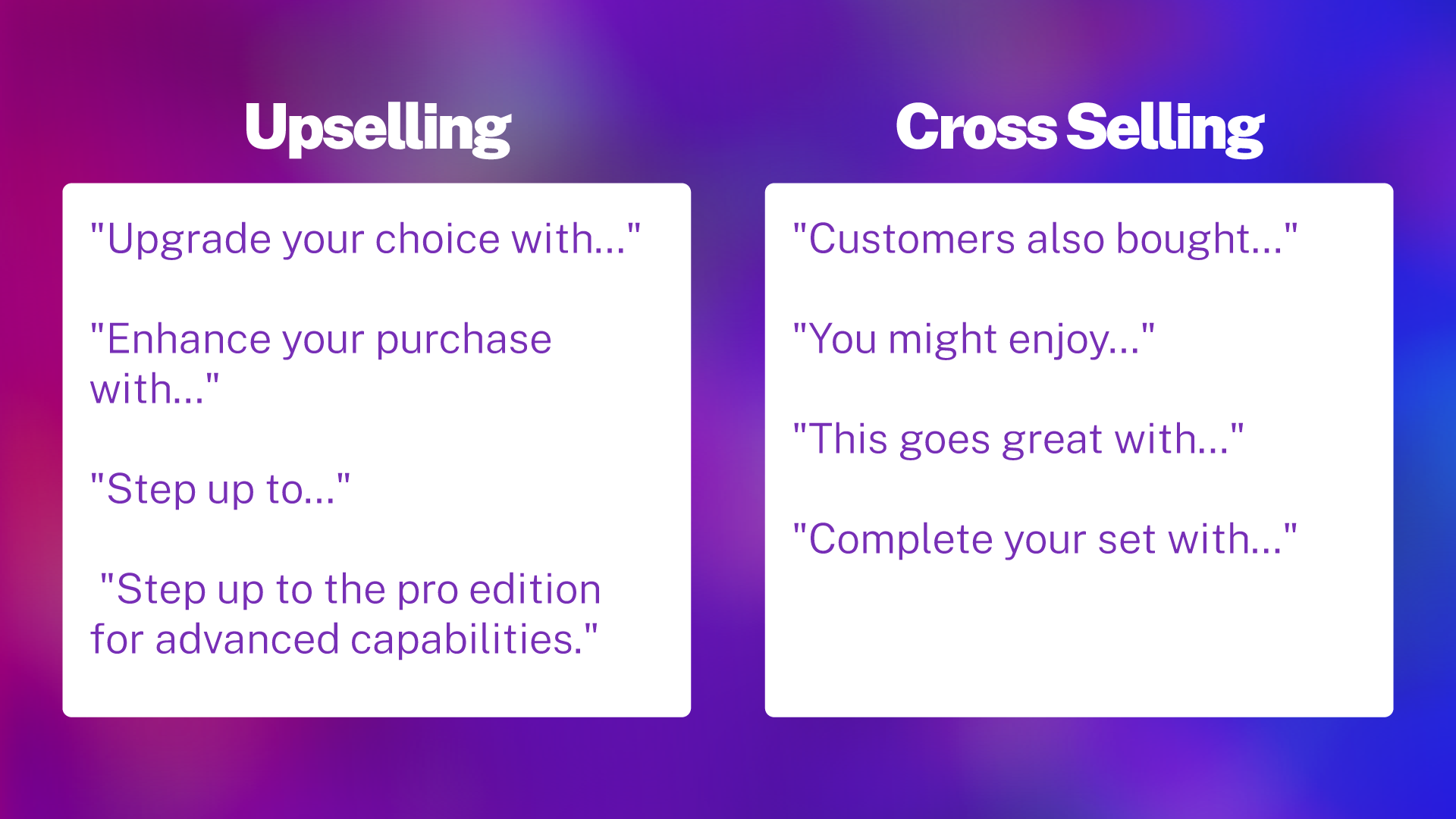
Upselling
"Upgrade your choice with..."
- Trying to sell customers a higher-end version of their chosen product.
- Example: "For just $50 more, you can get the deluxe model with extra features."
"Enhance your purchase with..."
- Offering a better version or premium feature.
- Example: "Upgrade to our premium package for added benefits and extended warranty."
"Step up to..."
- Encouraging customers to choose a more expensive version.
- Example: "Step up to the pro edition for advanced capabilities."
Cross-Selling
"Customers also bought..."
- Suggesting related items that complement the initial product.
- Example: "Customers who bought this camera often add a memory card and case to their order."
"You might enjoy..."
- Recommending additional products that enhance the original purchase.
- Example: "You might enjoy these matching headphones with your new smartphone."
"Complete your set with..."
- Offering complementary items.
- Example: "Complete your set with our stylish accessories that match your new outfit."
Purpose and Approach
When distinguishing between cross-selling and upselling, it's crucial to understand their unique purposes and approaches.
Cross-selling aims to enhance the customer's initial purchase by offering additional, complementary products or services. For instance, if you're buying a camera, being offered a tripod or a camera bag represents a cross-sell because these items add value to the primary purchase. Upselling, on the other hand, encourages customers to purchase a more expensive or upgraded version of the item they are already considering. This could mean suggesting a camera with higher resolution when a customer shows interest in a basic model.
The approach for each strategy also differs significantly. Upselling focuses on upgrading a single product, enhancing its features or quality, thereby increasing the value of the customer's original choice. Cross-selling, however, involves suggesting multiple different products that complement the first, aiming to increase the overall basket size and enrich the customer's experience.
Impact on Sales and Customer Relationship
Both cross-selling and upselling have profound impacts on sales and customer relationships.
By implementing these strategies, businesses can significantly boost their revenue and profit margins.
Upselling, by moving customers to higher-value products, and cross-selling, by increasing the number of items sold, both contribute to a higher average order value (AOV).
These strategies can enhance customer satisfaction by providing more tailored solutions and options, which leads to improved customer loyalty and retention.
By showing that you understand your customers' needs and preferences, you can build a stronger relationship and trust, which is essential for long-term customer engagement.
When to Use Each Strategy
Choosing when to use each strategy depends largely on the customer's current engagement and the nature of their purchases.
Upselling is most effective when a customer shows a strong interest in a particular product and might benefit from added features or a premium version. For example, if a customer is considering a basic smartphone model, you might upsell by highlighting the benefits of a model with more storage or better camera capabilities.
Cross-selling is appropriate when you can offer products that complement the customer's current selection. This strategy works well during the checkout process or after the initial purchase, where you can suggest additional items like accessories or service extensions. It's crucial to ensure that the suggested products are truly relevant and add value to the primary purchase to avoid overwhelming the customer.
By understanding these strategies and applying them thoughtfully, you can not only increase your sales but also improve customer satisfaction and loyalty, ensuring a more profitable and sustainable business model.
Effective Strategies for Cross-Selling and Upselling
Knowing Your Audience and Their Needs
Understanding your audience is crucial in tailoring effective upselling and cross-selling strategies.
By delving into demographic and psychographic information and gathering customer feedback, you can identify products that are most valuable for upselling or cross-selling.
Creating buyer personas based on post-purchase behavior also helps in understanding evolving customer needs and expectations, which is key to making personalized cross-sales that resonate well with your clients.
Leveraging Customer Data for Personalized Offers
Leverage the power of customer data to make your upselling and cross-selling efforts more personalized and effective.
Utilizing data analytics, you can gain insights into customer preferences and buying patterns, which allows for more targeted product recommendations. AI-powered tools can also be used to show relevant product recommendations, ensuring the offers are highly personalized and more likely to convert.
Creating Bundles and Exclusive Offers
Bundling products can significantly enhance the perceived value of offerings and simplify the customer's decision-making process.
By combining main products with complementary items and offering them at a discounted rate, you can increase the average order value and customer satisfaction.
Consider creating special packages that address specific customer needs or occasions, making them feel exclusive and more appealing.
Using Multiple Channels for Greater Reach
Utilize multiple channels to reach out to your customers with upsell and cross-sell offers.
Email remains a powerful tool for sending product recommendations and exclusive offers.
Ensure these emails highlight the benefits of the additional products and include clear calls to action. Social media platforms can also be effective in displaying products and gathering customer testimonials, which help build trust and influence purchasing decisions.
Conclusion
Through the exploration of cross selling and upselling, we've unraveled the complexities and distinct advantages of each strategy in enhancing customer value and driving greater revenue.
The tactical use of these strategies, tailored to customer needs and behaviors, underpins a successful sales approach that not only boosts the average order value but also solidifies customer relationships and loyalty. It's clear that the choice between cross selling and upselling is not a matter of preference but rather a strategic decision based on deep customer insights and the specific context of each sale.
Recognizing the broader implications of effectively implementing these strategies reveals their undeniable significance in achieving sustainable business growth. As businesses continue to navigate the competitive landscape, the insights provided here serve as a roadmap to leveraging cross selling and upselling in enriching the customer experience while maximizing profitability. The key takeaway is the importance of knowing your audience and delivering value that resonates, ensuring a win-win scenario for both the business and its customers.
FAQs
Which strategy is more effective, cross-selling or upselling?
Upselling aims to enhance the value of a single purchase by encouraging customers to buy a more expensive version of an item, while cross-selling seeks to increase the overall number of items purchased by suggesting additional, related products. Upselling focuses on upgrading or improving a single product, whereas cross-selling targets the sale of multiple related products.
How can I effectively upsell or cross-sell to my customers?
To effectively upsell or cross-sell:
- Focus on increasing the lifetime value of existing customers through strategic upselling.
- Reduce customer acquisition costs by effectively cross-selling.
- Avoid decision overload by offering tailored suggestions.
- Create a sales-focused user experience that encourages additional purchases.
- Offer product bundles to simplify decision-making for customers.
- Utilize price anchoring and the strategy of dummy choices to influence purchasing decisions.
- Always aim to be helpful and provide value, avoiding pushy or aggressive sales tactics.
Is cross-selling a beneficial strategy?
Yes, cross-selling is a beneficial strategy. It not only increases the average order value at the time of purchase but also boosts the rates of returning customers and repeat purchases. This strategy enhances customer lifetime value and contributes to reducing customer acquisition costs, making it a valuable approach for businesses.
Are there times when upselling or cross-selling should be avoided?
Yes, there are situations when it's best to avoid upselling or cross-selling. For example, if a customer has a strict budget or a specific need, attempting to upsell or cross-sell can create discomfort or pressure, potentially harming the customer relationship. Additionally, if a customer has already made a firm decision or commitment to purchase, introducing new options or alternatives could lead to confusion and decision paralysis, detracting from the customer experience.


The agentic growth toolkit for Shopify
Ask your customers anything
UserLoop talks to your customers at scale with surveys and contests that feed one AI-queryable dataset. AI does the setup and the analysis.
- SurveysFind out why customers buy: checkout, email, link & QR.
- ContestsGiveaways that grow your list and social following.
Free plans on both apps · live in minutes