Creating Effective Surveys with the Likert Scale
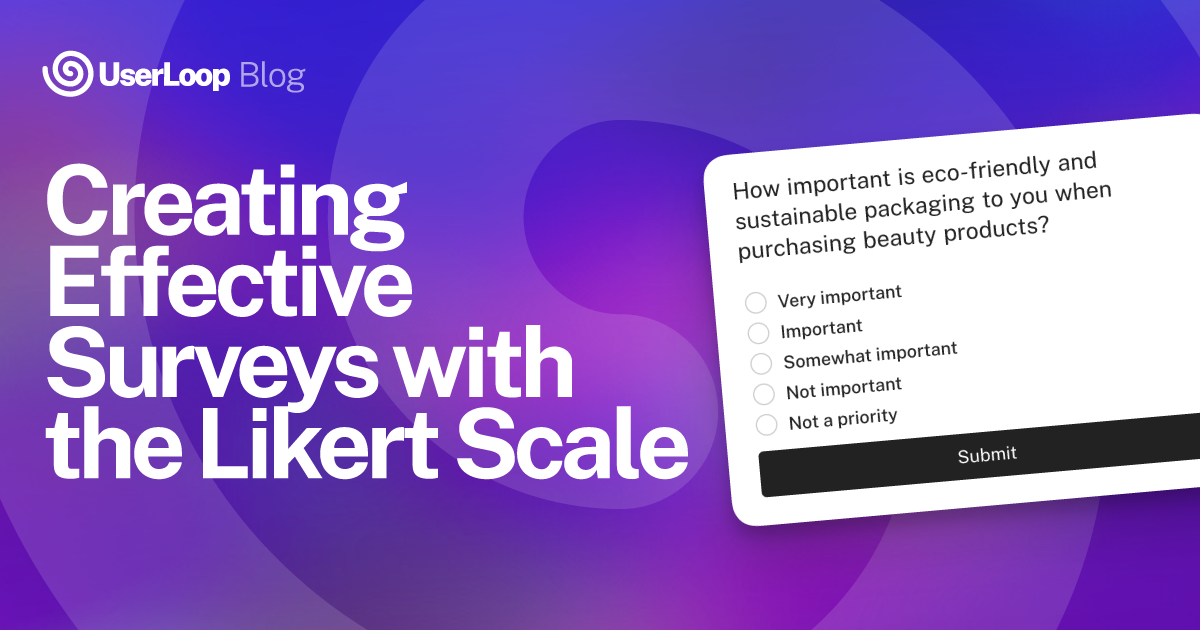
Ever wondered how companies gage customer satisfaction or measure employee engagement?
Enter the Likert scale, your trusty sidekick in the world of surveys and feedback collection.
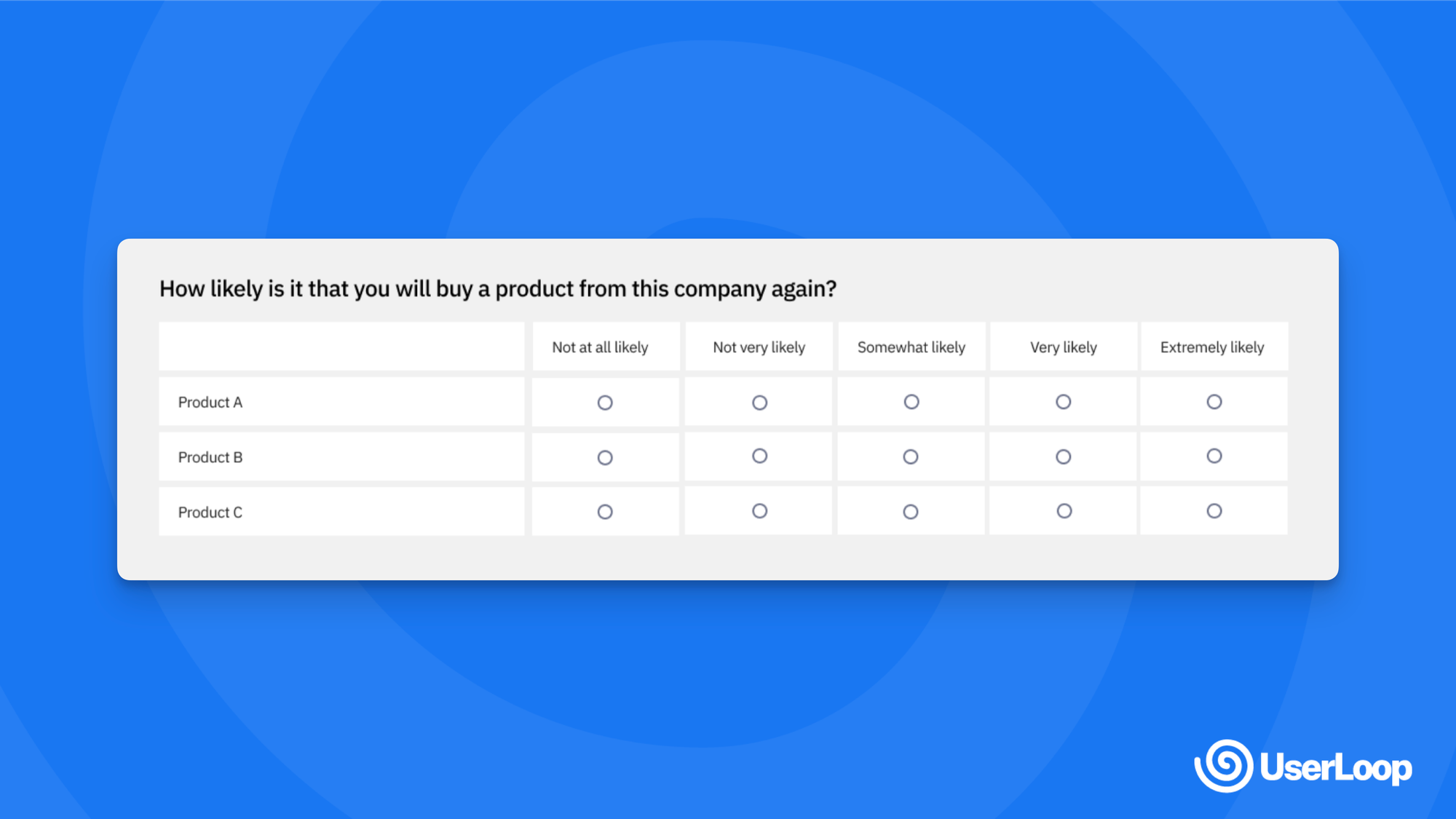
This powerful tool helps you gather quantitative data through a series of closed-ended questions, allowing for easy statistical analysis and interpretation. Whether you're a Shopify store owner looking to boost customer loyalty or a marketer aiming to fine-tune your strategies, understanding Likert scales is key to crafting effective surveys.
In this article, we'll dive into the nuts and bolts of Likert scales and show you how to use them like a pro. You'll learn about different types of Likert scale questions, from the classic 5-point scale to more nuanced options. We'll also share best practices for creating surveys that yield meaningful insights, and help you overcome common challenges in Likert scale design. By the end, you'll be well-equipped to create surveys that hit the mark and provide valuable data to grow your business.
The Fundamentals of Likert Scales
What is a Likert scale?
A Likert scale is a powerful tool used in surveys to measure attitudes, opinions, and perceptions. It's a type of psychometric scale that allows respondents to indicate their level of agreement or disagreement with a statement [1]. You'll often see Likert scales in customer satisfaction surveys, employee engagement questionnaires, and market research studies [2].
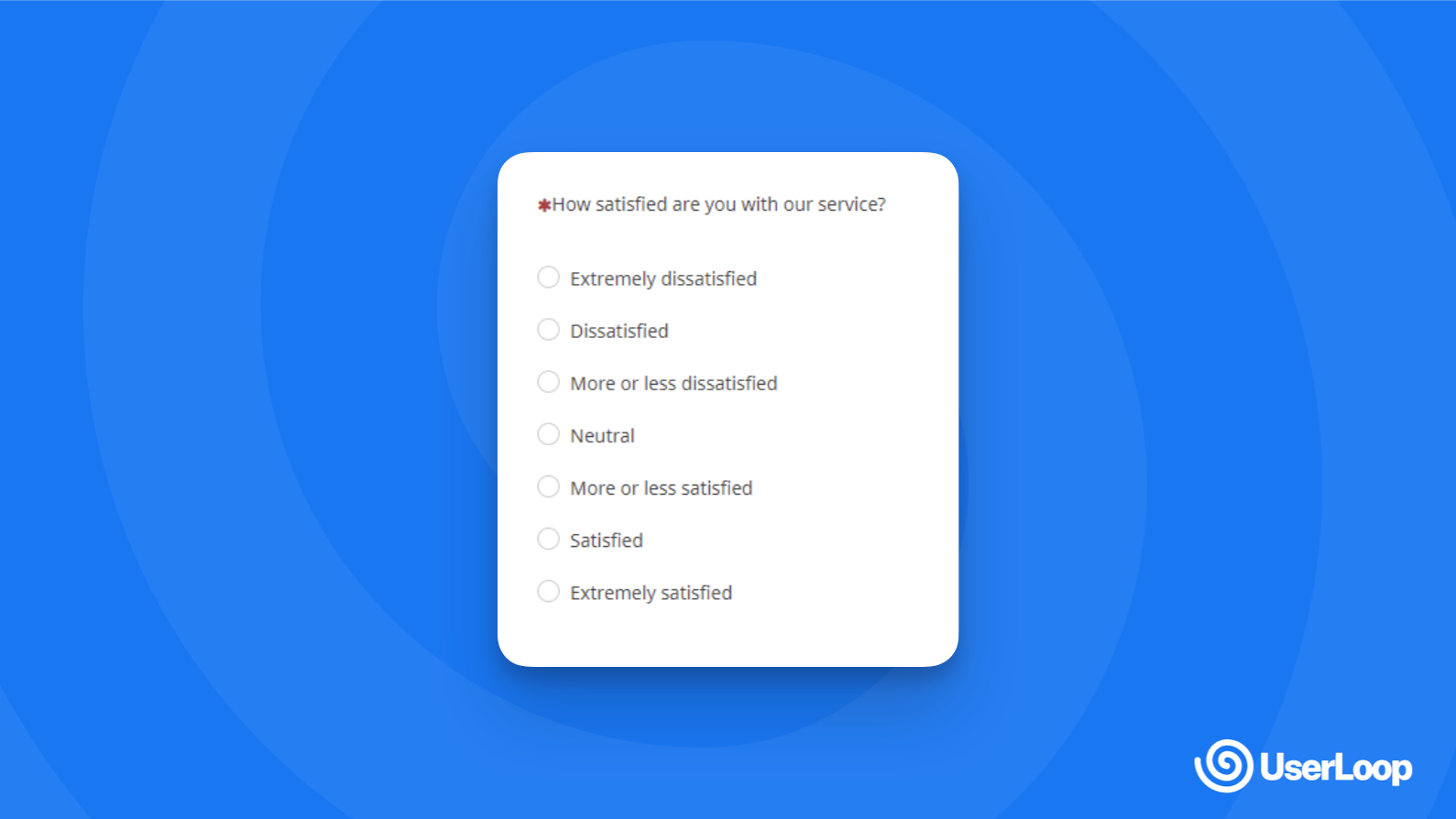
Typically, a Likert scale consists of 5 or 7 points, ranging from one extreme attitude to another.
For example, you might see options like "Strongly Agree," "Agree," "Neutral," "Disagree," and "Strongly Disagree" [2]. This structure gives you a more nuanced understanding of people's opinions compared to simple yes/no questions.
History and development
The Likert scale gets its name from Rensis Likert, an American psychologist who developed this method in the 1930s [3].
Likert was on a mission to create a more efficient way of evaluating subjective responses to various statements. He realized that traditional methods often lacked clarity and accuracy, making data analysis tricky [3].
In 1932, Likert introduced his revolutionary 7-point bipolar agreement scale [3]. This scale has since become one of the most widely-used tools in social science research, second only to the simple yes/no dichotomous scale [3].
Common applications in research
You'll find Likert scales used across various fields, including:
- Psychology and sociology
- Market research
- Customer satisfaction surveys
- Employee engagement studies
- Educational assessments
In medical education, for instance, Likert-type scales are frequently used for end-of-rotation trainee feedback and faculty evaluations [4]. They're also handy for measuring the effectiveness of educational interventions [4].
What makes Likert scales so popular? They're versatile and easy to understand. You can use them to measure agreement, quality, importance, frequency, or even probability [1]. Plus, they provide a balance between getting detailed information and keeping the survey user-friendly.
Types of Likert Scale Questions
Likert scales are versatile tools that can measure various aspects of people's attitudes and opinions. Let's explore the different types of Likert scale questions you can use in your surveys to gather meaningful insights.
Agreement scales
The classic Likert scale measures the level of agreement with a statement [5]. You'll typically see options ranging from "Strongly Agree" to "Strongly Disagree" [5]. For example:
How much do you agree with the statement: "Our customer service exceeded your expectations"?
- Strongly Agree
- Agree
- Neutral
- Disagree
- Strongly Disagree
This type of scale helps you gage how strongly your customers feel about specific aspects of your product or service.
Frequency scales
When you want to know how often something occurs, frequency scales come in handy [2]. These scales use options like:
- Always
- Often
- Sometimes
- Rarely
- Never
For instance, you might ask: "How often do you seek assistance from our customer support team?" This information can help you understand usage patterns and identify areas for improvement.
Importance scales
To measure how much value respondents place on different aspects, use importance scales [2]. A typical importance scale might look like this:
- Very Important
- Important
- Moderately Important
- Slightly Important
- Not Important
This type of scale is great for prioritizing features or understanding what matters most to your customers.
Quality scales
Quality scales help you assess how well something performs or how good something is [2]. A common quality scale includes options like:
- Excellent
- Good
- Fair
- Poor
- Very Poor
You could use this to ask: "How would you rate the quality of our product?"
Likelihood scales
When you want to predict future behavior or gage potential actions, likelihood scales are your go-to [2]. These scales often use options like:
- Definitely
- Probably
- Possibly
- Probably Not
- Definitely Not
For example: "How likely are you to recommend our product to a friend?"
By using these different types of Likert scale questions, you can gather nuanced data about your customers' attitudes, behaviors, and preferences. Remember, the key is to choose the scale that best fits the information you're trying to uncover.
Using AI to generate Likert Scales
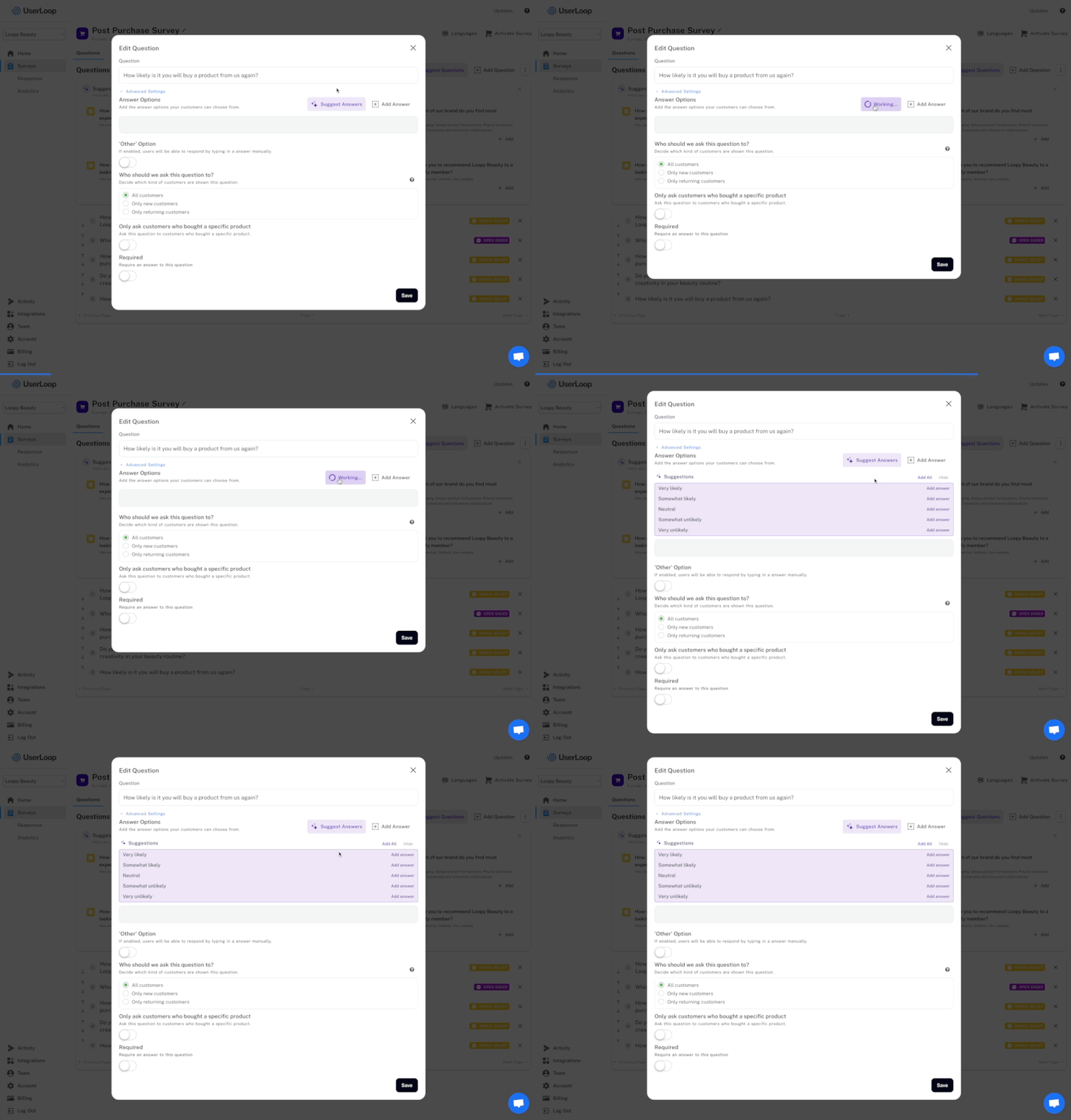
Survey tools like UserLoop have built in AI which can automatically write Likert scale survey questions tailored to your brand.
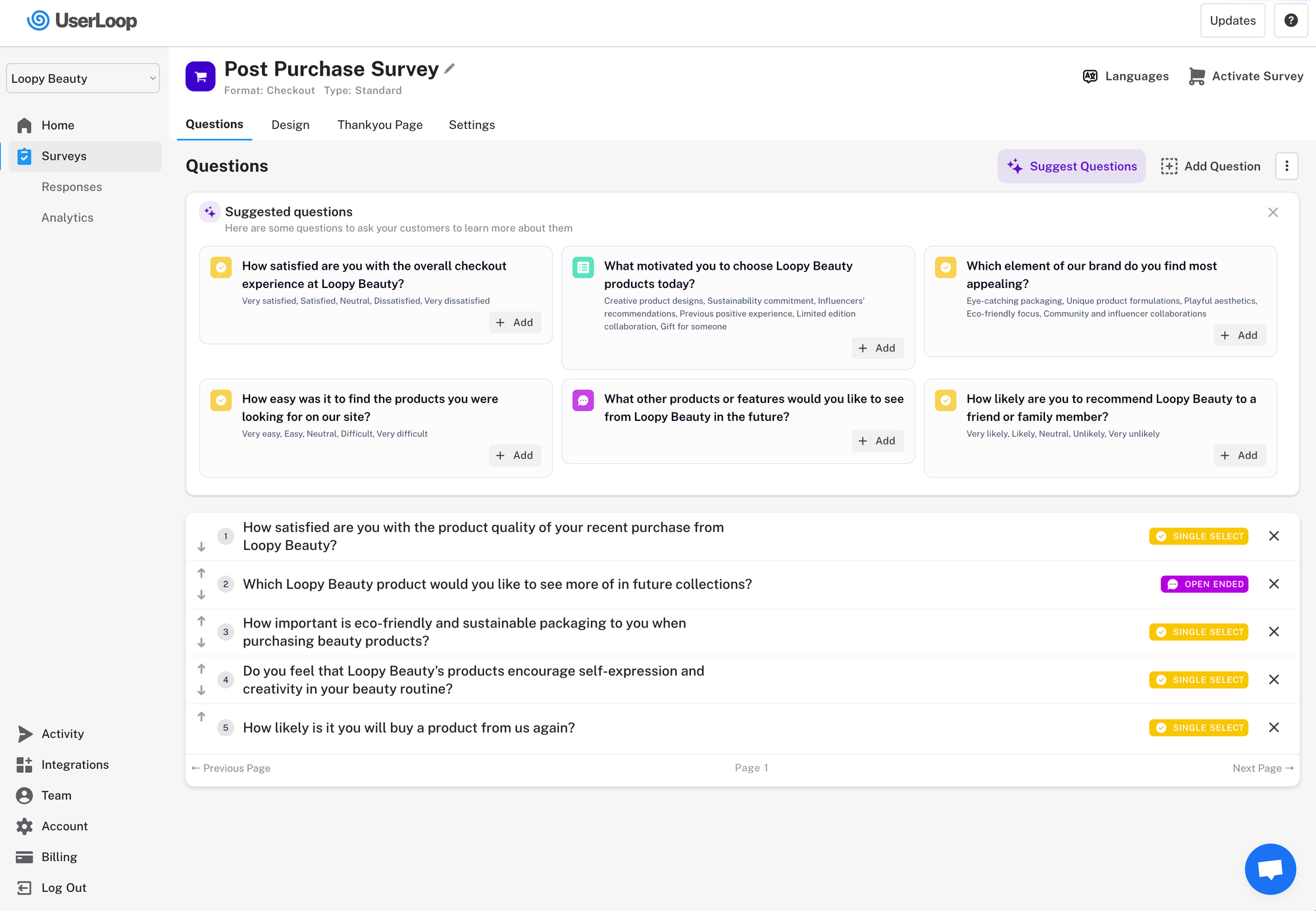
When you sign up to UserLoop, you'll notice a list of Likert scale question recommendations ready for you in your account - you can add them to your survey with a single click.
You can even use UserLoop's AI to create Likert scale answers for your own questions.
Simply create a new single select question and press the 'Suggest' button. UserLoop will write a series of Likert scale answer options for your question in seconds.
Best Practices for Creating Likert Scale Surveys
Determining the optimal scale length
When it comes to creating effective Likert scale surveys, choosing the right scale length is crucial. Most studies don't strongly favor either 5-point or 7-point scales, but some research suggests that 7-point scales might be better for respondents with higher cognitive abilities, while 5-point scales work well for the general public [5].
Interestingly, a European study recommended using 5-point scales for better data quality compared to 7 or 11-point scales [2]. This aligns with the idea that 5-point scales are more suitable for the general public.
When deciding between different scale lengths, keep in mind:
- Fewer scale points are easier for respondents to process but provide less detailed data.
- More scale points offer more nuanced data but can lead to respondent fatigue.
- Consider using an even-numbered scale if you want to avoid neutral responses.
Remember, a 5-point Likert scale is often optimal for most items and businesses, providing high accuracy without being too time-consuming for customers [6].
Writing effective statements or questions
To get valuable insights from your Likert scale survey, you need to craft clear and unbiased questions. Here are some tips to help you write effective statements or questions:
- Be clear and concise: Use simple language that everyone can understand the same way [2].
- Stay neutral: Avoid leading respondents to a particular answer. For example, instead of asking, "Don't you think our customer service is great?" try "How would you rate our customer service?" [2]
- Focus on one idea at a time: Each statement should measure only one specific aspect or opinion [2].
- Be specific: Vague statements can lead to ambiguous responses. Make sure your questions are clear regardless of the respondent's background [2].
Balancing positive and negative items
To create a well-rounded survey and minimize bias, it's important to balance positive and negative items. Here's how you can achieve this:
- Use positive and negative indicators for balance. For every positively worded statement, include a negatively worded counterpart later in the questionnaire [6].
- For example, if you have the statement, "The variety of options online overwhelms me," you should also have an item like, "I appreciate the wide selection online shopping has to offer." [6]
- This approach helps ensure that your questions are clear and the responses are reliable. People who agree with the positive statements should disagree with the negative ones, and vice versa [6].
By following these best practices, you'll be well on your way to creating effective Likert scale surveys that provide valuable insights for your business.
Overcoming Challenges in Likert Scale Surveys
Addressing central tendency bias
When you're creating Likert scale surveys, you might run into a tricky issue called central tendency bias. This happens when people tend to choose the middle options on your scale, avoiding the extremes [5]. For example, if you're using a 1-10 scale, most responses might cluster around 4-7, with few 1-3 or 8-10 ratings [5].
To tackle this challenge:
- Make your questions crystal clear. Add simple tooltips to explain what each end of the scale means [5].
- Don't ask for justification for extreme answers. This extra work often pushes people towards middle options [5].
- Consider limiting how often respondents can use the same rating. This encourages more thoughtful responses [5].
Dealing with acquiescence bias
Acquiescence bias is another hurdle you might face. It's when people tend to agree with statements, regardless of their true feelings [2].
This "yes" bias can lead to skewed results and misinformed business decisions [2].
To minimize acquiescence bias:
- Keep your surveys short and simple. Long, complicated surveys can lead to fatigue and default positive answers [2].
- Provide detailed answer options that align with various experiences. This helps respondents find an option that truly fits their opinion [2].
- Avoid leading questions that assume a positive experience. For example, instead of asking, "When did you first realize you loved our coaching program?" ask, "How would you rate your experience with our coaching program?" [2]
Ensuring reliability and validity
To make sure your Likert scale surveys are both reliable and valid, consider these tips:
- Choose the right number of scale points. While there's debate about the ideal number, many researchers argue that 6 or 7-point scales can improve reliability and validity [6].
- Consider your audience. If you're surveying non-experts or children, a 5-point scale might be easier to understand and use [6].
- Think carefully about including a neutral option. While it can prevent forced decisions, it might also lead to respondents choosing the "path of least resistance" [6].
By addressing these challenges, you'll be well on your way to creating Likert scale surveys that provide accurate, valuable insights for your business.
Conclusion
Likert scales have a significant influence on the way we gather and analyze data in surveys.
From measuring customer satisfaction to gaging employee engagement, these versatile tools offer a nuanced approach to understanding opinions and attitudes. By using different types of Likert scales and following best practices, businesses can gain valuable insights to improve their products, services, and overall strategies. To start crafting effective surveys right away, you can create a Likert Scale survey question for free with UserLoop.
To wrap up, mastering Likert scale surveys involves more than just asking questions. It's about choosing the right scale length, writing clear statements, and addressing potential biases.
By tackling these challenges head-on, you'll be well-equipped to create surveys that yield meaningful results. Remember, the goal is to gather accurate data that can drive informed decisions and ultimately lead to better outcomes for your business.
Don't forget - you can create your own Likert scale survey questions for free using AI with UserLoop, sign up for a free account today to try it out.
FAQs
How is a Likert scale implemented in surveys?
To implement a Likert scale in a survey, provide respondents with a series of statements or questions and a range of response options. Typically, these options range from 5 to 7 possible choices, allowing participants to indicate their level of agreement or disagreement.
What does each point represent on a 5-point Likert scale measuring effectiveness?
A 5-point Likert scale allows respondents to express their agreement with a given statement across five levels: 1) Strongly Disagree, 2) Disagree, 3) Neither Agree nor Disagree, 4) Agree, and 5) Strongly Agree. This scale helps in capturing the intensity of their feelings towards the statement.
What are the recommended best practices for designing a Likert scale?
When designing a Likert scale, it is advisable to frame items as questions rather than statements. This approach helps in minimizing bias, as respondents are less likely to automatically agree with statements, which can be influenced by the desire to conform or by the positivity of the statement itself (known as acquiescence bias).
What is the most appropriate method to analyze data from a Likert scale?
Data from Likert scales are best analyzed by treating them as interval data. This involves using statistical measures such as means and standard deviations to summarize the responses, providing a clear view of central tendencies and variations within the data.
References
[1] - https://www.fynzo.com/post/likert-scale/
[2] - https://www.qualtrics.com/experience-management/research/likert-scale/
[3] - https://www.questionpro.com/post/rensis-likert-and-the-likert-scale/
[4] - https://www.ncbi.nlm.nih.gov/pmc/articles/PMC3886444/
[5] - https://www.surveymonkey.com/mp/likert-scale/
[6] - https://www.scribbr.com/methodology/likert-scale/


The agentic growth toolkit for Shopify
Ask your customers anything
UserLoop talks to your customers at scale with surveys and contests that feed one AI-queryable dataset. AI does the setup and the analysis.
- SurveysFind out why customers buy: checkout, email, link & QR.
- ContestsGiveaways that grow your list and social following.
Free plans on both apps · live in minutes