5 Ways Customer Segmentation Can Boost Your AOV
If you’re building an ecommerce business, it can sometimes be overwhelming when trying to work out the best way to segment your customers. We all know that personalised customer messaging performs better - but how do you collect the data you need to segment customers, and depending on your business, what does it make sense to segment them based on?
Customer segmentation can range from simple demographic splits, such as age or location, to more complex divisions based on customers' behaviors and purchasing habits.
Think of it this way: instead of shouting into a crowded room and hoping the right people hear you, segmentation allows you to directly address individuals in a way that they can relate to.
But how does this tie into your business's Average Order Value (AOV)?
AOV, simply put, is the average amount of money each customer spends when they make a purchase from your business.
It's calculated by dividing your total revenue by the number of orders. For example, if your online store generated $5,000 in a month from 100 orders, your AOV would be $50.
AOV is a critical metric for businesses because it provides insights into customer buying habits and overall sales trends, and is one of the biggest levers you can pull to increase your overall profitability.
If you’ve spent a lot to acquire a customer, you need to ensure you’re maximising how much each one spends on average. Segmenting and targeting offers and promotions to them based on what’s unique about each customer can help massively with this.
We’re going to dive deeper into how customer segmentation can enhance AOV.
Through targeted marketing strategies and personalized customer experiences, businesses can influence their customers' purchasing behaviors and ultimately increase their average spend.
The strategies we'll discuss are not just theoretical; they have been successfully implemented by businesses across various industries. So, whether you're a small business owner, a marketing professional, or just curious about the power of digital marketing, customer segmentation can drive up your AOV and boost your revenue.
We’re also going to recommend some of the best tools in the industry you can use to help you with collecting data and segmenting customers to help you along the way.
Personalization and Customized Recommendations
The era of one-size-fits-all marketing is long gone. In today's customer-centric world, personalization is the key to standing out and connecting with your audience.
By leveraging customer segmentation, you can offer personalized experiences that talk to each distinct group of customers, increasing their satisfaction and likelihood of making a purchase - or increasing the amount they spend with you overall.
Statistics in this report by leading customer segmentation app Dialogue shows that about 91% of consumers prefer to buy from sellers who understand their needs and offer specific, relevant offers.
Additionally, a remarkable 83% of consumers are willing to share details about their purchasing history and other data in exchange for personalized experiences. This personalization approach improves customer satisfaction, drives conversions, and enhances AOV.
Take the example of a fashion retailer. They could segment their customers based on factors such as age, gender, style preferences, or past purchase history.
With these segments in place, the retailer could then deliver personalized product recommendations and promotions that align with each group's unique interests.
A customer who previously purchased athletic wear might receive recommendations for new running shoes or fitness gear, while a customer who often buys formal wear might see suggestions for ties, cufflinks, or elegant dresses.
Such personalized marketing taps into the individual needs and desires of your customers, making them feel valued and understood. When customers receive product suggestions that are relevant and appealing, they are more likely to add these items to their basket.
Amazon, the global e-commerce giant, is a prime example of a company that excels in personalization and customized recommendations.
Their complex algorithms analyze a customer's browsing and purchasing history to suggest items that they might be interested in. This approach often leads customers to discover products they didn't initially intend to buy, which increases the number of items in their basket and thus, the total order value.
Studies have shown that personalized marketing significantly improves customer engagement.
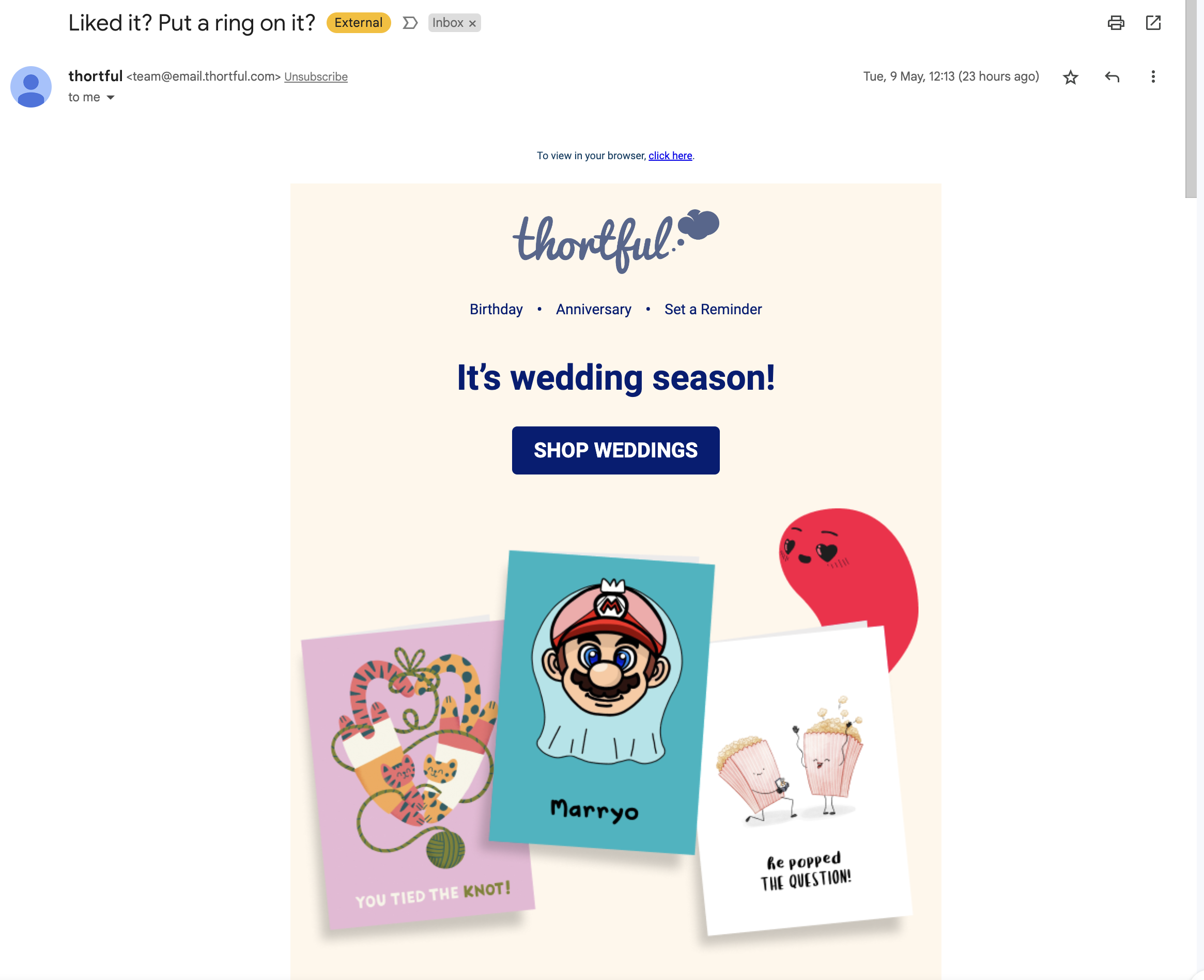
Example of a targeted email promotion based on a customer who was in a 'wedding' segment. They were placed into this segment based on their response to a post purchase survey about how many weddings they expected to attend over the next year.
According to a survey by Accenture, 91% of consumers are more likely to shop with brands that provide relevant offers and recommendations. This increased engagement can lead to larger order sizes and higher AOV.
In essence, personalization, powered by customer segmentation, allows you to create a more intimate and meaningful shopping experience. When customers feel like a you understand their needs and preferences, they're more likely to add more items to their shopping cart and increase their average spend.
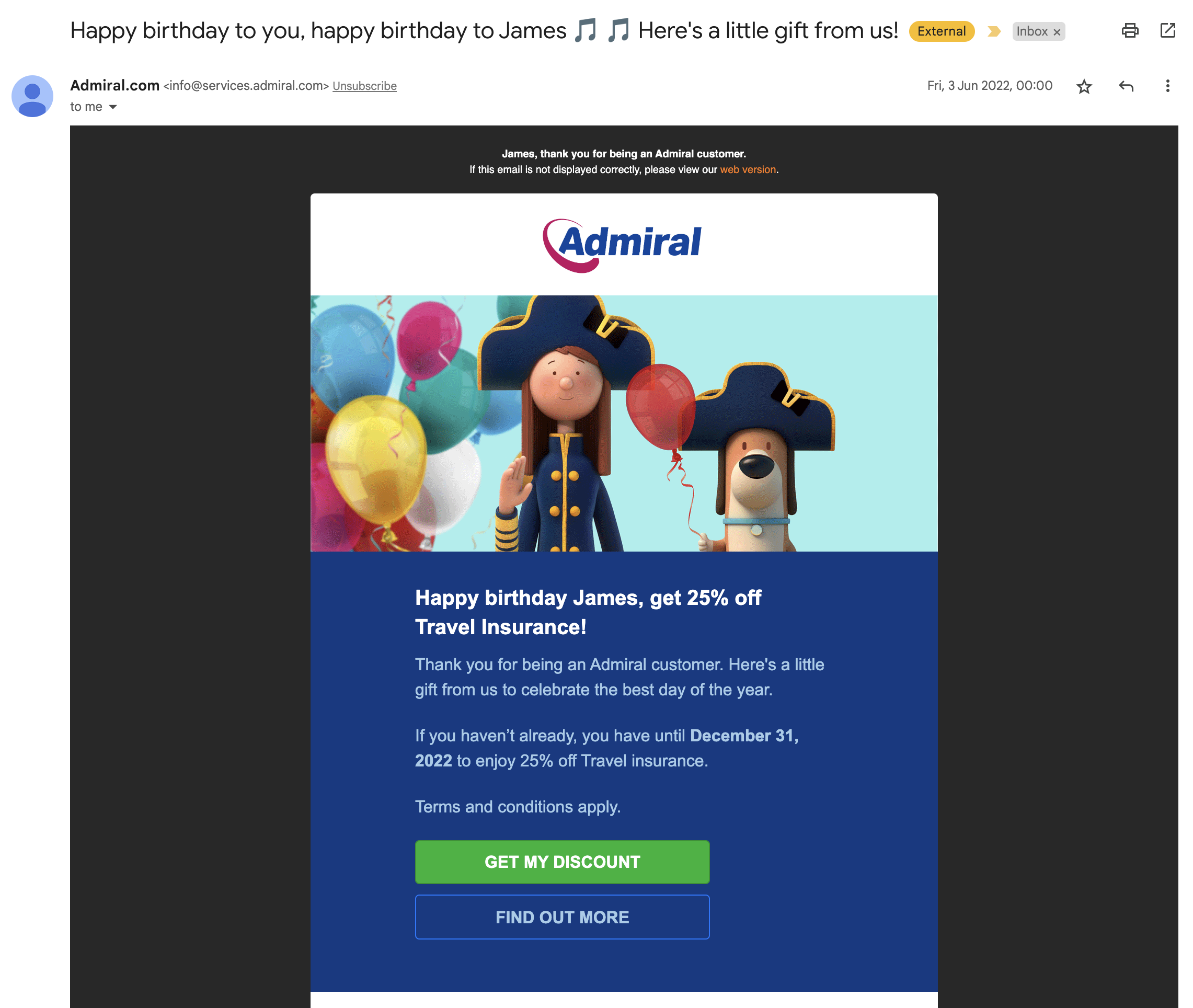
Example of a targeted email promotion based on a customer who was in a 'birthday' segment. They were placed into this segment based on their response to a post purchase survey which asked when their birthday was, this email is then triggered automatically by the email marketing platform.
Now - not every store has access to the engineering resources of a ecom giant like Amazon, thankfully there are many tools that can help any store owner apply customer segmentation and reap the rewards.
One of the best customer segmentation apps is Dialogue. It's powerful but easy to user interface can help you become a customer segmentation pro like Amazon.

Dialogue's powerful segmentation UI lets you build customer segments based on multiple characteristics through a simple and easy to use interfa
Targeted Upselling and Cross-selling
In the realm of digital marketing, upselling and cross-selling are two powerful strategies that can significantly boost your Average Order Value (AOV) when applied correctly. Both strategies revolve around promoting additional or more expensive items to customers, but each takes a unique approach.
Upselling is the practice of encouraging customers to purchase a higher-end product than the one they are currently considering. For instance, if a customer is looking at a basic version of a product, an upsell might be the premium version of the same product that offers more features or benefits.
On the other hand, cross-selling involves recommending related or complementary products to the ones the customer is already interested in or has purchased. An example of cross-selling could be recommending a protective case and screen protector when a customer purchases a new smartphone.
Understanding your customer segments is crucial to effectively upselling and cross-selling. By grouping customers based on shared characteristics, interests, or behaviors, businesses can offer more relevant product suggestions. For instance, a customer segment that frequently purchases high-end designer clothing may respond well to upselling tactics.
By recommending more expensive items or collections, businesses could significantly increase their AOV.
For cross-selling, consider a customer segment that frequently purchases home fitness equipment.
Businesses could recommend complementary products like yoga mats, resistance bands, or fitness apparel, enticing the customer to add more to their cart. This not only enhances the customer's shopping experience by offering relevant suggestions but also boosts the AOV by increasing the number of items in each order.
A real-world example of effective upselling and cross-selling can be seen with Amazon.
Amazon's "Customers who bought this item also bought" and "Frequently bought together" features are classic cross-selling strategies.
By recommending relevant products based on customer segmentation and purchase history, Amazon has significantly increased its AOV. Amazon’s upsell approach is also notable.
When customers view a product, they often see a comparison chart that shows more expensive models with better features, effectively encouraging an upgrade.
Dynamic Pricing and Discounts
One of the most effective ways to leverage customer segmentation to boost Average Order Value (AOV) is through dynamic pricing and targeted discounts. These strategies not only offer value to customers but also help businesses optimize their profit margins.
Dynamic pricing involves adjusting the prices of products or services based on real-time supply and demand. For instance, you might have noticed how flight prices tend to fluctuate based on the time of booking, the popularity of the route, or even the day of the week.
This is dynamic pricing in action. When it comes to eCommerce, dynamic pricing might involve offering slightly higher prices during peak shopping hours or lowering prices for items that are not moving quickly.
The beauty of dynamic pricing is that it can be highly customized to different customer segments. For example, customers identified as price-sensitive might be offered special deals during non-peak hours.
On the other hand, customers who have shown a willingness to spend more might be shown higher-priced items during peak hours.
This strategy can effectively encourage more spending and thus increase AOV without alienating any customer segment.
Targeted discounts, on the other hand, are all about offering special prices or deals to specific customer segments. This strategy can incentivize higher spending without significantly reducing profit margins. For instance, you might offer a "buy one, get one 50% off" deal to customers who frequently buy in pairs. Or you could offer a discount on a customer's next purchase if their current order exceeds a certain amount.
A good example of dynamic pricing can be seen with Uber. The company uses dynamic pricing (commonly referred to as surge pricing) during periods of high demand to encourage more drivers to get on the road. Prices increase to ensure those who need a ride the most can get one, while also balancing the need for more drivers.
For targeted discounts, consider the approach of businesses like Sephora. The beauty retailer offers a loyalty program where customers earn points on each purchase.
These points can be redeemed for discounts on future purchases, effectively encouraging higher spending. Sephora's "Beauty Insider" program is segmented into tiers based on annual spend, offering more benefits to those who spend more, hence stimulating an increase in AOV.
Exclusive Offers for High-value Customer Segments
Another powerful strategy to increase your Average Order Value (AOV) involves specifically targeting high-value customer segments with exclusive offers. High-value customers, often referred to as VIP customers, are those who consistently spend more, make frequent purchases, or have a high lifetime value (LTV).
These customers are gold mines for businesses, as they contribute significantly more to your revenue than regular customers. In fact, according to a study by Adobe, in the U.S., the top 10% of customers spend three times more per order compared to the lower 90% segment. This statistic highlights the immense potential of high-value customers.
By segmenting your customer base and identifying these high-value individuals, you can tailor exclusive offers to cater to their preferences and shopping habits. These offers can take various forms, including early access to new products, exclusive discounts, personalized deals, free premium shipping, or access to exclusive content or events.
The idea is to make these customers feel valued and special, which in turn encourages them to maintain or increase their spending with your business. Not only does this strategy boost AOV, but it also promotes customer loyalty and enhances lifetime value.
A perfect example of this strategy in action is Amazon with its Prime membership. Amazon Prime members, who pay an annual or monthly fee, receive a number of exclusive benefits, including free two-day shipping, early access to deals, and access to exclusive content on Prime Video. By offering these benefits, Amazon incentivizes customers to spend more, thus increasing AOV, while simultaneously creating a loyal customer base.
Reward Programs and Customer Loyalty
Reward programs are a proven strategy to boost the Average Order Value (AOV) and foster customer loyalty. They incentivize customers to spend more and shop more frequently by offering them tangible benefits or exclusive perks. Moreover, these programs also enhance customer experience and satisfaction, leading to increased brand loyalty.
How does customer segmentation play into this? Well, when you segment your customers based on their behaviors, preferences, and buying habits, you can design tailored reward programs that resonate with each segment. By doing so, you increase the likelihood of customers increasing their spend to avail of these benefits, thereby boosting your AOV.
For instance, you might have a segment of customers who frequently purchase certain categories of products. You could design a rewards program that offers them extra points or discounts on these categories, encouraging them to spend more on each purchase.
Alternatively, you might have a segment of customers who shop infrequently but make high-value purchases when they do. For these customers, a rewards program that offers benefits based on the total value of purchases might be more enticing, encouraging them to add more to their basket each time they shop.
One of the most notable examples of a successful reward program is Sephora's Beauty Insider program. This program has three tiers (Insider, VIB, and Rouge), each offering a different level of benefits. To advance to higher tiers (and receive more benefits), customers must spend a certain amount in a calendar year. This encourages customers to spend more on each purchase, effectively increasing Sephora's AOV.
We've journeyed through the realms of customer segmentation and uncovered its magic in boosting your Average Order Value (AOV). We've seen how personalization and customized recommendations create a more intimate shopping experience. We've uncovered the power of upselling and cross-selling, dynamic pricing and discounts, and exclusive offers for your VIPs.
Not to forget the magic of reward programs in building customer loyalty and increasing AOV.
But remember, segmentation isn't a one-and-done deal. It's a continuous process that should evolve as your customers do. Keep testing, analyzing, and refining your segmentation strategies to ensure they're effectively driving up your AOV.
Customer segmentation is a bit like detective work - it involves piecing together clues about your customers to create a complete picture that will help you serve them better. It's a powerful tool, and when done right, it can supercharge your AOV, improve customer satisfaction, and ultimately, drive your business's success.
So, there you have it! Start harnessing the power of customer segmentation today and watch your AOV and business grow like never before. Happy segmenting!


The agentic growth toolkit for Shopify
Ask your customers anything
UserLoop talks to your customers at scale with surveys and contests that feed one AI-queryable dataset. AI does the setup and the analysis.
- SurveysFind out why customers buy: checkout, email, link & QR.
- ContestsGiveaways that grow your list and social following.
Free plans on both apps · live in minutes