Voice of Customer Surveys for Retail: A Comprehensive Guide
Do you truly listen to your customers, or do you pay lip service to voice of customer surveys, whilst really going on internal hunches that justify existing strategy. According to Forrester’s 2024 CX planning guide, CX programs foist too many surveys on customers, then fail to act on feedback. Don’t fall into that trap! start actively listening to your customers.
The evidence is loud and clear, customer experience matters in retail. In fact, 4 in 10 consumers' future purchase decisions are impacted by their experiences with your brand today. And, done right, voice of customer surveys for retail gather vital information, which forward thinking retailers use to enhance their offerings, improve customer satisfaction, and grow revenue.
This blog will delve into the significance of VoC surveys in retail, best practices for conducting them, and how to effectively utilize data to make informed business decisions. We will highlight the importance of using multiple survey methods to create a comprehensive VoC program and how to ensure you make the most of your data and AI to deliver business value.
Understanding Voice of Customer (VoC) Surveys
Voice of Customer (VoC) surveys are designed to capture the opinions, feedback, and expectations of customers regarding a product, service, or overall experience with a brand. These surveys aim to provide a comprehensive understanding of what customers value, their pain points, and areas where the business can improve. In the retail industry, VoC surveys are particularly valuable as they help retailers stay attuned to the ever-changing preferences and expectations of their customers.
The Importance of VoC Surveys in Retail
1. Enhancing Customer Experience
A positive shopping experience can turn first-time buyers into loyal customers. VoC surveys allow retailers to identify factors that contribute to a positive or negative customer experience. By understanding these factors, retailers can implement targeted improvements to enhance the overall shopping experience.
2. Identifying Pain Points
VoC surveys help retailers pinpoint specific issues that customers encounter during their shopping journey. Whether it's long checkout lines, unhelpful staff, or difficulty in finding products, identifying these pain points enables retailers to address and rectify them promptly.
3. Driving Product and Service Innovation
Customer feedback is a goldmine for innovation. VoC surveys provide insights into customer preferences, unmet needs, and desired features. Retailers can use this information to develop new products, enhance existing ones, and tailor their services to better meet customer demands.
4. Boosting Customer Loyalty and Retention
Understanding what keeps customers coming back is crucial for building loyalty and building strong customer relationships. VoC surveys reveal the factors that drive customer loyalty and satisfaction. By focusing on these areas, retailers can strengthen their customer relationships and improve retention rates.
5. Supports retention levels.
Existing customers are high value as selling to a new customer costs businesses 5 to 25 times more than existing ones. So its important to understand how and why you retain customers and adversely why customers churn.
Best Practices for Conducting VoC Surveys in Retail
1. Define Clear Objectives and Keep the Customer Front of Mind
Before conducting a VoC survey, it's essential to define clear objectives. Determine what specific information you want to gather and how you plan to use it. Clear objectives will guide the survey design and ensure that the collected data is actionable.
Also remember that Customers don’t want surveys to be a nuisance or a waste of time. Make sure your messaging addresses how it helps both the customer and hte brand. And, ideally, VoC surveys should be short, straightforward, and respectful of your customers’ time and energy.
2. Choose the Right Survey Method
There are various methods to conduct VoC surveys, including online surveys, in-store surveys, email surveys, and phone interviews. Choose the method that best suits your target audience and objectives. For instance, online surveys might be more effective for capturing feedback from tech-savvy customers, while in-store surveys can provide immediate insights from shoppers.
3. Design Engaging and Relevant Questions
The quality of your survey questions directly impacts the quality of the feedback you receive. Ensure your questions are clear, concise, and relevant to the objectives. Use a mix of open-ended and closed-ended questions to gather both quantitative and qualitative data. Open-ended questions allow customers to express their thoughts freely, while closed-ended questions provide measurable data.
Why not test out UserLoops AI question generator as a starting point – Click here to get started
4. Ensure Survey Accessibility
Make your survey easily accessible to all customers. If conducting an online survey, ensure it is mobile-friendly and easy to navigate. For in-store surveys, provide tablets or kiosks at convenient locations. Accessibility encourages more customers to participate, leading to a more representative sample.
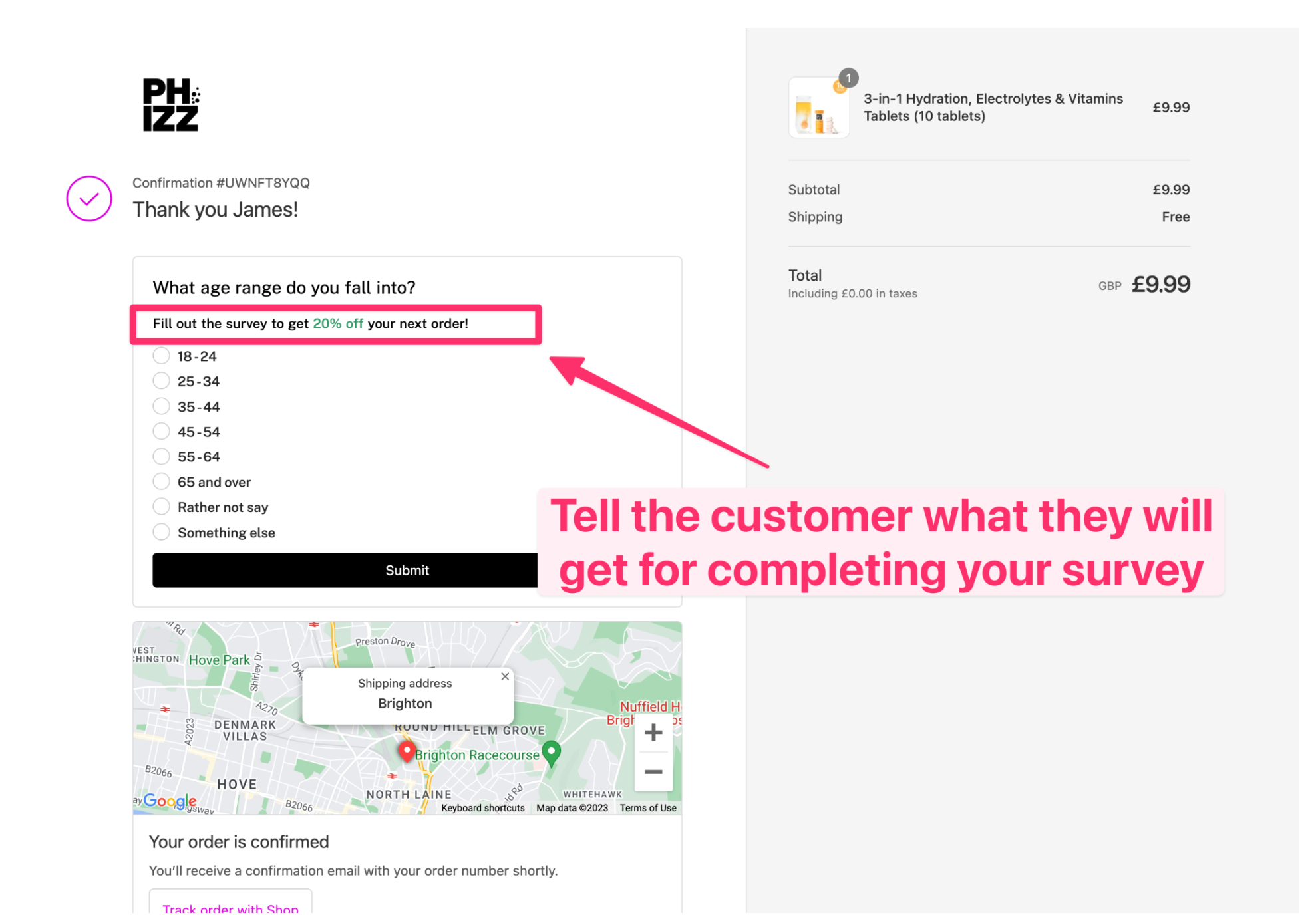
5. Offer Incentives
Incentives can significantly boost survey response rates.
Our data revealed a substantial increase in survey response rates when incentives were offered. Response rates jumped from 48% to over 75% with the introduction of incentives. This 26% increase underscores the powerful effect that even a modest incentive can have on customer participation. James Davenport, Founder UserLoop
Consider offering discounts, loyalty points, or entry into a prize draw as incentives for completing the survey. Ensure that the incentives are attractive enough to motivate customers without overshadowing the primary goal of gathering genuine feedback.
6. Analyze and Act on Feedback
Collecting feedback is only the first step. Analyze the survey results to identify trends, common themes, and actionable insights. Use this data to make informed decisions and implement changes that address customer needs and preferences. Communicate these changes to your customers to show that their feedback is valued and acted upon.
According to Forrester, more than half of US CX leaders plan to build capabilities in technologies that help them understand customer insights and customers’ experiences with the brand. These technologies include customer insights and analytics, digital intelligence, and customer feedback tools. With this advice in mind, make sure any tool you deploy has an insights engine and ensure you have a plan data outcomes and stakeholders, as outlined in the rest of this article.
Effective Utilization of VoC Survey Data
1. Segment Your Data
Segmenting your survey data allows you to understand the preferences and needs of different customer groups. Segment by demographics, purchase history, or shopping behavior to identify patterns and tailor your strategies accordingly. For example, younger customers might prioritize convenience, while older customers may value personalized service.
2. Prioritize Key Issues
Not all feedback will have the same level of impact on your business. Prioritize the issues that are most frequently mentioned or have the most significant effect on customer satisfaction. Focus on addressing these key issues first to make the most impactful improvements.
In UserLoop you can ask the AI specific questions and it will interrogate the data and bring back insights.
3. Integrate VoC Data with Other Business Metrics
Don’t keep survey data in silos. Integrate it with other business metrics such as sales data, customer retention rates, and other key metrics. This holistic approach provides a more comprehensive understanding of your business performance and customer satisfaction.
4. Share Insights Across the Organization
Insights should be shared with all relevant departments, from marketing and senior management and sales to product development and customer service. This ensures that everyone is aligned and working towards common goals based on customer feedback. Regularly update teams on VoC findings and progress made in addressing customer concerns.
5. Continuously Monitor and Improve
Customer preferences and expectations are constantly evolving. Regularly conduct VoC surveys to stay updated on these changes and continuously monitor customer satisfaction. Use this ongoing feedback loop to make iterative improvements and keep your business aligned with customer needs.
Key VoC Survey Types for Retailers
Retailers can utilize various types of VoC surveys to gather comprehensive customer feedback at different stages of the customer lifecycle. Each survey type serves a specific purpose and can provide unique insights into different aspects of the customer experience. Below are some key VoC survey types for retailers, along with example questions for each:
1. Customer Satisfaction (CSAT) Surveys
Customer Satisfaction surveys measure how satisfied customers are with specific aspects of their experience. These surveys help retailers identify areas of strength and opportunities for improvement.
Example Questions:
- How satisfied are you with the overall shopping experience at our store?
- How would you rate the quality of our products?
- How satisfied are you with the helpfulness and friendliness of our staff?
- How easy was it to find the products you were looking for?
- How satisfied are you with the checkout process?
- How likely are you to recommend our store to a friend or family member?
- How satisfied are you with the cleanliness and organization of our store?
2. Net Promoter Score (NPS) Surveys
NPS surveys measure customer loyalty by asking how likely customers are to recommend the store to others. This metric helps retailers understand overall customer sentiment and identify potential brand advocates or detractors.
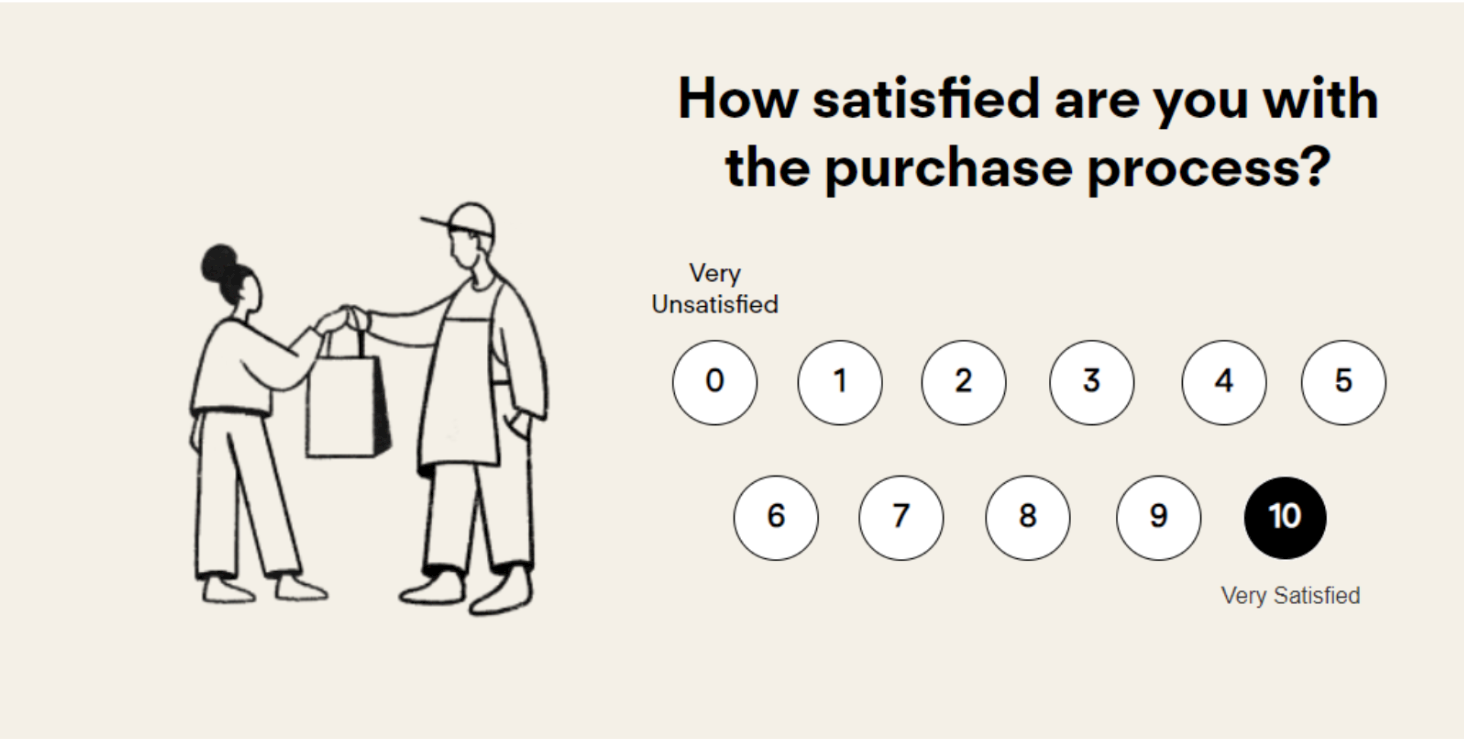 NPS Score Example
Example Questions:
- On a scale of 0-10, how likely are you to recommend our store to a friend or colleague?
- What is the primary reason for your score?
- What can we do to improve your experience and increase your likelihood of recommending us?
- How satisfied are you with the variety of products available in our store?
- How likely are you to return to our store for your next purchase?
- How would you describe your overall experience with our brand?
- What changes would you like to see in our store to improve your shopping experience?
3. Customer Effort Score (CES) Surveys
CES surveys measure how much effort customers put in to get their issues resolved or complete a purchase. Lower effort is associated with higher customer satisfaction and loyalty.
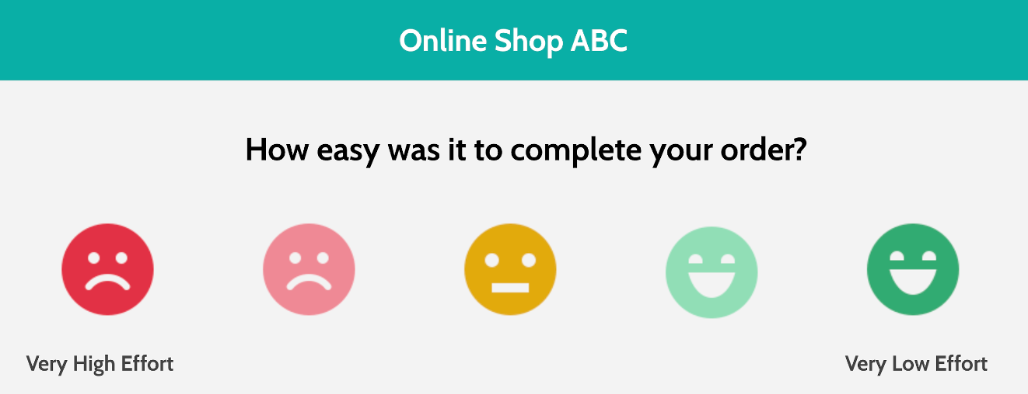 CES Score Example
Example Questions:
- How easy was it to complete your purchase today?
- How much effort did you have to put in to find the information you were looking for?
- How easy was it to get assistance from our staff?
- How would you rate the ease of navigating our store?
- How easy was it to use our website for online shopping?
- How quickly was your issue resolved by our customer service team?
- How easy was it to return or exchange a product at our store?
4. Product Feedback Surveys
Product feedback surveys focus on gathering detailed feedback about specific products. This helps retailers understand customer preferences, identify potential issues, and improve product offerings.
Example Questions:
- How satisfied are you with the quality of [specific product]?
- How would you rate the value for money of [specific product]?
- What features do you like most about [specific product]?
- What improvements would you suggest for [specific product]?
- How likely are you to purchase [specific product] again?
- How does [specific product] compare to similar products from other brands?
- What additional products or features would you like to see in our store?
5. Post-Purchase Surveys
Post-purchase surveys are conducted shortly after a customer makes a purchase. They provide immediate feedback on the recent shopping experience, allowing retailers to address any issues promptly.
Example Questions:
- How satisfied are you with your recent purchase?
- How would you rate the overall shopping experience during your recent visit?
- How satisfied are you with the delivery or pickup process?
- How likely are you to shop with us again based on your recent experience?
- How would you rate the accuracy of your order?
- How satisfied are you with the condition of the products upon delivery?
- What could we have done to make your recent shopping experience better?
6. Exit-Intent Surveys
Exit-intent surveys are triggered when a customer is about to leave the website or store without making a purchase. These surveys help understand the reasons behind the decision to abandon the shopping process.
Example Questions:
- What was the primary reason for not completing your purchase today?
- Did you encounter any issues while browsing our website/store?
- Was there a particular product you were looking for but couldn't find?
- How would you rate the overall usability of our website?
- Did you find the information you needed to make a purchase decision?
- What could we do to encourage you to complete your purchase?
- How likely are you to return to our website/store in the future?
7. In-Store Experience Surveys
In-store experience surveys gather feedback from customers about their experience while shopping in physical stores. These surveys help retailers improve the in-store environment and service quality.
Example Questions:
- How satisfied are you with the cleanliness and organization of our store?
- How would you rate the availability of products in our store?
- How satisfied are you with the assistance provided by our staff?
- How would you rate the ease of navigating our store layout?
- How satisfied are you with the wait time at the checkout?
- How likely are you to visit our store again?
- What improvements would you suggest for our in-store experience?
Leveraging AI for VoC Surveys: Accelerating Setup and Delivering Actionable Insights
The integration of Artificial Intelligence (AI) in Voice of Customer (VoC) surveys can significantly enhance the speed and efficiency of survey setup, data collection, and analysis. AI technologies, such as natural language processing (NLP), machine learning, and advanced analytics, enable retailers to quickly gather actionable insights from customer feedback.
This section quickly summarizes how AI can streamline the VoC survey process and deliver deeper, more meaningful insights. For more detail and case studies Download our white paper on the Power of AI for VoC Here
1. AI-Driven Survey Design and Personalization
AI can simplify the process of designing VoC surveys by suggesting relevant questions based on your ecommerce presence, previous surveys and customer interactions. AI algorithms can analyze customer behavior, preferences, and feedback history to create personalized survey questions that are more likely to elicit meaningful responses.
Benefits:
- Faster Survey Creation: AI can generate survey templates and questions tailored to specific customer segments, reducing the time required for manual survey design.
- Increased Relevance: Personalized questions ensure that surveys are more relevant to respondents, leading to higher engagement and response rates.
In this example, UserLoop automated question generation can help ed a client create high-quality, relevant survey questions quickly, tailored to the retailer's brand and objectives.
Simply type in what you’re trying to learn about customers, and AI can help suggest the best questions to ask customers to get that data.
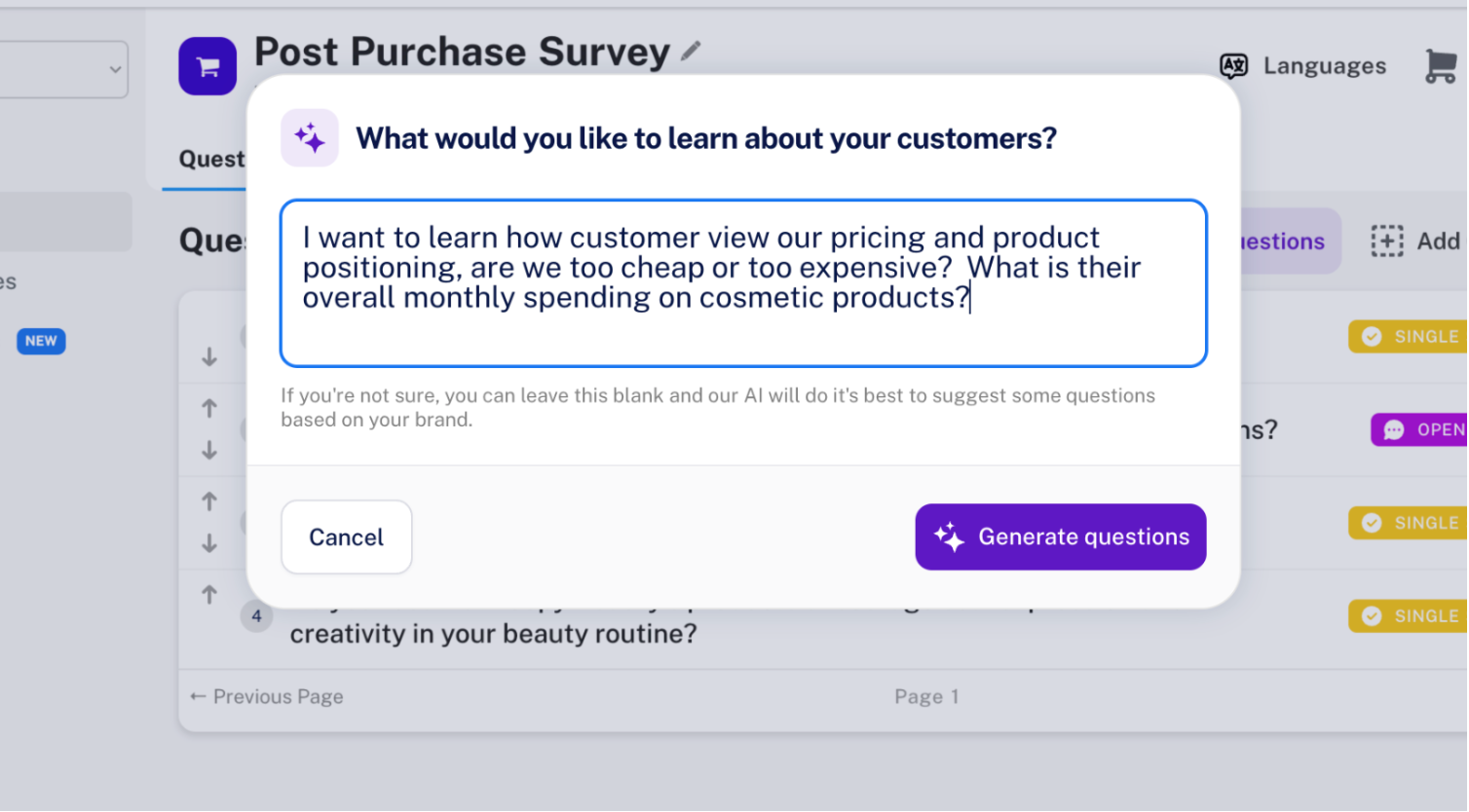 AI survey design
2. Automated Data Collection and Processing
AI-powered tools can automate the collection and processing of survey responses. This automation includes real-time data capture, transcription of voice responses, and extraction of key information from open-ended answers.
Benefits:
- Efficiency: Automated data collection reduces the need for manual data entry and processing, allowing retailers to gather feedback quickly and accurately.
- Scalability: AI can handle large volumes of survey data, making it easier to conduct extensive surveys without overwhelming resources.
In this case study example, AI has helped by automatically categorizing, tagging, and interpreting open ended responses. This process provides retailers with actionable insights and makes it easier to identify trends, issues, and opportunities.
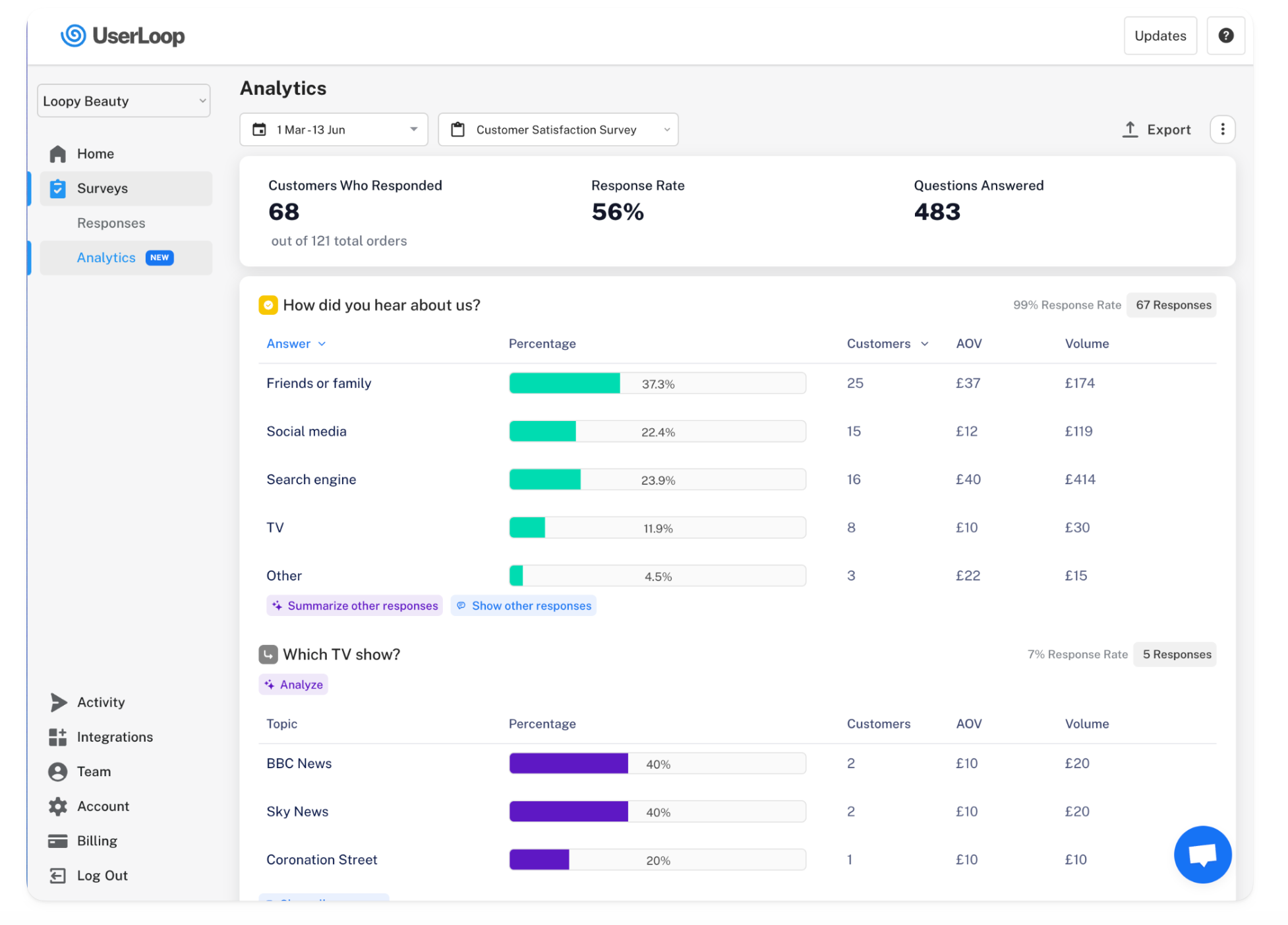 Data Analytics
3. Natural Language Processing (NLP) for Sentiment Analysis
NLP enables AI to analyze and understand human language, making it possible to interpret open-ended survey responses and gauge customer sentiment. Sentiment analysis identifies positive, negative, and neutral sentiments expressed by customers in their feedback.
Benefits:
- Deeper Insights: NLP can uncover underlying emotions and sentiments that might not be evident from quantitative data alone.
- Trend Identification: AI can identify common themes and trends in customer feedback, helping retailers to understand broader patterns and issues.
4. Predictive Analytics for Proactive Decision-Making
AI Powered Reporting: Leveraging AI for reporting means retailers can get summaries of thousands of responses quickly, enabling fast and informed decision-making and trend prediction. This is especially useful for managing feedback at scale, saving significant time and resources.
Benefits:
- Proactive Management: Predictive insights enable retailers to anticipate customer needs and address potential problems before they impact customer satisfaction.
- Informed Strategy: Retailers can make data-driven decisions based on predictions,
5. Automated Reporting and Visualization
AI can generate automated reports and visualizations from survey data, providing clear and actionable insights in an easily digestible format. These reports can highlight key metrics, trends, and areas for improvement.
Benefits:
- Time-Saving: Automated reporting eliminates the need for manual data analysis and report creation, freeing up time for strategic decision-making.
- Clarity: Visual representations of data make it easier to understand complex information and communicate findings across the organization.
Survey platforms like UserLoop are able to deliver daily reports to your teams summarizing what customers have been saying in their feedback over the last day.
By leveraging AI, retailers can design more effective surveys, understand customer sentiment, predict future trends, and make informed decisions that enhance the customer experience. Embracing AI in VoC surveys is a crucial step for retailers looking to stay competitive and customer-centric in a rapidly evolving marketTop of Form
Case Study: Successful VoC Implementation in Retail - Boosting Sales through Targeted Insights
Brands integrating UserLoop have seen significant improvements in their marketing effectiveness. For instance, one brand reported a 19% increase in attributed conversion value and a 25% increase in Facebook ROAS after harnessing the power of UserLoop’s AI to refine their understanding of customer attribution channels.
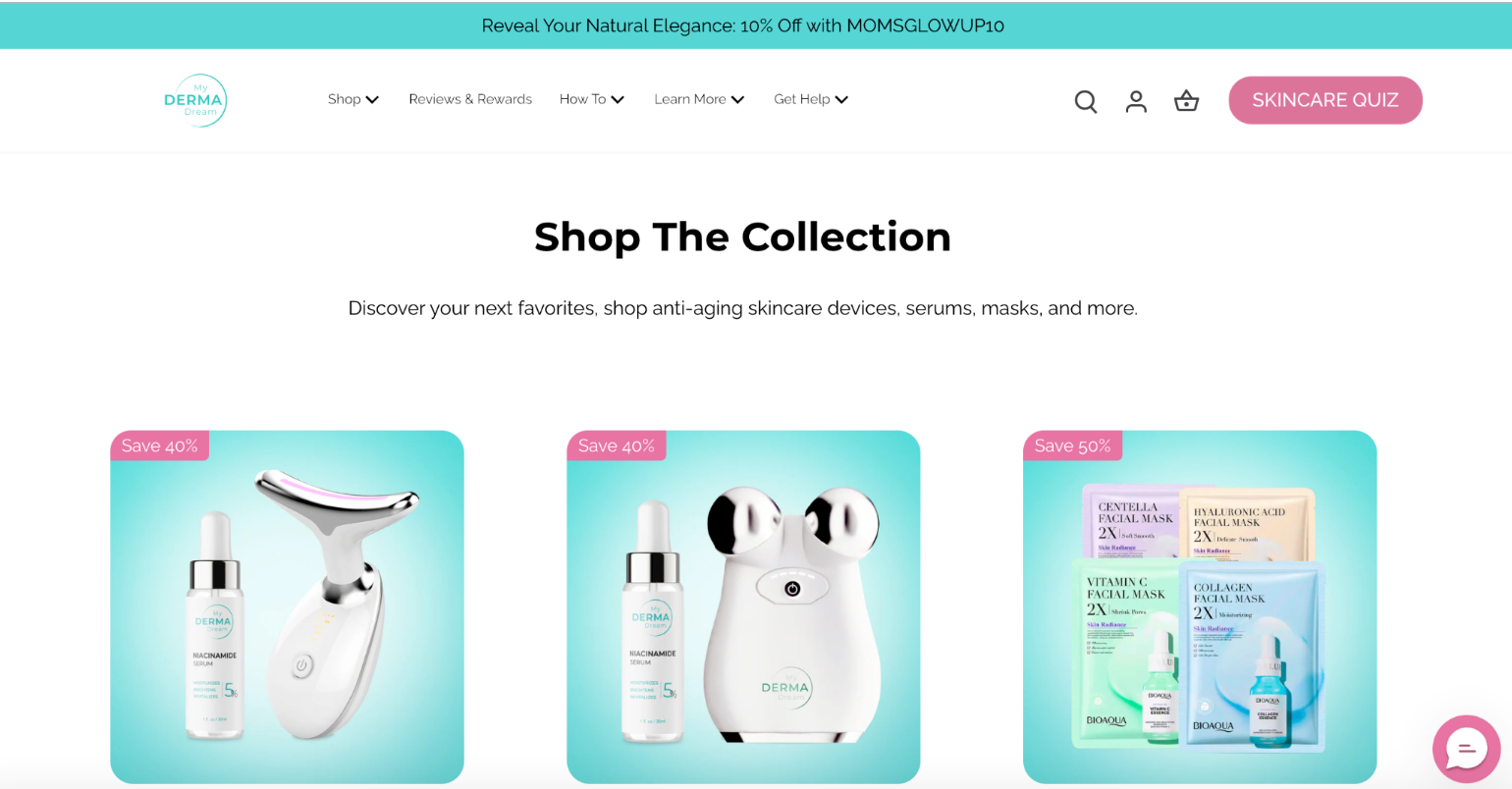
Solution: MyDermaDream implemented UserLoop’s video survey tool and discount incentive feature, alongside UserLoop’s AI-powered analytics.
Implementation:
- Video Surveys: Customers shared how they use MyDermaDream products and the results they experienced through video feedback.
- Discount Incentives: Customers received discount codes for completing video surveys, encouraging higher participation.
- AI Analysis: UserLoop's AI analyzed the video feedback, identifying key themes and customer preferences.
Results:
● 65% Increase in Feedback: Video surveys and discount incentives led to a 50% increase in customer feedback.
● 19% Sales Uplift: The discount incentive not only increased survey participation but also drove a 25% uplift in repeat sales for customers who interacted with the survey.
● Product Improvements: AI analysis revealed specific new ways customers were using the product that the brand weren’t previously aware of - they took these learnings and launched new marketing campaigns based around the personas they discovered.
Conclusion
Retailers should embrace the power of Voice of Customer surveys. By utilizing different types of VoC surveys, such as Customer Satisfaction (CSAT), Net Promoter Score (NPS), Customer Effort Score (CES), Product Feedback, Post-Purchase, Exit-Intent, and In-Store Experience surveys, retailers can comprehensively understand various aspects of the customer experience and make improvements to impact growth.
By workly smartly with AI powered tools and capturing and analyzing customer feedback, retailers can make informed decisions that enhance the customer experience, drive innovation, and boost loyalty. Implementing best practices for VoC surveys ensures that the collected data is actionable and leads to meaningful improvements.
As the retail landscape continues to evolve, staying attuned to the voice of the customer will help retailers gain a competitive advantage By prioritizing customer feedback and making continuous improvements, retailers can create a customer-centric culture that drives long-term growth and success.
Get Started Today!
Don’t miss out on the opportunity to transform your business with the power of AI-driven customer feedback. Download "AI x Customer Feedback" today and take the first step towards a smarter, more efficient, and customer-centric eCommerce strategy.
UserLoop
UserLoop is leading the way by introducing AI into the customer feedback process. It's innovative AI-powered solutions speed the survey creation process whilst providing personal branding options, results focused analytics, and easy-to-access data. Start building your customer feedback survey and emails today.
Discover what UserLoop can do for you with a free 14-day trial 🌟. Kick off your first customer survey in just a few minutes and start unlocking valuable insights for your brand and customers!
Transform your eCommerce business with AI-driven customer feedback insights. Download our comprehensive guide today and stay ahead of the competition!


The agentic growth toolkit for Shopify
Ask your customers anything
UserLoop talks to your customers at scale with surveys and contests that feed one AI-queryable dataset. AI does the setup and the analysis.
- SurveysFind out why customers buy: checkout, email, link & QR.
- ContestsGiveaways that grow your list and social following.
Free plans on both apps · live in minutes