Guide to Creating Skincare Customer Surveys: Questions, Strategies, and Templates
As a skincare brand in the dynamic digital age, understanding your customers is no longer a preference—it's a necessity. Why? Because knowledge about your customers' preferences, needs, and habits is a powerful tool that can shape your business success in several ways.
Customer insights help refine your product range and formulations, allowing you to offer solutions that your customers truly want and need. By aligning your product offering with your customers' desires, you create a direct path to customer satisfaction and brand loyalty.
Knowing your customers allows you to tailor your marketing strategies effectively. Whether it's about crafting compelling messages, choosing the right marketing channels, or timing your campaigns, understanding your customers empowers you to make data-driven decisions that hit the mark.
Customer knowledge allows you to shape your brand to reflect your customers' values and aspirations. In a market increasingly influenced by brand authenticity and alignment with personal values, being a brand that your customers can relate to and believe in can set you apart.
Given the above, it's clear that surveys are invaluable. So, how do you conduct effective customer surveys? First of all, you'll need a survey platform that helps you collect customer data at every step of the journey - we humbly recommend checking out UserLoop for a free trial 👀
Identify Your Goals: Before setting up your survey, identify what you wish to learn from your customers. Is it about their skincare habits? Their preferences? Their lifestyle factors that influence their skincare needs? Defining your goals will guide you in crafting effective questions.
Design Clear and Direct Questions: Your questions should be straightforward and easy to understand. Avoid jargon and ensure they are targeted towards your survey goals.
Choose the Right Survey Tool: Depending on your audience size and needs, choose a survey tool that allows you to design, distribute, and analyze your survey effectively.
Analyze and Implement Findings: After collecting responses, analyze the data to glean insights. Most importantly, use these insights to shape your product development, marketing strategies, and overall brand positioning.
In this blog, we've analyzed customer surveys from leading direct-to-consumer (DTC) skincare brands, including KraveBeauty, Aesop, Tropic, and Ballsy.
We’ve extracted a selection of the most insightful questions that these successful brands are asking their customers.
We'll delve into each question, explaining its significance and how you can adapt it for your brand's surveys.
Questions on Customer Profile
Getting to know your customers is the cornerstone of a successful skincare brand. Demographic data – from age to lifestyle – offers insights into their skincare needs and buying behavior. This valuable knowledge can guide your product formulation and marketing strategies.
For example, if many customers enjoy outdoor activities, products with sun protection might be in demand. If you cater to many students, affordability could be crucial. This data can even help you forecast trends and ensure you're meeting evolving needs.
The following questions aim to create an accurate customer profile. By gathering these insights, you can refine your approach, optimize resources, and maximize business growth.
To which age group do you belong?
Question Type: Single Select
18-24
25-34
35-44
45-54
55-64
65 +
Why you should ask this: It might feel awkward to ask, but our data shows customers are generally more than happy to answer this question. Knowing your customers' age helps tailor products and marketing to their specific skincare needs and concerns. It also aids in anticipating future demand and trends based on age distribution.
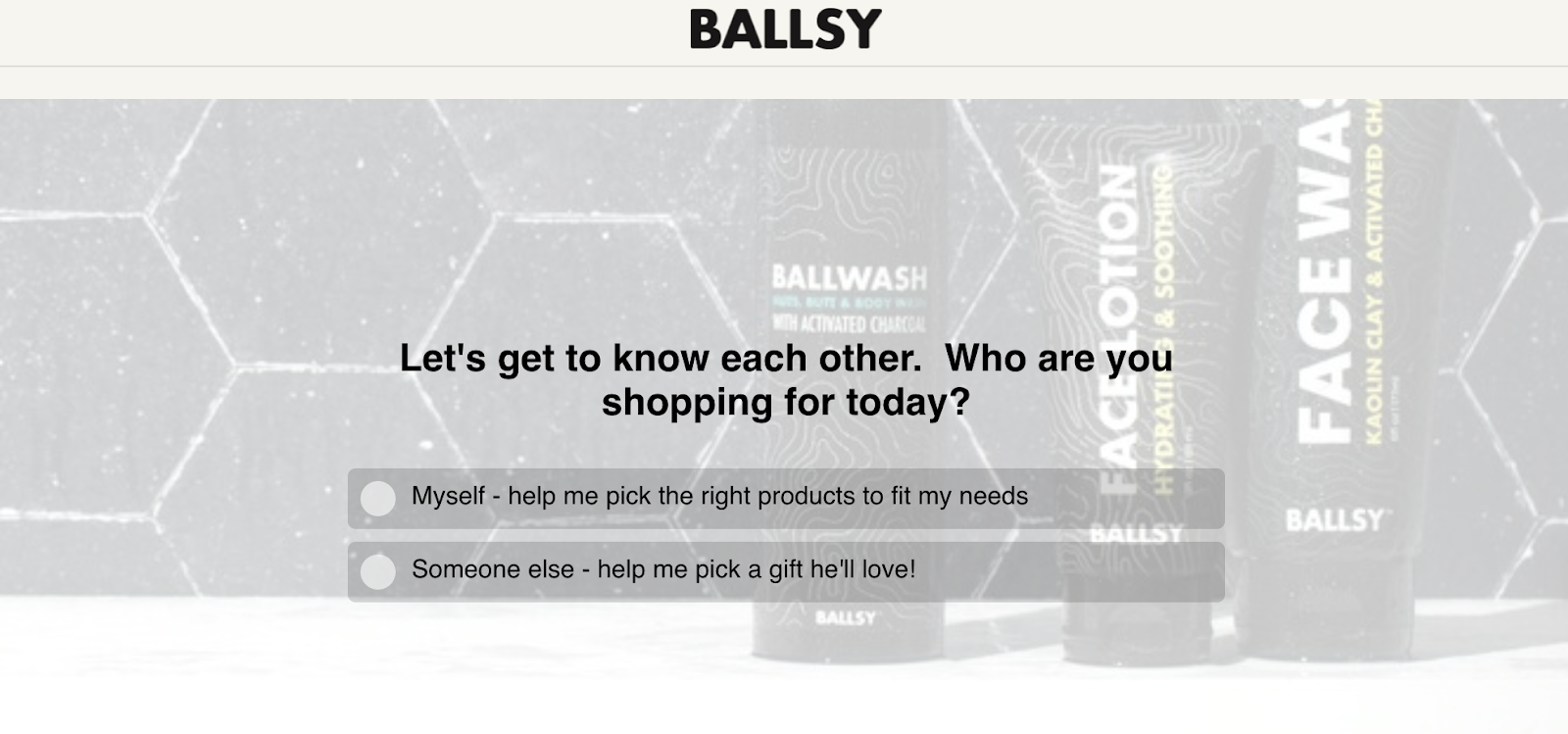
Who are you shopping for today?
Question Type: Single Select
Myself
My significant other
A family member
A friend
A colleague
A gift for someone else
Multiple people
Why you should ask this: Use the responses from this question to tag customers in Shopify and your email platform. Understanding who your customers are shopping for lets you be a better gift guide. Are they shopping for themselves or someone special? This way, you can give more personal suggestions and even plan special deals around gifting occasions. Plus, it adds that personal touch that can make all the difference.
Example from Ballsy:
Questions on Skin Type and Concerns
Delivering effective skincare solutions begins with understanding your customers' skin types and their primary concerns. This knowledge enables your brand to tailor products that directly address their specific needs, enhancing their skincare experience and building customer loyalty.
From the sensitivity of the skin to its reaction to new products, each piece of information provides valuable insights into the unique challenges your customers face. Recognizing their main skincare goals and particular needs for areas like the eye can help shape your product lines, ensuring you're offering solutions that truly resonate.
The following questions are designed to delve into these nuances, helping your brand to create personalized and effective skincare solutions.
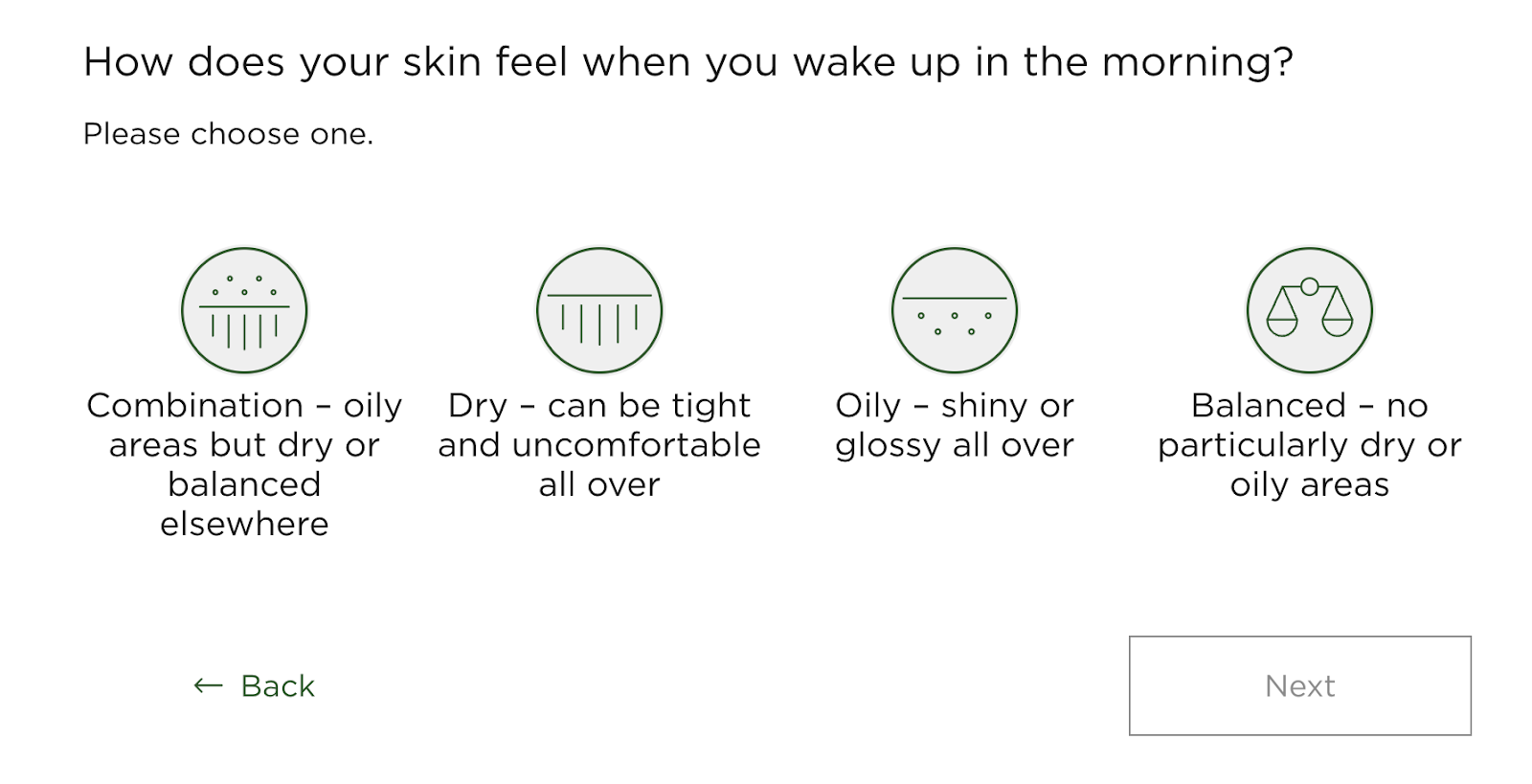
How does your skin feel when you wake up in the morning?
Combination – oily areas but dry or balanced elsewhere
Dry – can be tight and uncomfortable all over
Oily – shiny or glossy all over
Balanced – no particularly dry or oily areas
Why you should ask this: Understanding your customers' skin type is crucial. Skincare products are typically tailored for specific skin types. Knowing this allows your brand to provide personalized product suggestions and create new products that meet your customers' needs.
Example:
How sensitive is your skin?
My skin is rarely sensitive to skincare products
My skin is sometimes sensitive to skincare products
My skin is very sensitive and prone to redness and irritation
I am unsure
Why you should ask this: Sensitivity levels can influence product choice, as certain ingredients may irritate sensitive skin. Understanding your customer's sensitivity level helps to customize skincare advice, avoid customer dissatisfaction, and guide the development of new products for sensitive skin.
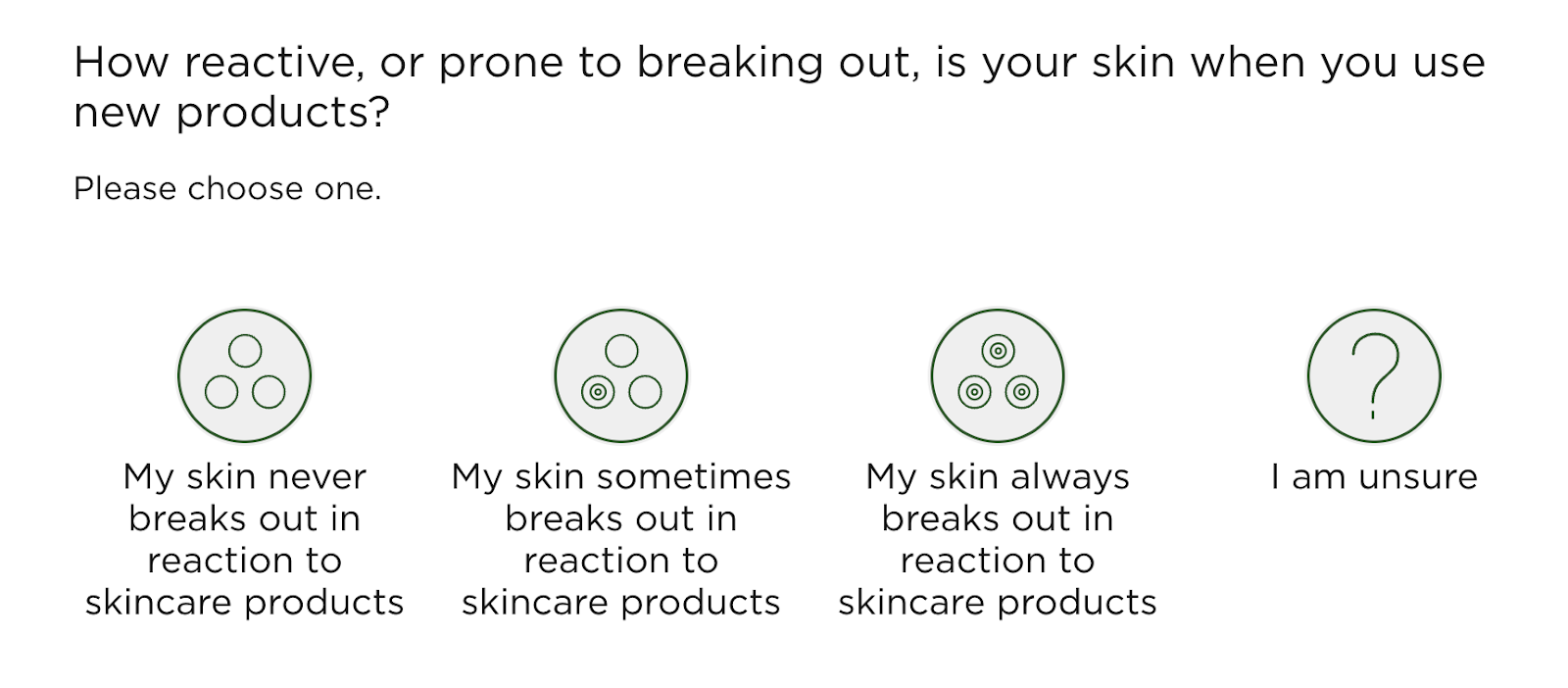
How reactive, or prone to breaking out, is your skin when you use new products?
My skin never breaks out in reaction to skincare products
My skin sometimes breaks out in reaction to skincare products
My skin always breaks out in reaction to skincare products
I am unsure
Why you should ask this: Some customers are more prone to breakouts than others. This question can help segment customers, inform product recommendations and highlight the need for products designed for reactive skin.
Example:
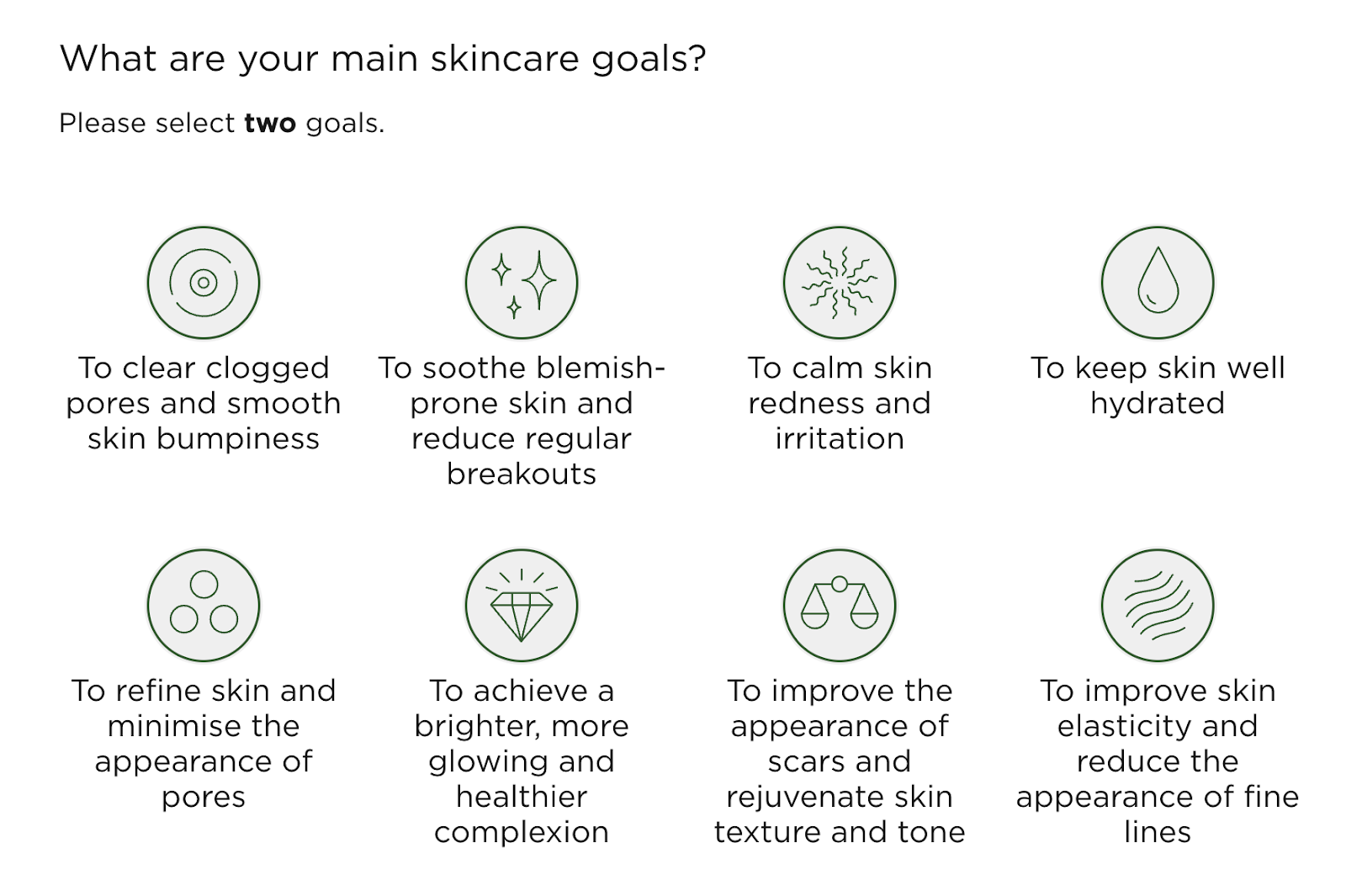
What are your main skincare goals?
To clear clogged pores and smooth skin bumpiness
To soothe blemish-prone skin and reduce regular breakouts
To calm skin redness and irritation
To keep skin well hydrated
To refine skin and minimise the appearance of pores
To achieve a brighter, more glowing and healthier complexion
To improve the appearance of scars and rejuvenate skin texture and tone
To improve skin elasticity and reduce the appearance of fine lines
Why you should ask this: Knowing the skincare goals of your customers allows your brand to guide them to appropriate products. It can also help identify gaps in your product range and inspire the development of new solutions.
Example:
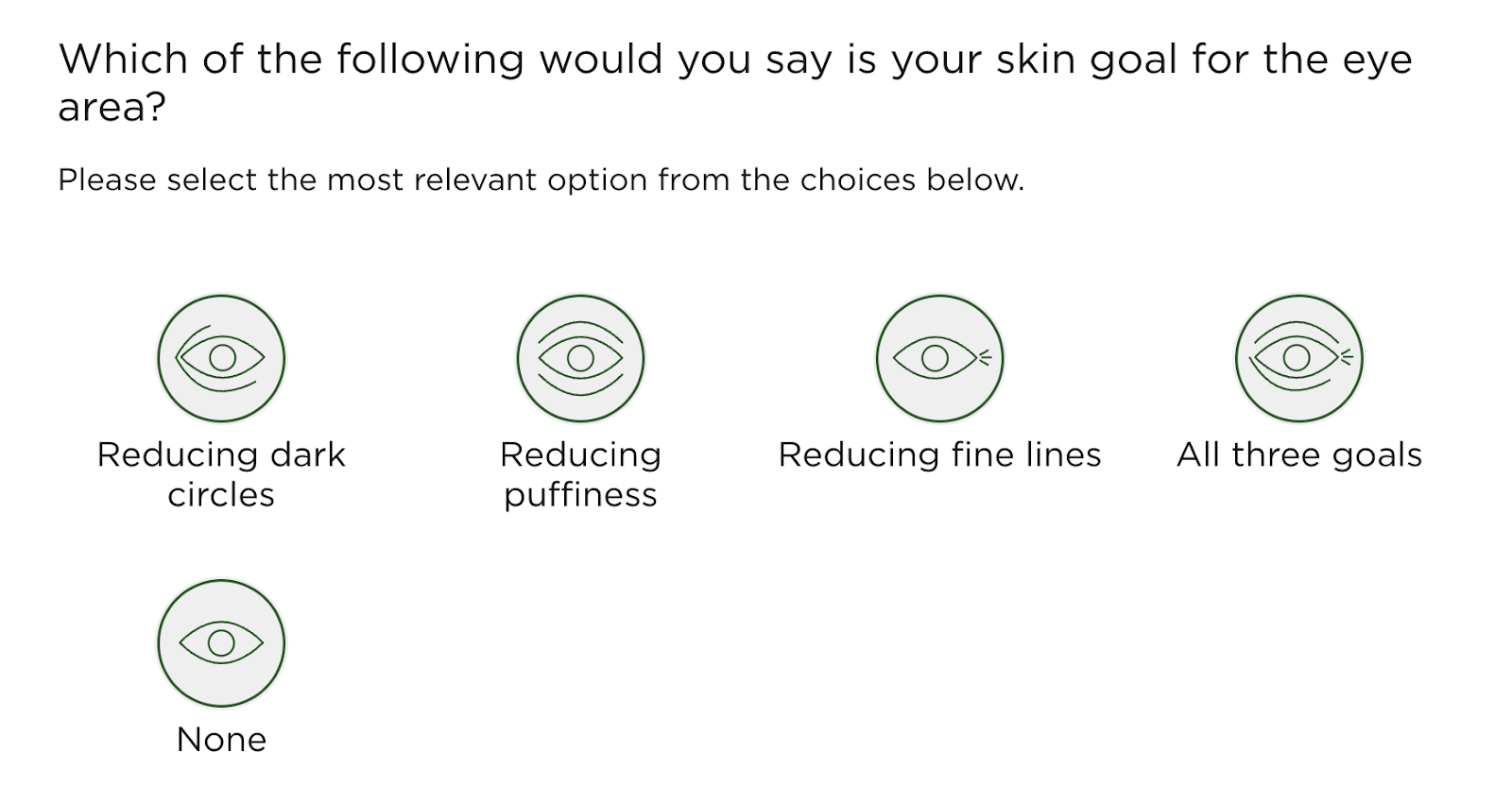
Which of the following would you say is your skin goal for the eye area?
Question Type: Single Select
Reducing dark circles
Reducing puffiness
Reducing fine lines
All three goals
None
Why you should ask this: The skin around the eyes has different needs, often being the first area to show signs of aging. Understanding your customers' goals for this area can inform the development of specialized eye care products.
Example:
Questions on Lifestyle
This set of questions will help you gain a deeper understanding of your customers' day-to-day habits, which are often directly linked to their skin health and skincare choices.
By knowing how they live their lives, you can better align your products and marketing messages to their real-world needs.
Knowing their lifestyle allows you to personalize their experiences with your brand and can be a tool for building stronger, more meaningful relationships with your customers.
These insights can also guide the development of new products that support their wellbeing and fit seamlessly into their lifestyles.
On average, how would you rate your overall stress levels?
Question Type: Single Select
Minimal daily stress
Average daily stress
Stress is a constant presence
Back
Why you should ask this: Stress impacts skin health. Knowing your customers' stress levels can inform content on managing stress-related skin issues and even inspire a skincare line targeted towards stress management.
On average, how many hours of sleep would you say you get each night?
Question Type: Single Select
Less than 4 hours
4-5 hours per night
6-7 hours per night
8 hours or more
Why you should ask this: Sleep greatly affects skin health. This question can help identify customers who may benefit from products targeting issues caused by lack of sleep, like dullness or dark circles.
On average, how many glasses of water do you drink each day?
Question Type: Single Select
1-2 glasses per day
3-5 glasses per day
6-8 glasses per day
So many, I’ve lost count!
Why you should ask this: Hydration impacts skin health significantly. This information can guide hydration-focused product recommendations and educational content on the importance of water intake for skin health.
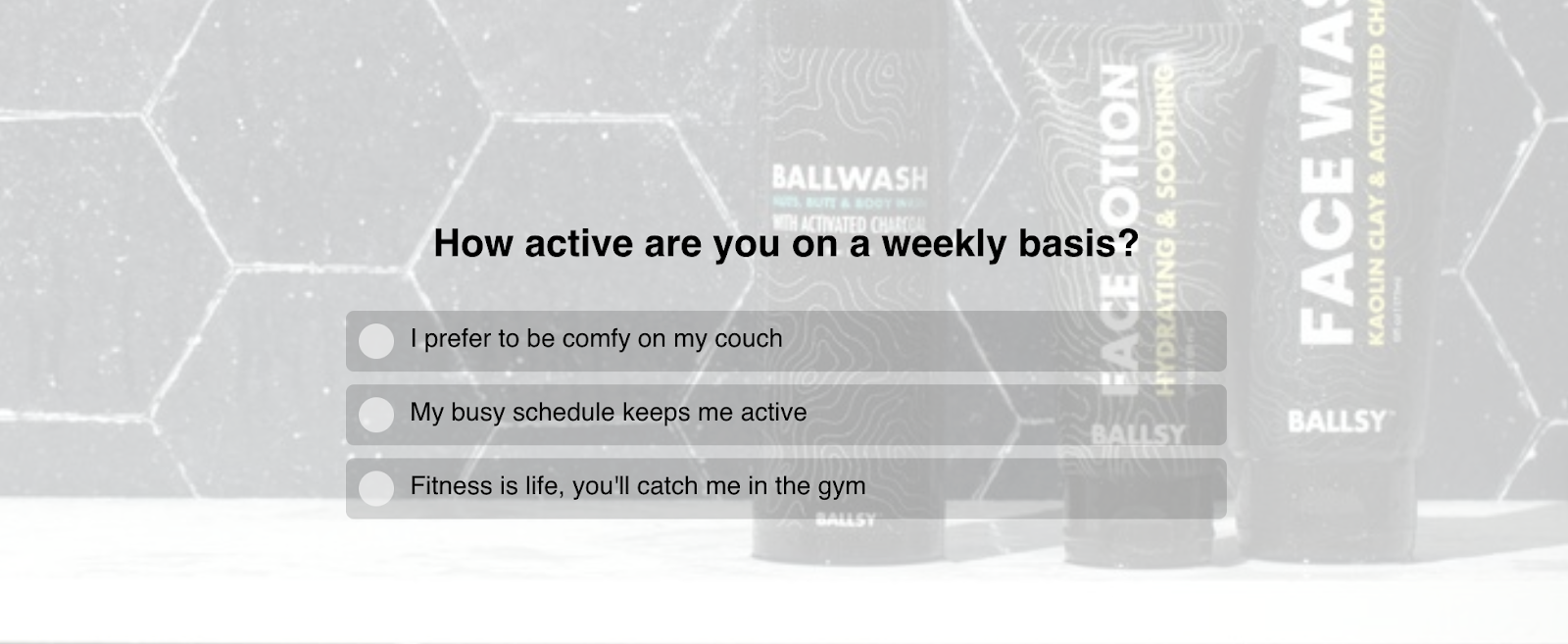
How often do you exercise or work out?
Question Type: Single Select
Never
1-2 times per week
3-4 times per week
5-6 times per week
Every day
Why you should ask this: Regular exercise can improve skin health. Knowing how often your customers work out can help provide targeted skincare advice for active individuals and guide the creation of products designed for post-workout skin care.
Example:
What's your annual salary?
Question Type: Single Select
< $25,000
$25,001 - $50,000
$50,001 - $75,000
$75,001 - $100,000
$100,001 - $150,000
$150,001 - $200,000
$200,001+
Prefer Not to Answer
Why you should ask this: The customer's income can influence their buying capacity and willingness to invest in high-end skincare. It assists in segmenting your market, and tailoring marketing strategies and product pricing.
How would you describe your complexion?
Question Type: Single Select
Fitzpatrick Scale
Type I - Light, pale white
Type II - White, fair
Type III - Medium, white to olive
Type IV - Olive, moderate brown
Type V - Brown, dark brown
Type VI - Black, very dark brown to black
Why you should ask this: The Fitzpatrick scale provides insight into customers' skin types and potential issues. It helps in personalizing product recommendations and could guide the development of products specifically designed for different skin types on the Fitzpatrick scale.
How would you describe your undertone?
Question Type: Single Select
Warm
Neutral
Cool
Why you should ask this: Understanding a customer's skin undertone can help make personalized product recommendations, especially for color-based products, and provide more accurate skincare advice.
What are your skin concerns?
Question Type: Multi Select
Signs of Aging
Dryness
Acne
Enlarged pores
Sun Damage
Medical (Rosacea, Eczema, etc.
Sensitivity
Damaged Skin Barrier
Dehydration
Dullness
Hyperpigmentation
Whiteheads / Blackheads
Signs of Aging
Dryness
Acne
Enlarged pores
Sun Damage
Medical (Rosacea, Eczema, etc.
Sensitivity
Damaged Skin Barrier
Dehydration
Dullness
Hyperpigmentation
Whiteheads / Blackheads
Other
Why you should ask this: Identifying common skin concerns can help you create products that address these issues directly. It also helps in personalized marketing, where you promote products based on each customer's specific concerns.
In a typical month, how much do you spend on beauty products (makeup, skincare, haircare, etc.)?
Question Type: Single Select
< $25
$26 - $50
$51 - $100
$101 - $250
$251-$500
$500+
Why you should ask this: Understanding a customer's spending habits on beauty products can help you price your products competitively and identify which price range appeals most to your customers.
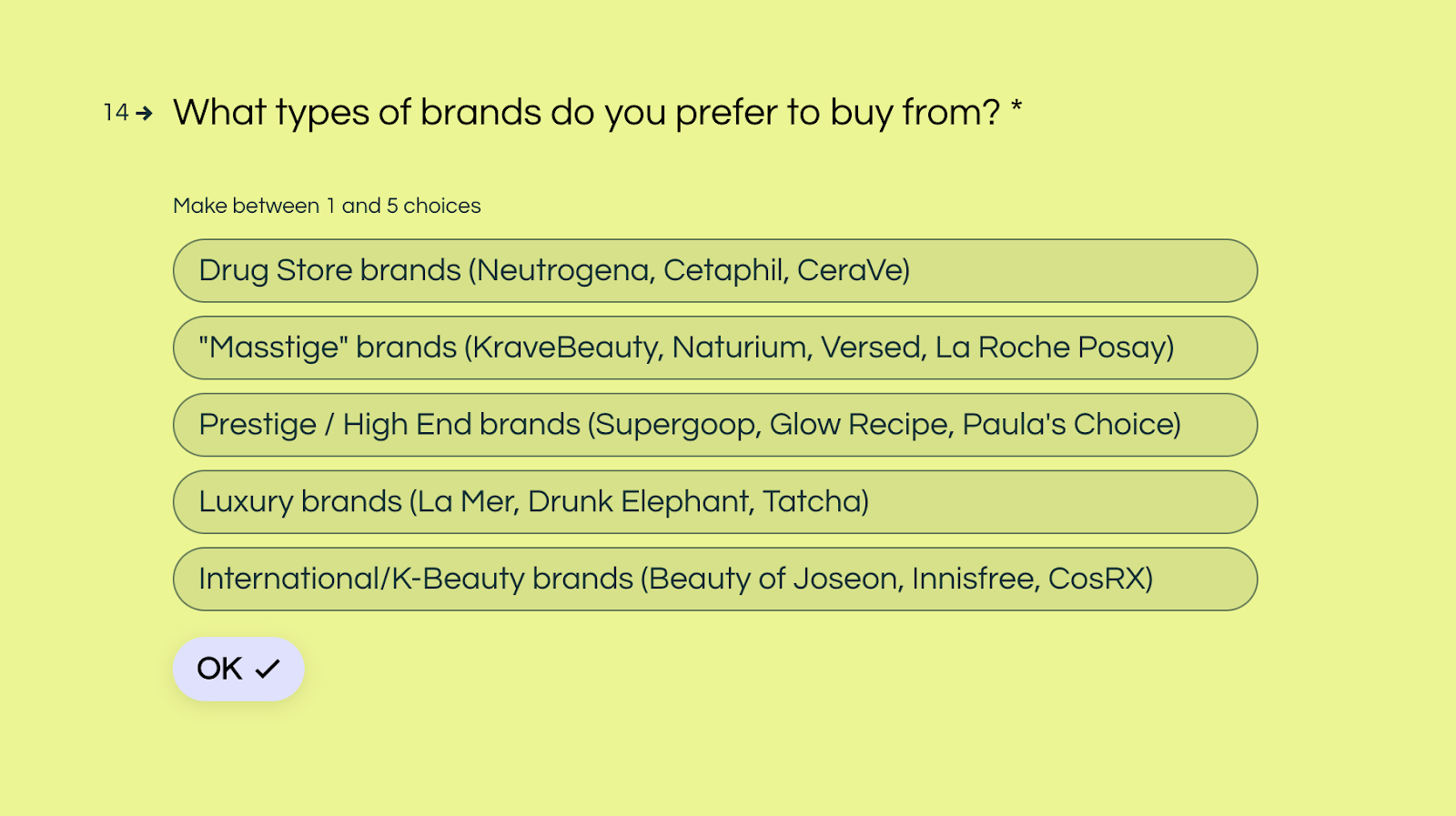
What types of brands do you prefer to buy from?
Question Type: Multi Select
Drug Store brands (Neutrogena, Cetaphil, CeraVe)
"Masstige" brands (KraveBeauty, Naturium, Versed, La Roche Posay)
Prestige / High End brands (Supergoop, Glow Recipe, Paula's Choice)
Luxury brands (La Mer, Drunk Elephant, Tatcha)
International/K-Beauty brands (Beauty of Joseon, Innisfree, CosRX)
Why you should ask this: Knowing the types of brands your customers prefer can help understand your competition and the customer's preferences. It can influence your branding, positioning, and marketing strategy. You should edit the brands included in the answer options to more closely match your competitors.
Example: KraveBeauty
Where do you like to buy your skincare products?
Question type: Multi Select
Beauty Retailers: Ulta, Sephora, Sally Beauty, Credo , etc.
Digital Retailers: Dermstore, Soko Glam, YesStyle, Cult Beauty, etc.
Mass/Drug Store: Target, Walgreens, CVS, Walmart, etc.
Directly from brands
Why you should ask this: It offers insights into the most popular shopping channels amongst your customers, helping you optimize distribution and marketing strategies.
How often do you REPURCHASE skincare products?
Question Type: Single Select
All the time! If a product works for me, I will buy it again and rarely switch or explore new products.
Every now and then. I like exploring new products, but tend to stick with what I know works.
Very rarely. I rarely repurchase products because I prefer to explore new products and change my skincare routine often to keep things fresh.
Never! I’m always one and done with my products.
Why you should ask this: This will help gauge your customers' loyalty towards skincare products and inform you about the stickiness of your products.
Which of the following products do you repurchase most often?
Question Type: Multi Select
Serum / Ampoule
Actives (Retinoids, Vitamin C)
Face Oil
Exfoliator
Moisturizer
Sunscreen
Toner / Essence
Eye Cream
Tools
Lip Balm / Lip Mask
Makeup Remover
Cleanser
Face Mask
Other
Why you should ask this: Understanding which products get repurchased often can inform your stock planning and guide product development for more popular categories. You can also learn new product ideas from customers typing in their own responses into the ‘Other’ section.
Where do you most often discover new skincare products?
Question Type: Multi Select
Reddit
YouTube
TikTok
Pinterest
Twitter
Word of Mouth
Facebook
Instagram
Other
Why you should ask this: This provides insight into effective channels for product discovery, which can help improve marketing strategies - learn which channels your customers are most active on and advertise there!
What motivates you to purchase a skincare product?
Question Type: Multi Select
Price
Brand philosophy
Ingredients
Product reviews
Recommendations from friends / family
Clinical evidence
Packaging
Other
Why you should ask this: It helps understand your customers' purchase drivers. This knowledge can inform marketing messages, product development, and pricing strategies.
What sources do you rely on to learn about safe skincare ingredients and trustworthy brands?
Question Type: Multi Select
My favorite influencers / content creators
Blogs
TikTok
Publications / magazines
Instagram
YouTube
Friends and family
My esthetician / dermatologist
Other
Why you should ask this: It reveals trusted sources of information for your customers, which can help in strategizing collaborations or choosing channels for educational content.
How important is it for you to buy from companies that are sustainable?
Question Type: Single Select
Very important
Somewhat important
Neutral
Not very important
Not at all important
Why you should ask this: It gauges the value your customers place on sustainability, which can shape your company's sustainability efforts and communication.
What skincare products does your current skincare routine include?
Question Type: Multi Select
Makeup Remover
Serum / Ampoule
Actives (Retinoids, Vitamin C)
Exfoliator
Moisturizer
Eye Cream
Cleanser
Face Oil
Toner / Essence
Sunscreen
Lip Balm / Lip Mask
Face Mask
Other
Why you should ask this: This can provide valuable information about the types of products your customers frequently use, which can guide new product development or marketing focus.
What other brands are in your current skincare routine?
Question Type: Open Ended
Why you should ask this: This helps identify your competition and understand your customers' brand preferences, useful for benchmarking and competitive analysis.
What is your favorite brand that you follow on social media?
Question Type: Open Ended
Why you should ask this: It helps you understand which brands are doing well on social media, useful for benchmarking and shaping your own social media strategy.
What do you most like to see from us?
Question Type: Multi Select
Product education (formulation, ingredient spotlights, ways to use the product)
Events + IRL experiences
Memes + fun stuff
General skincare education
Brand collabs
Merch
Product development (behind the scenes, naming contests, new product surveys)
Other
Why you should ask this: It provides direct feedback on your customers' expectations, guiding your content creation and brand communication efforts.
What brands would you like to see us partner with?
Question Type: Open Ended
Why you should ask this: It helps you identify potential partnership opportunities that resonate with your customer base, leading to more effective and successful collaborations.
How do you feel we differs from other brands?
Question Type: Open Ended
Why you should ask this: This question allows you to understand your unique selling proposition (USP) from a customer's perspective. Their answers can aid you in strengthening your brand positioning and tailoring your marketing messages.
And there we have it, skincare enthusiasts and business mavens alike! A well-constructed customer survey can be a goldmine of information, giving you a crystal-clear snapshot of who your customers are, what they need, and how you can serve them best. But remember, this is just the first step.
Taking this rich information and translating it into action - be it personalized product recommendations, new product development, or a more inclusive marketing strategy - is where the real magic happens.
Remember, we're in the business of making people feel good in their skin, and there's no better way to do this than by understanding their unique skincare journeys. When we know better, we can do better.
So here's to creating a more customized, caring, and inclusive skincare world, one survey at a time.
Don't forget to check out UserLoop for a free trial 👀 - you could be running your first customer survey in under 10 minutes!


The agentic growth toolkit for Shopify
Ask your customers anything
UserLoop talks to your customers at scale with surveys and contests that feed one AI-queryable dataset. AI does the setup and the analysis.
- SurveysFind out why customers buy: checkout, email, link & QR.
- ContestsGiveaways that grow your list and social following.
Free plans on both apps · live in minutes