Customer Satisfaction Survey Examples: Proven Questions To Ask Your Customers

In an era where customer feedback is the cornerstone of business improvement, having a robust mechanism to capture this data is indispensable. Among the myriad of tools at your disposal, customer satisfaction surveys stand out for their direct insight into customer sentiments.
This collection of customer satisfaction survey examples, rich in CSAT, NPS, and CES questions, serves as a fundamental resource for businesses aiming to gage and enhance customer satisfaction and loyalty.
With a focus on actionable data, these surveys are crafted to not only measure satisfaction levels but also to illuminate pathways for augmenting service quality and customer engagement.
This article will delve into a wealth of customer satisfaction survey questions examples, including multiple-choice questions, open-ended questions, and survey templates tailored for comprehensive customer segmentation. By employing these meticulously designed survey questions—ranging from Net Promoter Score (NPS) to Customer Effort Score (CES) and Customer Satisfaction (CSAT) metrics—you'll unlock deeper insights into customer preferences, pain points, and loyalty. Additionally, the inclusion of proven customer satisfaction survey templates ensures that you have a ready-to-use framework to start gathering invaluable customer feedback with precision and clarity. Whether your aim is to refine customer service, enhance product offerings, or strengthen customer relationships, the insights garnered from these surveys can substantially influence your strategic decisions.
Net Promoter Score (NPS) Questions
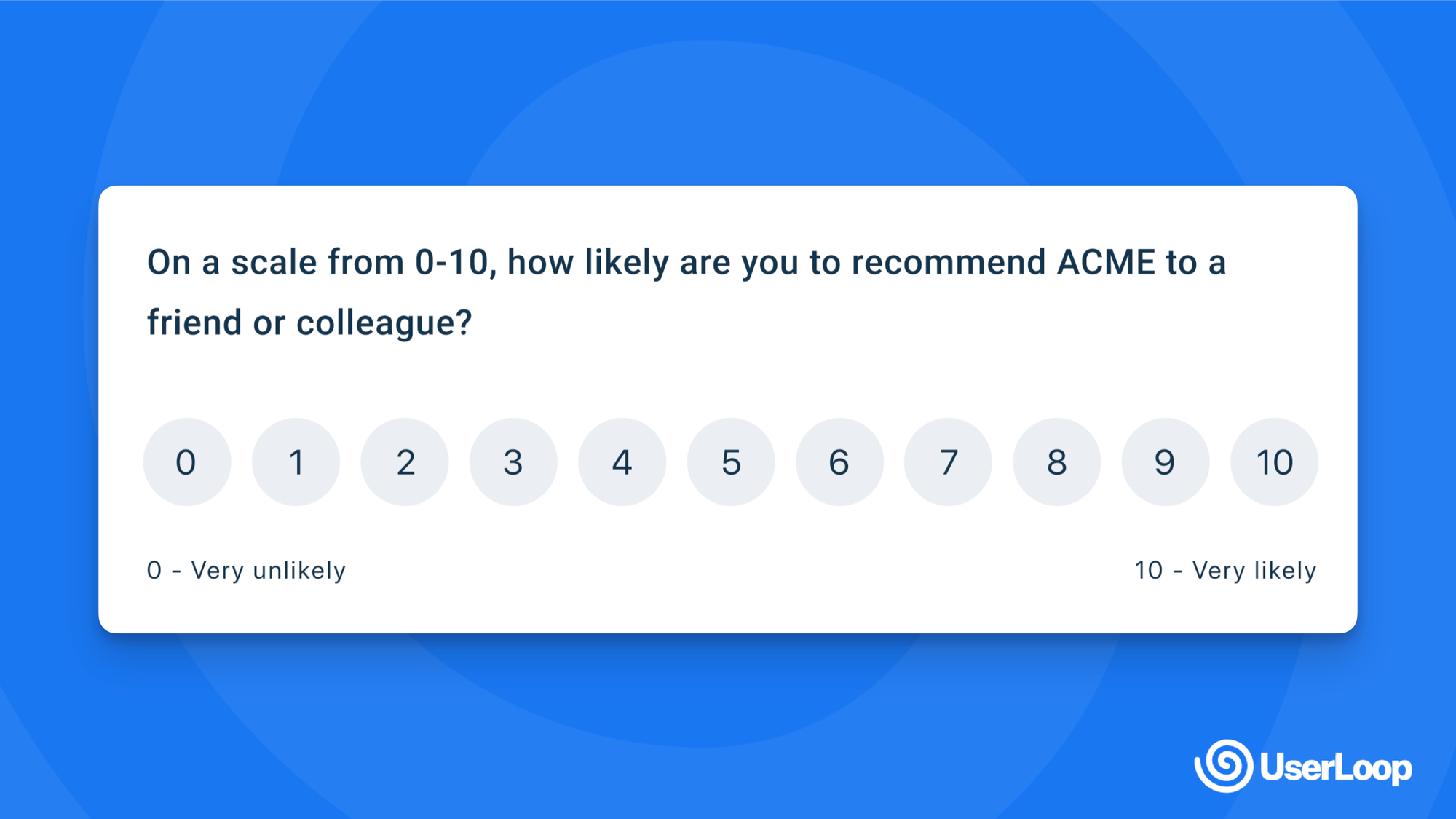
The Net Promoter Score (NPS) question is a powerful tool for measuring customer loyalty and satisfaction. It typically takes the form of a single question:
"On a scale of 0 to 10, how likely are you to recommend our company/product/service to a friend or colleague?"
Respondents are categorized based on their scores:
- Promoters (score 9-10): Loyal enthusiasts who will keep buying and refer others, fueling growth.
- Passives (score 7-8): Satisfied but unenthusiastic customers who are vulnerable to competitive offerings.
Detractors (score 0-6): Unhappy customers who can damage your brand and impede growth through negative word-of-mouth.
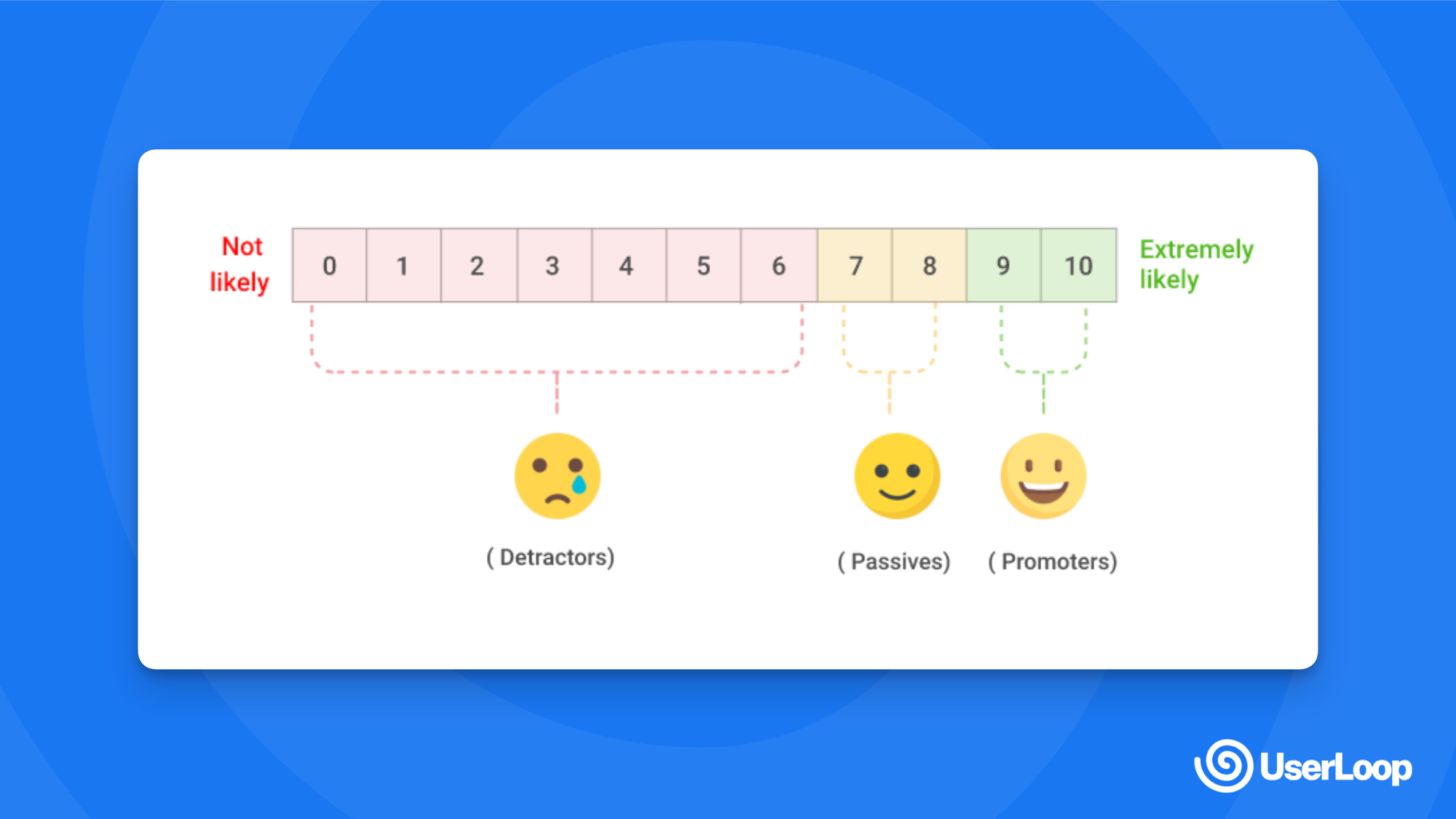
Your company's NPS score is then calculated by subtracting the percentage of Detractors from the percentage of Promoters, resulting in a score between -100 and +100.
Benefits of NPS Questions
- Measure customer loyalty: NPS helps you understand how satisfied customers are with your brand and how likely they are to recommend it to others.
- Segment customers: NPS allows you to segment your customer base according to loyalty levels and identify trends in performance for each group.
- Identify at-risk customers: Low NPS scores signal unhappy customers who may be at risk of churning, allowing you to take proactive steps to win them back.
- Close the loop: NPS feedback helps you identify dissatisfied customers and turn poor experiences into great ones by addressing their concerns.
Types of NPS Questions
- Relational NPS: Measures a customer's overall feelings about their relationship with your company. Usually conducted at regular intervals (e.g., quarterly, bi-annually).
- Transactional NPS: Measures satisfaction at a more granular level, immediately after specific interactions (e.g., support call, product installation). Provides insights on the performance of individual transactions.
Follow-up Questions for Relational NPS
To gain deeper insights, consider asking follow-up questions after the main NPS question:
- Open-ended feedback: "Please tell us why you gave that rating." This allows customers to elaborate on their answer and helps you identify drivers of promoters and detractors.
- Improvement suggestions: "Is there anything specific we can do to improve your experience?" This gives respondents a chance to share actionable feedback.
- Permission to follow up: "Would it be okay for us to follow up with you on your responses?" This opens the door for further engagement and issue resolution.
By leveraging the power of NPS questions and follow-ups, you can gain valuable insights into customer loyalty, identify areas for improvement, and take action to enhance the customer experience.
Customer Effort Score (CES) Questions
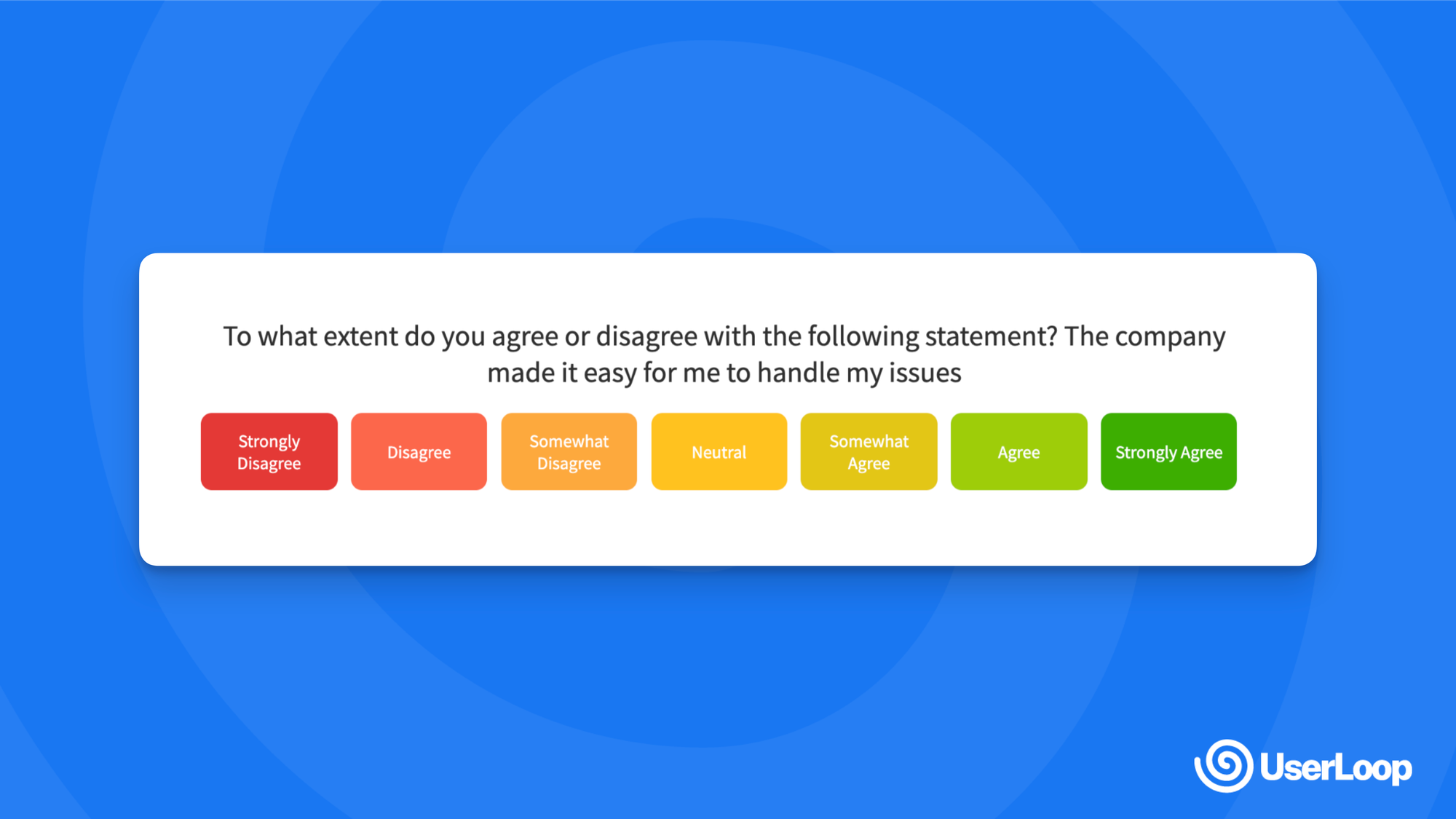
Customer Effort Score (CES) is a feedback survey that measures how easy your customers find the interaction with your product or service . It's about the effort it takes for someone to use your product or interact with your customer service to find an answer to their question.
How to Structure Customer Effort Score Questions
- Aim for simplicity: All customer feedback questions should aim for simplicity. When it comes to CES surveys specifically, you're only focusing on learning more about the customer effort .
- Be clear with the wording: It's easy to confuse your customers by asking too many things in one question. Simple and straightforward questions tend to get a higher response rate as they simply feel easy to follow .
- Avoid using the word 'effort': There's no need to be too obvious with your ask. Yes, CES is all about measuring customer effort but your questions shouldn't necessarily guide your customers towards the outcome you want to get .
- Decide on the way you'll structure the question: There are two ways to structure a CES question – you can either ask a direct question or turn it into a statement .
Three Different Ways to Present CES Questions
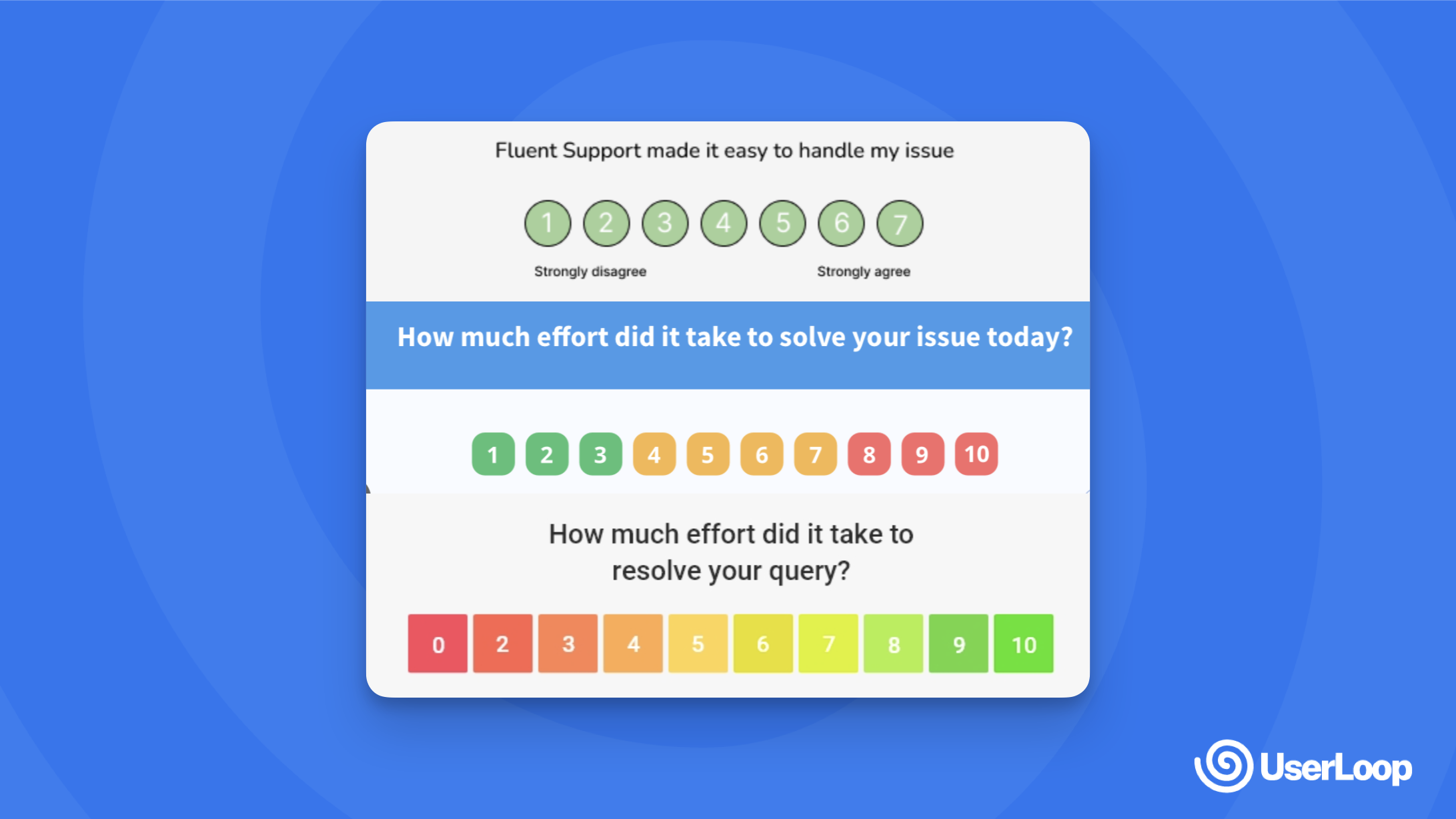
- Numerical scale: In this type of survey, you are measuring the customer effort with numbers – the higher the number, the higher the effort it takes for someone to complete an action .
- Text-based scale: The text-based scale, also known as the Likert scale, is based on a statement that customers get to choose a response ranging from 'strongly agree' to 'strongly disagree' to reflect their opinion .
- Using emoticons: You can also launch a CES survey to associate the level of effort with different emoticons, such as smiley faces, hearts, or thumbs up .
Examples of Customer Effort Score Questions
Primary questions:
- How easy was using [Product] so far?
- Overall, how easy was it to solve your problem today?
- To what extent do you agree with the following statement: [Product] made it easy to handle my issue.
- Was it easy to find the information you wanted on our website?
- How easy was it to interact with our team?
- Were the instructions you received during the onboarding stage easy to follow?
- How much do you agree with the following statement: [Product] made it easy for me to use the X feature .
Follow-up questions:
- What do we need to do to improve your score by one point?
- What made you choose this score?
- Would the X feature instead make your customer experience easier?
Open-ended questions:
- Do you want to add anything else?
- Be honest, what do we need to improve?
Best Practices When Creating a Customer Effort Score Question
- Be neutral: Your questions need to be objective to get the most out of the customer feedback. You can't ask a question that makes it too obvious what you want to get out of it .
- Segment your audience: Not everyone is at the same stage in the customer journey to respond to your CES question. Segment your audience to make your questions more relevant and increase your response rate .
- Timing matters: It's important to choose the right time to send a CES survey to your customers to get the most of the feedback .
- Don't add too many questions: Having too many questions in your survey can affect your response rate as customers would be less interested in spending too much time filling out the survey .
By leveraging CES questions, you can gain valuable insights into the level of effort required from customers, identify areas for improvement, and take action to enhance the overall customer experience.
Customer Satisfaction (CSAT) Questions

The most basic way of measuring customer satisfaction is by using the CSAT question. Here are the questions it comes with and how you should use it.
How satisfied are you with [product name]?
This question measures overall customer satisfaction. Responses will help you discover your customers' needs and give you ideas for changing and improving. The score is a widely recognized customer experience metric that helps predict company growth and reduce customer churn .
This question is usually measured on a five-point rating scale. However, you can also choose to use other Likert scales, e.g. a 1-to-10 rating scale. You can use numbers or a star rating system. A great tool like Survicate will also let you take advantage of the Likert or smiley scale .
By asking this simple yet powerful CSAT question, you can gain valuable insights into how happy your customers are with your product or service. It allows you to identify areas for improvement, prioritize product development efforts, and take proactive steps to enhance the customer experience .
Regularly measuring CSAT helps you track customer satisfaction trends over time. You can see if satisfaction levels are increasing, decreasing or remaining stable. This data empowers you to make informed decisions to continuously optimize your offerings and exceed customer expectations .
So whether you're looking to validate product-market fit, reduce churn, or drive business growth, including the CSAT question in your customer surveys is a must. It's a straightforward way to tap into the voice of the customer and use their feedback as a guiding light for your customer-centric strategies .
Additional Questions to Ask
Here are some additional questions you can include in your customer satisfaction surveys to gain deeper insights:
Questions About Customer Support
- Rate your satisfaction with our team in resolving your issue.
- Did you feel that our team answered your inquiry promptly?
- Do you agree or disagree that your issue was effectively resolved?
- What can our employees do better?
- How can our employees better support your business's/your goals?
Engagement and Research Questions
- What's working for you and why?
- How can we improve your experience with the website or the in-store location?
- Can we connect you with a customer success manager via chat?
- Would you be open to discussing upgrade options for your product?
- Can we send you a list of useful resources for getting the most out of your product?
- What additional support can we offer to enhance your experience?
- Would a loyalty program encourage more frequent purchases or interactions?
- How responsive do you find our online platforms?
- Would more frequent updates or newsletters be helpful?
- How personalized do you feel our communications are?
- What elements of our service exceed your expectations?
- Would you recommend us to a colleague?
- Is there anything else you'd like to share with us?
By incorporating these additional questions, you can uncover valuable feedback about your customer support, identify opportunities for further engagement, and gather insights for product and service improvements. Remember to keep the surveys concise and relevant to maximize response rates and the quality of the feedback received.
Conclusion
Throughout this comprehensive exploration of customer satisfaction survey examples, we have navigated the vast landscape of questions designed to unlock actionable insights into customer preferences, experiences, and loyalty. From the straightforward yet profound Net Promoter Score (NPS) questions to the detailed inquiry of Customer Effort Score (CES) and Customer Satisfaction (CSAT) metrics, we have underscored the importance of engaging with your customers in a meaningful way. This engagement not only illuminates pathways for service enhancement and personalized customer experiences but also fortifies the bond between businesses and their clients, promising improved satisfaction and loyalty.
Recognizing the significance of these insights for strategic decision-making, it becomes clear that collecting and acting upon customer feedback is not merely an operational task but a strategic imperative. As we strive to transcend average customer experiences to deliver exceptional value, starting the journey of surveying customers becomes a critical step. For those ready to embark on this path, starting surveying customers for free with UserLoop offers an insightful beginning. By weaving the fabric of customer feedback into the very core of business strategy, organizations can navigate the ever-evolving consumer landscape with agility and confidence.
FAQs
What are the most effective questions to include in a customer satisfaction survey?
Some of the top customer satisfaction survey questions include:
- How would you rate the support you received?
- Was the support representative able to resolve your issue?
- How satisfied are you with the support provided?
- Was your problem resolved satisfactorily?
- Please rate the quality of the support.
Can you suggest five basic questions for any survey?
Certainly! Five fundamental questions that are essential but often overlooked in surveys are: how, why, who, when, and what. These questions are crucial for gathering comprehensive feedback.
What exactly is a customer satisfaction survey and can you provide an example?
A customer satisfaction survey, often abbreviated as CSAT, is designed to gage how satisfied customers are with a company's services or products. For example, customers might be asked: "How satisfied are you with [company]?" They then rate their satisfaction on a scale from 1 (highly unsatisfied) to 5 (highly satisfied).
What should be included in a customer satisfaction survey?
A typical customer satisfaction survey question might be, "How would you rate your overall satisfaction with the [goods/service] you received?" Respondents are usually asked to provide their satisfaction level using a Likert scale ranging from 1 (highly unsatisfied) to 5 (highly satisfied).


The agentic growth toolkit for Shopify
Ask your customers anything
UserLoop talks to your customers at scale with surveys and contests that feed one AI-queryable dataset. AI does the setup and the analysis.
- SurveysFind out why customers buy: checkout, email, link & QR.
- ContestsGiveaways that grow your list and social following.
Free plans on both apps · live in minutes